> But this fallacy has been repeatedly exposed. For one, the organisations that are supposed to certify that indeed enough tree-planting has taken place do not have the tools to verify that the declared emissions will definitely be absorbed. Another problem is that many offsetting activities do not actually offset anything.
> A recent investigation into the world’s largest carbon standard found that 94 percent of its rainforest offset credits did not actually contribute to carbon reduction.
When I looked at the offset market in the past, I realized that it was one of the few markets where both the buyer and seller are perfectly happy with fraud.
- The buyer is motivated to seek the lowest cost offsets they can find. They're not paying for the cleanup - all they need is the offset document itself, often for legal purposes.
- The seller is more than happy to take the buyer's money and spend it on looking like they're doing something. The rest is free margin.
Neither side remotely cares about the underlying activity behind the offset, and neither side is really penalized if the underlying activity is fraudulent. In fact, both sides are actually better off if the whole thing is fraudulent! I can't think of many other markets where this dynamic exists.
> When I looked at the offset market in the past, I realized that it was one of the few markets where both the buyer and seller are perfectly happy with fraud.
> I can't think of many other markets where this dynamic exists.
Recycling market is the same - UK government pays you to recycle plastic, £60 per tonne. You find someone in a 3rd world country that will take it off your hands for £30 per tonne, and pocket the difference. They give you a document saying the plastic was 'recycled' and dump it in the ocean.
Well you can't minimise plastic use if the rest of society doesn't.
I think landfilling is fine, we just need to make sure it does not end up in the environment floating about and causing contamination. And that we are not getting defrauded.
They must be recycling enough of it to recover their £30. They may dump the unrecyclable parts into the ocean, but nobody doubts there are unrecyclable things mixed in with it. It can't be 100% recycled.
To expand on this for anyone who doesn't quite follow, the government pays citizens £60 for recycling, which requires a certificate of proof, a citizen can give their plastic and £30 to a company for a certificate, but the company doesn't actually do the recycling.
The government might as well be part of such fraud too? What do they care, if the plastics is not actually recycled.
But if they cay say to the voters, "Now we're recycling all plastics", then, some more votes, they'll get, in the next elections? (Maybe just a few more votes, if most voters also don't care)
This is true for a lot of corporate training as well, in particular for compliance stuff. It's all bullshit to check a box. Whoever's paying for it wants to spend as little as possible, nobody cares what the content is or whether its actually learned, it's just about transferring liability. It's these silly regulatory constructs that are too detached from reality (like offsets) that give rise to this brand of bullshit
Indeed. I found i can pass 99% of these trainings without reading any materials beforehand. I just check reasonably sounding boxes. That's it. I failed such training only one time among hundreds!
My colleagues pass these in foreign languages for the lulz
My favourite was a training I took once which, if clicked through fast enough, would just skip right past the tests. There was no final check for how well you did, so my "you passed" certificate at the end proudly displayed that I had passed with a 10% score (because I answered the first few questions before realising the bug).
Nice ;)
I certainly hope these things do not store answers forever. Because if they do, in ten years some scary social credit system will punish a lot of people
> both the buyer and seller are perfectly happy with fraud.
Many people fully believe that they are making the world a better place, they are not "happy with being deceived" but they are just ignorant. This is like saying that the tobacco industry lies make both happy. That is only true as far as the buyer, the smoker, does not find the true, sometimes in a very hard way.
And your argument also applies to economic scams. If I invest all my money in a fund and think that I am getting a 20% return, I may be happy because I do not know that the bank has lost all my money. So, I am happy until I know the true.
Here, all the fault is in corporations that lie and scam people. The consumers are just trying to be good people. Your assumption that people does not want to know the true seems very profitable for scammers.
> I realized that it was one of the few markets where both the buyer and seller are perfectly happy with fraud.
The tragedy of the commons is near universal on all transactions and our propensity for neglecting fraud regarding the commons is universal. It just so happens that for these transactions the focus is on the commons.
I think the environmental movement went seriously awry by aligning itself with socialist political goals. Socialism is nothing more than a way to monopolize corporate power for tremendous profits. Climate ideals of limiting carbon also diverted attention from real-world pollution concerns - like harm from large-scale mining operations.
Oh man, attacking "socialism" by invoking profits. Saying carbon limiting efforts do not align with concerns about mining. Implying limiting carbon isn't an important goal.
Telling that you invoke those leaders rather than the countries of northern Europe. In any case, I can't tell how your original comment aligned with the discussion about carbon offset credits, or more off-topic, how you think limiting carbon output is somehow not a worthy goal of reducing climate change.
Well, for one, trying to reduce carbon output diverts attention other environmental concerns - like waste management, resource depletion, particulate pollution, recycling, etc. (When is the last time you heard about environmentalists trying to solve those issues?) Second, it gives blanket permission to regulate virtually every aspect of your life. Across the board. Whether it is needed or not. It is also highly presumptions to think that we can effectively control it to the degree it will actually make a significant difference without crashing the economy. And by crashing the economy, I don't just mean the rich sacrificing some of their salary. I mean, people starving or freezing to death.
Some of what the author says is accurate. Carbon offset credits are bunk. Industrial agriculture is harmful. There are environmental issues to a lot of the “greening” practices. There are issues around how equitably the climate change revolution is going to impact different demographics.
Some of what the author says is false. Consumer choices do make a difference. I work in climate tech and the product my company produces monitors electricity usage in the home. The average user reduces their home electricity usage by 7% in the first month, solely due to becoming aware of what they are using. Residential electricity usage is something like 45% of electricity usage here in the states, I believe. That’s huge progress due to consumer choice.
Electric vehicles are progress. There are companies developing new ways to extract lithium that do not destroy the environment as much as brining does. As where ICEs inherently must pollute (good luck having combustion without emitting CO2), electric power has the ability to become renewable and green. Oil companies are a hundred years ahead and have governments in their pockets, subsidies, and well-established infrastructure in place already. If renewable energy were in that position, there would be no contest in what was more eco-friendly.
Calling for “reparative justice” is another fear-mongering, divide-and-conquer strategy. The proper path forward IMO is capturing externalities so they can be incorporated into the existing economic framework. That’s what drives behavior of companies. I’m talking about putting a price on carbon. I’m talking about taxing land use at different rates for agricultural operations based on the type of agriculture being done. Imagine how quickly companies would change their behaviors if they had to pay the full price of what their fossil fuel usage or monoculture farming costs us collectively.
> The proper path forward IMO is capturing externalities so they can be incorporated into the existing economic framework.
I totally agree! No way China should be able to have price advantages due to lack of manufacturing pollution control. And Mexico makes engine blocks for the north because of the difficulty of getting environmental approval for foundries in the north.
Pollution parity import tariffs will level the playing field and allow low-polluting factories to compete with the high polluting areas that are harming everyone.
> change their behaviors if they had to pay the full price
The imported igadgets and solar panels and baby rockers will be more expensive. If we manufacture at home we can even reduce usage of energy for transporting things from China.
That is the only way forward. The only problem is the Fed fighting a “war” with inflation. If they would just accept inflation as the necessary evil and impose tariffs on every polluting import, both the economy and citizens of the West would be much better off. Many more jobs would be created and and the competition for labor would keep driving compensation. After 10 years just denominate the dollar and all problems solved.
in which there is an extended discussion of the way that meat production has become dramatically more efficient over the last 30 years but the low price that supposedly reflects this can more accurately be said to be due to new externalities that the industry created (and does not charge the consumer for at the transaction point).
Klein does a good opening monologue about the importance of prices in a capitalist economy, and that while low prices are typically a good thing, they must reflect the true cost of the thing being paid for.
> I work in climate tech and the product my company produces monitors electricity usage in the home. The average user reduces their home electricity usage by 7% in the first month, solely due to becoming aware of what they are using.
“Electric vehicles are progress… has the potential to become renewable”
How do you contradict yourself so quickly and not see it?
Our electric cars aren’t using “renewable energy” (what a shifty term). They’re using oil being converted to electric energy (at a cost of losing some of the efficiency)
Maybe someday these cars will use energy purely generated from the sun or wind, but given the volume of cars in the planet Im suspicious we’ll ever generate that much. This ignores a growing population where each year we collectively consume more and more
Fusion would be a way to do it, or even fission, but for some reason we can’t consider fission and we don’t put nearly enough money into researching fusion
> They’re using oil being converted to electric energy
Classic conservative talking point. The next bit after this is "let's do nothing, gas burning cars are the future!". Anyone who actually wants to think for real about what the energy usage of an electric vehicle in their area is can refer to the EPA's Power Profiler: https://www.epa.gov/egrid/power-profiler#/
If you're in California, about half is gas. The other half is primarily nuclear, solar, wind and hydro. Transmission losses from power plant to home, and home to charged battery, are 10-20%; but then, electric drivetrains lose much less to efficiency than gas drivetrains. At the end of the day, emissions from driving an electric are better pretty much anywhere in the world; and in most places, massively better.
I think saying that electric "has the potential to become renewable" is quite reasonable. It'll certainly take a lot of time and isn't a certainty, but the generation mix is probably, all in all, an easier problem than the emissions from manufacturing batteries.
This is wrong on so many levels. Just adding regenerative braking and using a larger, more efficient steam turbine pays for the extra embodied CO2 in an EV in about 200 charges (out of 5000 or so an LFP battery lasts). After that the EV is producing under half the emissions even running on pure coal burnt in a subcritical plant delivered over an inefficient third world grid.
As of 7 months ago 13% of annual world electricity generation over the preceding year was wind and solar (and this goes up several percent a year), a little under 10% is nuclear and 15% is hydro. Along with minor renewable resources like landfill gas (distinct from wood biomass which should not be included) fossil fuels are under 60%.
Anyone in Brazil or Norway or one of many othernplaces has about two orders of magnitude less marginal emissions.
The amount of sunlight that hits a car over an average december day in Ireland could move it further than 80% of people drive. It's not yet possible to gather most of it, but in 80% of the world >90% of grid powered charging by covering one of the places the car parks on the regular with PV and buffering a day's power in a battery 10% the size of the car's.
> How do you contradict yourself so quickly and not see it?
where is the contradiction? yes, switching to an electric car when its oil converted to electricity isn't much better but it still represents progress because it creates incentive for an electrical supply chain that can take inputs from things other than oil. The idea is that it creates an opening for renewables to take a foothold where ice presented a blockade.
It's worth keeping in mind that Al Jazeera (as the state-funded news outlet of an extremely wealthy state that is built entirely and existentially on the sales of oil) may not be unbiased on this particular analysis.
It appears to be decrying the ongoing sale of oil:
"The supposed energy transition that has been undertaken has seen renewable energy production expanded, but there has been no indication that oil and gas are being substituted and ultimately phased out."
If I was an oil company executive, I would want carbon offsets to actually work, because they could enable my business to function for longer. Am I getting this wrong?
Just for accuracy's sake, most of Qatar's wealth isn't oil but natural gas. It is kind of a nitpicky point, but it does lead to understanding some of the political/economic things going on in the Middle East.
I would generally trust Al Jazeera about anything apart from news about Qatar, simply because unlike western networks Al-Jazeera doesn't have to care about pleasing advertisers, and its evident in their honest Palestinian coverage(their reporters paid their lives for it).
They are only second to the BBC in terms of how many stations they have.
This video has details about how Al Jazeera works, and how a rare combination of state goals end up in probably the regions best journalism, to the point other middle eastern countries boycotted Qatar to try to stop Al Jazeera.
In his book, the climate wars, Michael Mann argues that oil companies want to deceive the public, they want us to give up thinking that action is useless.
In that sense climate deniers and climate pessimists are on the same side: do nothing, business as usual.
> Vijay Kolinjivadi is a Writer with Earth Negotiations Bulletin, as well as a post-doctoral Fellow at the Institute of Development Policy (IOB) of the University of Antwerp. He is a U.S. national and has focused on assessing biodiversity and ecosystem service-based policies, especially ""payments for ecosystem services"" for the better part of a decade.
Al Jazeera may not be unbiased, but it seems the author is not on Qatar's payroll.
What GP is saying is that he wrote the article without monetary retribution from Al Jazeera. He was paid by someone else (one of his employers) to write an opinion piece published by Al Jazeera.
Corporate culture at its finest: perpetuating ignorance by commenting on articles you didn't read is a marketing problem. The solution is to brand anyone who points out ignorance as a big meanie.
I did and if you don't consider the source then I'm not sure what kind of reader you are. Al-Jazeera English is happy to publish some of the most lefty writers on other topics but strangely not here.
Both-sidesism on climate is hardly an exoneration of their media position. If you think the Qatari government and its media arm are above reproach, then I don't know what to say.
Yea, instead we should trust the people who invested trillions into “green” energy to remind us how cities are falling into the ocean and how we are doomed unless we do what they say (no matter how little those changes affect the data they are presenting as evidence they are right)
Honestly, there’s been a lot of lies and fraud in the green movement. There’s never any suggestion that our actions will produce specific results in a measurable way. We’re just always being fed one fear mongering tactic after another.
carbon offsets being a lie. most recycling being dumped. corporations having unfettered plastic usage while you’re demanded to use a paper straw…
Face it, at this point big oil has a more honest reputation.
The gcp, google cloud, data center choices with the green leaves give users the ability to claim to use green datacenters, so the green washing helps with the marketing.
This article has a couple non-sequiturs that undermine the whole argument, the biggest to me was the thrust of these two sequential paragraphs:
> the growing electric vehicle industry may help reduce carbon emissions but it will also cause a massive jump in the demand for lithium and other minerals. [...] Apart from making climate change worse,
Reducing and eliminating carbon emissions is key to climate change reduction. Other environmental impacts aren't consistently correlated with climate action.
It wasn't conflation. It was two examples of movements that can only exist through popular support being sidelined. The ways in which they have been both been sidelined may differ, but the sidelining itself is a common feature of them both.
The dude has a great point about the need to verify carbon offsets.
Where he loses me is this whole idea of 'reparative justice'. That will never happen. We can't even get everyone to agree to meet targets that will keep the world at 1.5c. The idea that we'll get powerful countries and corporations to fork over trillions to right past wrongs is laughable. It's a bad faith poison pill. If I didn't know any better, I'd bet this guy is funded by fossil fuel companies to ensure nothing gets done.
I agree. Maybe it can happen to some extent, but sounds kind of dangerous way to follow. Same as with a law applied to previous crimes.
If companies should pay for what was lawful at the time, how you can be sure something you are doing now won't be declared evil? Meat production, outsourcing to cheaper countries, not sharing natural resource profits on large scale with citizens, like in Norway?
Hundreds of things that are looking sus now. CEO pay, among others. But who would make large effective enteprises in such climate?
I don't like large corps, but ive lived in socialism, and it is way worse.
> billions of dollars have been poured into big pharma, instead of public health and policies
My biggest pet peeve is this idea that the human race or even some large swath (“investors”) are doing one thing instead of another. How does one “pour billions in to policies” anyways? How do investors investing in bigpharma in any way impact public health policy?
It’s as if the author wants to take the entire human race aside and say “hey buddy, you’re making some mistakes”. Who? What? When!
Planting trees isn’t great for carbon offset but it’s probably great for a dozen other reasons - and guess what - we can do lots of things simultaneously!
If the worst miscalculation you can point at the human race making is accidentally planting too many trees - well - I think the author is perhaps the myopic one! Of course they immediately confuse other complex topics (wildfires bad is an extremely naive understanding of California!) so pulling apart any of this is hopeless.
> My biggest pet peeve is this idea that the human race or even some large swath (“investors”) are doing one thing instead of another. How does one “pour billions in to policies” anyways? How do investors investing in bigpharma in any way impact public health policy?
You're asking these questions as if they're rhetorical, relying on the simplicity of the "One doesn't! They don't!" answer to get that answer which you want. But that's not the true answer, the true answer is just more complicated.
People are investing billions into getting policies passed (lobbyists) and implementing them (compliance, government contracting, etc.). These are multi-billion-dollar economies.
Big pharma affects drug policy through lobbying, drug pricing, choosing what drugs to research and make publicly available, etc.
> If the worst miscalculation you can point at the human race making is accidentally planting too many trees - well - I think the author is perhaps the myopic one!
The miscalculation being pointed out by the author is that we're paying fraudsters for environmental interventions like removing carbon from the atmosphere, and they aren't doing it.
Even if planting trees is a good, it's not the good we're paying them for and it's not getting the results we intended. And if you read the article with the intention of understanding it rather than with the intention of picking it apart, you might have noticed that it points out that the trees aren't even getting planted in many cases.
> Of course they immediately confuse other complex topics (wildfires bad is an extremely naive understanding of California!) so pulling apart any of this is hopeless.
"Wildfires bad" is an extremely naive understanding of this article. Perhaps pulling apart the article is only hopeless for you because you're trying to pull it apart without bothering to understand it.
> Public policy was mostly a disaster and thank god for all the taxpayers who poured R&D funds into “big pharma”.
FTFY.
You mean the estimated USD 39.5bi taxpayer dollars that went into big pharma R&D just in the US?
Or the US 3.6Bi, Europe 1.9Bi of taxpayer money invested in the first 2 years in big pharma?
Big pharma doesn't exist in a vacuum. Someone needs to be interested in large scale research, purchasing and applying all those vaccines, or their effectiveness is hampered.
> it was capitalism that doomed us and capitalism that saved us
Saved whom?
As I understand what happened it was the biggest wealth transfer in the history of humanity. The disaster investments pouring into the pharmaceutical industry before the pandemic wasn't the reason that the vaccines existed at all; there was decades of research that went into mRNA based vaccines. The pharmaceutical industry was more than profitable already and able to meet demands without the influx of investment.
It seems to me that while it was beneficial to have the vaccines we had rolled out it didn't "save" all of us. It protected a good number of people. It wasn't evenly or fairly distributed. And it made a very few number of extremely wealthy people even more wealthy while increasing the number of already financially precarious people in the world.
The covid shots were quickly rolled out because of the emergency use authorizations which exempt the manufacturers and providers from safety regulations and liability. It's not a fair market when a favored industry can provide products without liability. That would be like an airplane manufacture not caring if the planes are unsafe.
A small note: the Green New Deal is not much about ecology. It's a, needed, industrial revolution. Why? For the same reasons why we switch from mechanical cash registers to electronic ones: because making electronics is expensive in factories terms, but it's needed and can spit out gazillion of very cheap ICs needing not much raw material, while the previous mechanical version demand much more raw material, energy and labor per single unit. Similarly moving electricity is not that simple nor cheap, but still needed and far cheaper than moving gas, gasoline, diesel etc.
Ecology? Ah, ok, there is SOME at the end, meaning much less need of raw materials ONCE the transition would be made.
That's the point almost nobody want to state because in that case instead of getting a polarized cohort of fanatics on both side we would get a significant cohort of people stating "ok, let's do it BUT if we pay for product factories sustain the costs OR we participate to the costs and to the earning".
Biggest point this article gets right: The political figures who brand themselves as environmentalists are there to syphon energy and support for these movements, while providing no real change.
Biggest thing this article gets wrong: Not realizing that the dismissive approach to indigenous peoples and the poor does not make a policy (by defenitiion) ineffective. Turns out that environmentalism and humanism can be (and often are) at odds.
I don't think problem 1 will be solved until problem 2 is addressed, because pretending like there is no contention or sacrifice by the already downtrodden in order to prevent climate change is the only way the grift maintains popular support.
Indeed, whenever bigcos get onboard something in flashy ways, its mostly a me too gimmick with the purpose of providing cover for something nasty and at the same time gaining favor over their competition who are caught flat-footed and not taking advantage of this cover: one of the prim examples is Apple's manufacturing. On the one hand they project an aura of justice and caring, whatever, and on the other hand, they still use metals sourced under dire conditions and have their phone manufactured under less than ideal conditions --meanwhile, back in the West they pretend they are all for the good things every upstanding citizen stands for.
The very premise of modern environmentalism necessitates human extinction by logical extension. You can't act or believe as if humans can or should have no impact on the environment without entertaining humanity's gradual demise as part of the process of "saving the earth" when all other known options are exhausted.
> The very premise of modern environmentalism necessitates human extinction by logical extension. You can't act or believe as if humans can or should have no impact on the environment without entertaining humanity's gradual demise as part of the process of "saving the earth" when all other known options are exhausted.
This is mostly a straw man argument. It's always a mistake to represent diverse groups like "environmentalists" as holding a homogeneous belief. There are certainly some environmentalists who believe what you just said, but as an environmentalist, I don't believe that, and I think the environmentalists who do believe that are the minority of environmentalists.
On the contrary, for me, environmentalism isn't about saving the planet, it's about saving humans. The planet doesn't need saving: if we turn the planet into a barren wasteland it will uncaringly continue hurtling through space without us, but we'll be dead. The environment is a necessary component to human survival and thriving. I don't believe that means we should have no impact on the environment--that's not possible--but that we need to be careful about when we change our impact on the environment, because we risk breaking the fragile ecosystems that have supported our existence.
Thinking only about the humans is pretty selfish and sad. If Asian hornets go extinct, or gonorrhea bacilli, I won't shed many tears. Whales, elephants, apes laugh and love also, let them live.
> The very premise of modern environmentalism necessitates human extinction by logical extension.
No. At best that's a position held only by a tiny and extreme minority.
Consider "Permaculture", a school of applied ecology that's become popular all over the world since it was started by a government-employed ecologist and co. in the late 1970's. The explicit goal of this design school is to create and maintain agriculturally productive ecosystems that improve soil fertility and volume over time (the "permanent" part of "Permanent Agriculture".)
With applied ecology we could probably increase the carrying capacity of the Earth to the point of having, say, 20B people while also increasing biodiversity and climate and long-term stability and all that good stuff.
The Mayans figured out how to grow corn and beans such that farmland was fertile indefinitely. The Pilgrims came into managed forests of edible nut trees that were good hunting grounds. Feels like we have a serious NIH complex.
>You can't act or believe as if humans can or should have no impact on the environment without entertaining humanity's gradual demise as part of the process of "saving the earth" when all other known options are exhausted.
IMO this particular aspect of modern environmentalism is a religious root on a secular tree.
Many religions imply that man isn't natural, that there's the nature world and that we are above it/not part of it. That core belief carries over into secular society/people even though they no longer believe the system of thought that lead to that conclusion.
I assert that man is in fact natural not supernatural, and that the changes man makes to the world as as natural of a process a trees overgrowing a grassland to make a forest or an ocean eroding away an island.
Interesting. Yeah, the separation of many from nature (or perhaps that "nature" is even a comprehensible idea) seems demireligious in the sense that nature was given to man to have dominion over; man can become holy but not animals, depending on one's inherited belief system.
There's other fallacious ideas around nature that may have nothing to do with religion that I think are just common breakdowns in logic. People commonly apply the idea of "balance" to areas where it doesn't apply, or at least doesn't apply in the way that they think it does. Earth is a complicated system of systems, but is it meant to be in balance? If that were so, Earth's climate would not oscillate (excluding changes in solar output) over geological eras. Was Earth out of balance during the ice age?
"Balance" may in part be a proxy for our desire to want systems with which we are accustomed to not change. I've witnessed countless individuals, concerned with preserving nature, who would consider a plant or animal to be "non-native" or "invasive" while failing to recognize that the plants they believe to be "native" were introduced by animals in recent ecological history. They overlook the possibility (really a high likelihood) that the environment that explorers set foot on was significantly different from how it was even a century prior. It'd difficult for concepts of nativeness and invasiveness to be comprehensible if they did. Not that these aren't useful concepts in some domain, but many people interested in ecology or environmentalism believe them to be absolutely accurate or meaningful.
A return to the technical limitations and lifestyles of somewhere between 3000 BCE and 1400 CE would do. Maybe live like the Amish do. Fewer people would be supported, true, but we'd still dominate all other lifeforms.
That's why giving up is so attractive. We will procreate our way beyond all sustainability. Our economies have been arranged to require continual population growth, only disease and war correct it. When populations stabilize or drop, the call goes out to get people from Africa and the Middle East where birthrates are high.
So continual world war seems the only way to become sustainable.
But do we? Population growth slows down at certain level of quality of life, no secret there.
If you want for this to happen worldwide, make sure riches are distributed better than now.
Still unlikely utopia, but easier than laws against having children
You are mixing up advertising slogans and beliefs, and it's why "save the earth" has largely been abandoned as a slogan in favor of "the earth is fine -- it's humans that are in danger."
Even that is a bit difficult. We're really talking about reducing the carrying capacity of the earth in most scenarios for both humans and other animals. Environmentalism is saying that many humans will die on the default path, and this is a path that can be diverted with sufficient action. The longer we wait, the worse the action is going to need to be and the more people that may die.
But nuances are difficult to communicate when the other side is working in wholesale disinformation.
"The supposed energy transition that has been undertaken has seen renewable energy production expanded, but there has been no indication that oil and gas are being substituted and ultimately phased out."
That's not going to happen for another 27 years at least. I've said it before: Most people (including those who post here) are staggeringly illiterate when it comes to energy. Hydrocarbons store an immense amount of energy in a small, portable, cheap form. You can't just replace it in a year.
And even if you COULD, oil and gas are used for more than fuel and power. Natgas is a major feedstock for nitrogen fertilizer. You cannot replace it with solar panels. Then there's the laundry list of byproducts like plastics and other materials made from oil and gas feedstocks which are essential for the modern world to function -also not able to be substituted by wind and sunlight.
Funny how they never mention this at Vox, Mother Jones, or other progressive-leaning publications.
Half of all car trips in the US are under 3 miles.[0] If even a quarter of already existing roads were turned over for use by pedestrians and cyclists, then most people could accomplish those trips without driving with little to no new infrastructure investment. That would substantially reduce our use of gas for transportation overnight, save hundreds of millions of dollars, and millions of tons of CO2 emissions. It would also have secondary effects of improving local air and water quality, improving physical and mental health, lowering healthcare costs, and reducing future infrastructure costs.[1]
Meaningful changes like this could happen in well under a year if the political will were there. From there, we could tackle the more difficult challenges you mention of the remaining quarter of oil used for industrial purposes. None of these problems are impossible to solve. Defeatism doesn't do anything to contribute to a solution.
> most people could accomplish those trips without driving with little to no new infrastructure investment.
Cost is not the only issue. Often not even the main one. Please go to a town meeting (or planning board meeting) some time. Pay attention to what arguments people actually put forth, and how. They'll cite not only cost but inconvenience, damage to local businesses, historical character, even environmental issues. And here's the thing: any new project has to win every one of those battles, while the NIMBYs only have to win one. That's what we call systemic bias. It can be fixed eventually, but not just hand-waved over. Until then, better sidewalks and bike lanes will take years in most towns if they're allowed to proceed at all, even when the money is readily available.
> Meaningful changes like this could happen in well under a year if the political will were there.
Not just political will but authoritarian political will. The US is a country where toxic individualism rules all, to the extent that even agreeing to pay our bills is a major political fight. Starting major new initiatives is even harder, which is why there haven't been many since NASA was formed. The structural support for obstructionism has to be weakened - local, state, federal - before meaningful change can occur.
> None of these problems are impossible to solve.
Not impossible, but not easy.
> Defeatism doesn't do anything to contribute to a solution.
Neither does hand-waving, which seems to be the favorite way to do nothing productive around here lately. Recognizing the difficulty or complexity of a problem isn't defeatism. Would you make that claim about building a new compiler or relational database? Indeed, that recognition is an essential part of doing the planning and resource marshaling to solve a problem where and how it needs to be solved. The Manhattan Project didn't go with the first day's design. Neither did NASA. Neither did the allies at Normandy. Nor, most relevantly, did cities and countries that did put in decent transit infrastructure. "Just whack away at it without a clue and look down your nose at anyone not joining you" is not generally the way to really get things done. And if you don't like that characterization, fix your own first.
I haven't met that many people who think we can do it in a year. But it won't happen in 27 years if we don't make a consistent effort every year between now and then.
The key is to make the right efforts. Putting so much passion into "build more bike lanes", discouraging people from buying EVs or installing solar "because of the environmental cost" etc. either doesn't move the needle or moves it in the wrong direction. It is its own form of greenwashing. What we need to do is look at the actual flows of carbon-energy production and usage, and work our way down from the biggest to the smallest. Here's a starting point from LLNL.
(I'm pretty sure I've seen an even better one somewhere that breaks down e.g. personal vs. commercial transportation, but I can't find it right now.)
Parallel to that, we need to address the political issues that obstruct even minimal progress. And yes, sometimes that means holding our noses and voting for awful "moderates" or "centrists". Why? Because in a divided country (as most are) getting elected means getting the votes in the middle. Education helps some, in the long term, because it helps move the dividing line between the two sides of any issue (not just environment). Condescension and demonization don't help at all. In the short term, though, the biggest bang for the buck is to vote for people who will meet voters where they are ideologically and get them to support some kind of progress. Secondarily, electing people who will vote to dismantle the structures that favor obstruction and NIMBYism over doing something will also help - not this election cycle or next, but hopefully within a 27-year time frame.
So yes, consistent effort every year, but in ways that bear fruit and don't just satisfy someone's sense of superiority or self-righteous anger. There has been enough posturing. Every "that isn't good enough" or "they're both the same" delays actual progress. Like everything there's a strategy to this, and about 90% of what I see is a losing strategy.
"You can't replace it in XX years" is particularly true if you don't even try.
Everything we use oil and gas for that is not fuel is a tiny fraction of our consumption and can be replaced with synthesis pipelines that use carbon dioxide, water and electricity.
Besides fuel for transportation, the following make up a large use-case: blast furnaces for smelting steel and making coke, cement-making, ammonia synthesis, creating plastics. Electricity by itself accounts for near 25% of fossil fuel use.
None of those can be viably replaced right now. With very large transpo, there seems to be a lot of investment in hydrogen but skepticism surrounding it too, including for the environment.
If we could replace those things right now we would already have done so. That is no argument against investing into technologies that can replace those uses.
And I count furnaces, cement making, and electricity production as fuel, since all you need for the process is heat.
> That is no argument against investing into technologies that can replace those uses.
It never was. It's a suggestion that near-term abatability e.g. 27 years is untenable. Policy and projection qua climate can't hinge on the promise of hypotheticals. It's possible to leverage nuclear more for an accelerated timeline, but the greens keep trying to block progress. Can't have your cake and eat it too is the way I see it.
The article accuses greentech and carbon-credits of genocide: "While guaranteeing high returns, this deception is tantamount to the genocide of the hundreds of millions of people who will perish from the effects of climate change within the next century because things are that bad."
That's pretty harsh. But, if you think "things are that bad," let's also consider the moral culpability of people trying to stop the scientific study of geoengineering:
https://www.solargeoeng.org/
Scientifically, stratospheric aerosol injection works: IPCC gives "high agreement that it could limit warming to below 1.5°C" with a material cost of less than $10B per year.
https://en.wikipedia.org/wiki/Solar_geoengineering
But, as we all know, it is intellectually unacceptable to be an advocate for geoengineering. For some reason, "Thou shalt not believe in a technological solution to global warming." Instead, billions of people need to voluntarily (or not) dramatically reduce their lifestyle. I really don't get it. Any insights?
From my understanding, there's two major issues with geoengineering.
1. You have to keep doing it forever, and likely accelerate the rate at which you do. If rapid decarbonization doesn't happen in tandem, you'll need to be adding more and more aerosols over time. And the second you stop, you get a sudden whiplash climate change event that has a hundred years of warming in one. The risk of that catastrophe isn't worthwhile to many.
2. Most of the compounds that are cheap and effective are both ozone depleters and cause acid rain. The one studied most is Sulfur Dioxide, which would cause ocean acidification after many years of sustained use.
IMO, it's a fundamentally bad idea because it's using one form of pollution to fix the problem created by another. The second and third order effects could be unforeseen and catastrophic.
Just to break these separate arguments up into pieces:
1. "You have to keep doing it forever"
2. "[Stopping] creates a sudden whiplash climate change event"
3. Geoengineering will deplete the ozone
4. Geoengineering causes acid raid
5. Geoengineering causes ocean acidification
6. Fundamentally bad: "one form of pollution to fix the problem created by another"
7. "second and third order effects could be unforeseen and catastrophic"
8. If we use geoengineering, then people won't decarbonize (I'm assuming this is also a concern).
1. We do lots of things forever, like collecting taxes or taking out the trash. So I don't understand that issue. 2. Why would we stop, if it is so important? 3. Open to ozone depletion as a bigger problem, but just by tonnage, it should be 1/3 of the effect described here: https://meteor.geol.iastate.edu/gcp/studentpapers/1996/atmos... 4. According to this article, acid rain from geoengineering would be a small fraction of the effect of current industrial pollution: https://doi.org/10.1029/2009JD011918 5. Ocean acidification is a real concern. But I suspect 2 degrees of warming will much more dangerous to ocean ecosystems. 6. I don't understand the fundamentally bad argument. Neither CO2 nor SO2 are bad chemicals. Our goal should be to moderate the climate; maybe we need one chemical to balance the other. 7. This is my personal opinion, but I think the second and third order effects need to be studied scientifically. The second and third order effects of degrowth are also real. 8. I think a move to geoengineering would be politically advantageous for decarbonization policy. No one wants geoengineering. But if we need it, we need it—and if we might need it, we should study it carefully, scientifically.
At one point he talks about the possibility of unilateral geoengineering, and he mentions the head of the Bangladesh Institute of Strategic Studies...
- - - -
FWIW I figure that a technological "magic bullet" might save our bacon, and it's prudent to explore the options. (Personally I thought the olivine weathering seemed promising but I don't know if anything came of it, at least so far.) https://en.wikipedia.org/wiki/Enhanced_weathering
But I'm convinced by Václav Smil (among others) that the real solution will have to involve just not pulling up so much carbon from underground and putting it in the atmosphere.
Yeah, I agree with that. Unfortunately, it seems to me that we're going to overshoot on climate and it's going to be bad: mass migrations, mass starvation, war...
I feel like there's a narrow window here to choose our future, but that's likely an illusion or conceit.
For myself, I'm leaning toward becoming some sort of prepper, not politically nor ideologically, but as a kind of Pascal's Wager with the possibility of future chaos.
& that’s why I’m really surprised why people don’t take geoengineering more seriously. Like, if the climate naturally changed, we’d need to do it also. So why not now?
Reduce their GHG emissions, not their "lifestyle".
It's getting very boring listening to people confuse the two of those things.
Electric cars and heating are better. Electricity from renewables is better. Even if you totally ignore the GHG angle. Once you add that it's a no regret, no brainer decision, not a sacrifice.
Right! And those things will happen naturally, because it is in people’s best interest. Cars are about 1/5 of US emissions. Switching to electric will reduce that by 1/3.
It's a bit of an unnecessarily emotional way to frame the debate, but climate change under current projections will kill a lot of people, including children. Realistic forecasts suggest many deaths from increased natural disasters, air pollution, famine, drought, heat stress, poverty and war.
Unironically this is how most of the first world thinks while expecting us from the third to completely change our lifestyles and don't we even dare to try to develop the same way you guys did.
Net zero without carbon offsetting would, of course, be the end of all animal life on earth (animals exhaust CO2). So the only way to net zero is through carbon offsetting.
The tragedy though is that companies pretend to be climate warriors on one hand but with the other hand they're being the worst sort of environmental pollutants. These days it's all okay if you're destroying the environment so long as you're offsetting your CO2
Climate change has only one priority: stop releasing carbon into the atmosphere.
We're all dead if we don't and we cannot afford to add one tiny extra burden onto that monumental task. Sorry. The alternative is death for us all and no chance of any justice ever.
We must only do what is absolutely critical to get benefit. The developed world will have to help the rest with technology but IMO the developing world should not be sitting there waiting for help.
A lot of the money is going to have to be spent in the first world ... first to get the technology down in cost but there are existing technologies that developing countries can use now and it should be in their budgets instead of paying for their oversized army or paying ghost salaries to government workers who are all relatives of the minister. I mean these countries will need to act with a discipline and honesty that they are unaccustomed to. We need to get their populations worked up to demand it. (I am from Zimbabwe which is why this bugs me)
To pretend that some people are going to entirely take care of others is demotivating and wrong. Most of us are going to have to take strain.
We are also going to have to de-emphasise NIMBY and other concerns that aren't absolutely critical that might block our investments in clean energy.
> This is like saying "weight loss has only one priority; eat less food and exercise more".
I think this is far more reasonable. Want to weigh less? Eat a bit less, move a bit more. OP said eliminate all carbon emissions. That's like starving to lose weight. A good compromise is "emit a little less, plant a few more trees" or something along those lines, which is basically what we're doing.
We already know it won't be enough to avoid consequences, as those are already manifesting, but it's the most realistic path forward by far.
But it's insufficient, both because it doesn't reduce emissions to zero and because it's much too slow to prevent catastrophic warming (indeed, if the population drop comes as a consequence of catastrophic warming, all is already lost).
If you think about it we are all tempted to ignore a problem and hope that our lives won't be changed. It's very common in history to find resistance to necessary change especially when it's inconvenient.
I wish more people were tempted to ignore the problem. Seems today a lot more people are tempted to become social justice influencers and/or make a profit off of it.
Models. Prediction with no long term history of being correct. It's a doomsday cult. I would recommend going back to watch Al Gore's An Inconvenient Truth and see how many of the catastrophic predictions have come true.
The climate has always changed. Predicting the climate getting warmer when coming out of a mini ice age is hardly ground breaking. We were promised Manhattan would be underwater by now, that glaciers would be gone.
Cherrypicking is exactly what both sides do. Every extreme weather event is now pointed at as "evidence". It would be nice to have both sides heard and debated instead of the hysteria led media we get.
Look into Bjorn Lomborg. I have no idea how accurate his stuff is, but he is the only one that actually seems to take a pragmatic approach to the problem and looks at the bigger picture
The trend is clear, the world is warming, we know the mechanism, we know the cause and we can calculate at least some of the results and we know they’re bad.
People saying “oh but things are always changing, there used to be an ice age” and things like that, completely ignore the pace of change.
You don’t need to panic but please don’t bury your head in the sand.
"Fossil Future" is an interesting book on this topic that argues we need to use more fossil fuels instead of less. And it makes me kind of agree with the author, since I learnt that solar and wind only makes sense to use where it can offset the carbon footprint that it created when it was manufactured. I totally vote for nuclear, and I hope that it picks up, but we'll need fossil fuels for multiple industries anyway besides energy. And if we say "let's expand R&D to find alternatives" even that probably requires more fossil fuels and not less.
Disclaimer: I don't deny global warming. I'm just not sure what the objectively realistic options are that don't include massively reducing global population and at the same time sinking millions into poverty due to lack of energy. We can go green, but we can't go green and have everyone maintain their living standards at the same time we also grow and perform R&D on multiple areas.
> solar and wind only makes sense to use where it can offset the carbon footprint that it created when it was manufactured
IIRC, PV panels become (on average) carbon neutral after three years of operation. Given the lifespan, this suggests that there are very few locations you can put them where they won't more than pay back the carbon emitted in their production.
I'm a former nuclear fan. In anything like its current form it is a dead end, and it is past time we move on.
> I'm a former nuclear fan. In anything like its current form it is a dead end, and it is past time we move on.
Could you further elaborate on this take? I'm not interested in challenging you or anything, but the anti-nuclear position is often out of fear of catastophe, so it's refreshing to hear an opinion that it's a dead end.
I don't know that any of my opinions are particularly refreshing, but I'm happy to share them anyway. It's certainly never stopped me in the past ;-).
All current reactor designs, even the most recently approved ones, are bespoke. Incredibly expensive, slow to build, relying on a lot of one-off manufacturing and a dwindling number of experts in the technology. We could overbuild wind & solar on breathtaking scales and still spend a good bit less. I suspect we will find an energy storage solution for solar (EVs is a reasonably good bet IMO) before we'll figure out how to make economical nuclear a reality.
I don't worry much about catastrophe. The worst ones we have seen so far were practically non-events compared to the ongoing damage we do just with coal alone. Both of the big disastrous nuclear events have straightforward engineering solutions (and in the case of the first, we already have done that engineering). Aside from it being a bit of an eyesore, I'd happily live in close proximity to a current generation nuclear plant.
I think we'd need to see a fundamental shift in our approach to nuclear before we could make it viable. Maybe something like shifting to smaller floating reactors that we could churn out in quantity. I doubt we could make it directly cost competitive with wind & solar, but maybe we could find a way to make it valuable enough to keep as an alternative.
We'd also need a cultural shift, of course -- people already fear nuclear power plants and have forced them to close prematurely as a result. That's a non-trivial problem, and I don't have a solution for that. Humans aren't rational, even if we like to pretend otherwise.
And why would catastrophe not be a valid reason? How do you suggest we store nuclear waste for thousands of years? What if an accident happens (and they will happen, just like Fukushima and Tschernobyl) and huge amounts of land can't be used for ages? That might be an option for some sparsely populated areas but not for Europe for example. Also, renewables are an order of magnitude cheaper than nuclear.
"Doesn't make sense" is excessively vague. Are you implying that solar in Europe doesn't reach carbon neutrality due to its lower insolation? Because based on raw photons, a panel that is carbon neutral in 3 years in a sunny place would be carbon neutral in 6 years in a setting with 1/2 the sunlight..
These critiques and the silly book's premise that since solar/wind might not break even from an embodied carbon standpoint, that somehow burning actual carbon molecules in their place is "better" are just politically correct denialism.
It's not silly if all there's to argue from the other point of view is photons per square meter. Weather also plays a role.
I don't mean to say I have the absolute truth, I want to see if they've even considered sun availability for different regions. It seems solar proponents really haven't analyzed it from that point of view, AFAIK.
As far as you know, solar proponents haven't analyzed sun availability in the regions that they're installing solar? Perhaps they have done the analysis and that's why they're spending billions of dollars installing them? The industry has seen something like 75% decreases in cost-per-watt installation costs in the past decade, I can assure you, they're doing the analysis.
Unless you have evidence of those calculations (which should be public of course, right? I mean, it's government spending after all) I'd say they haven't, and they have just been pouring money into a fire pit because it won them votes to say they were going green.
What I mean is, I haven't seen those calculations. Have you, or are you just hoping they have done the math? I wouldn't put any faith on any politician doing any hard math on this whatsoever.
Ah, got it. You're basing this on your feelings and baseless conspiracy theories rather than looking at any of the actual profitable, privately owned renewable infrastructure that's being built. I get the distinct sense this conversation won't be productive for either of us, so farewell.
> We can go green, but we can't go green and have everyone maintain their living standards at the same time we also grow and perform R&D on multiple areas.
I would hope (at least at a physics level, politics would be hard, of course) that cutting down on yatchs and maybe flights might be enough... (i.e.: only cutting for the 1% or maybe 5%)
I think that's all this movement has: hope, but without anything real to back it up.
Virtue signaling seems to be their solution. I'm all for grounding Bill Gates to use a train to go anywhere, but I think we should have a serious discussion on the subject, with facts and not just "let's hope this works".
> the push to replace fuel-engine vehicles with electric ones
As opposed to what, replacing cars with public transit? It takes a serious amount of hubris to look at the world and think that we can just wave a magic wand and make public transit work in places that largely rely on cars (even in Europe, which is much denser and more friendly to public transit, there are a lot of personal cars). We will run out of oil way before we reach that sort of 'utopia', so electric cars are a far better option than just continuing to burn all the fossil fuels we can. It doesn't preclude us from also incentivizing more public transit options, either.
Edit: the amount of downvotes any post that is skeptical of public transit as a global solution gets is really descriptive of how narrow the bubble is most HNers live in.
What strikes me is that even in the Neatherlands, a place with the absolute best mix of public transit and bike infrastructure, there is still 1 car for every 2 people.
When people make comparisons of car ownership vs public transit, they always vastly inflate the cost of ownership, and more importantly, they do not account for the value of one's time. Just to give an example, if I were to replace the driven commute to my office with public transit, my commute time would grow from 30m to 90m each way.
Do not get me wrong. Public transit and especially protected bike infrastructure would be wonderful to have, but we're not going to be replacing cars any time soon. We need to be pushing EVs hard.
I think we need both, and that will be true indefinitely. The Netherlands is a great point. Cars aren't cheap, this is true, which is a strong indicator that they provide a lot of value. Otherwise people would just stop buying them.
We could make it harder and harder to use/own a car: more expensive, difficult to park, slower to use, etc. Then people would seek out other solutions by themselves, be it using a bike, public transport, or moving less (asking for more remote work options, for instance).
We don't seem to even be trying to do this and it's depressing.
Perhaps don't advocate making good things in life shittier in order to make comparatively shit options you happen to approve of look good by comparison? If you want public transport to be an even barely acceptable alternative to cars:
- Make it door to door, no connections, no hiking to or from a station/stop/port at either end
- Make it on demand, no timetables or shortages
- Make it actually show up, and not be susceptible to strikes or moderately bad weather
- Make a ticket cost the same as or less than the cost in petrol (or electricity) for the same journey
- Make it private, without the need to be crammed into a box with strangers
These aren't unreasonable requirements, or some utopia situation. They're all things that personal cars provide that trains, planes, taxis, subways, and busses frequently (perhaps generally?) do not. I don't even commute, I work entirely remotely, and your proposal would still be a massive decrease in my quality of life whether it achieved your objective or not.
If you want alternatives to be more popular, make them better than the status quo for every individual rather than just waving at "the world in general" and saying it's better for that/them.
If you want cars to be an even barely acceptable alternative to public transport:
- They should not be stuck in traffic jams
- They should not kill children, pedestrians and cyclists
- They should be electric without heavy and polluting batteries
These aren't unreasonable requirements, or some utopia situation. They're all things that trains and subways provide that cars do not.
> - Make a ticket cost the same as or less than the cost in petrol (or electricity) for the same journey
In your utopia, do I get a free car and only spend money on petrol for travel? It it a country that provides free car repairs and service, need no insurance, MOT checks, and has no road tax?
In Britain the fixed costs of owning a car exceed £2000 a year before you've driven a single mile.
You can solve almost all of those problems more easily by improving road design with knowledge we already have. In relative terms cars are actually amazingly safe given that we drive them trillions of miles a year.
> They're all things that trains and subways provide that cars do not.
Figure out how to get trains to operate everywhere instead of only on fixed routes, and then this comparison will be valid. Until then you're talking about two (more, really) different use cases with a minimal amount of overlap.
So at the very least we will need buses, and a lot of them, to feed the areas where it't uneconomical or otherwise unfeasible to run rails. Do the environmental math on that -- how full does a bus need to be before the pollution per passenger is better than a compact car with one passenger? How about a compact car with four passengers? Public transit would need a fundamental change in approach.
And of course this is only talking about people. Always lost in this conversation is that moving humans from place to place is just one use case.
> You can solve almost all of those problems more easily by improving road design with knowledge we already have.
Sure, to some extent. The knowledge we already have about how to prevent e.g. cars killing children, pedestrians, and cyclists is that you slow them down (and separate them which also typically involves taking space from cars to make room). But as seen above in this thread, that kind of thing meets opposition from people who say you're "making good things in life shittier".
> the areas where it't uneconomical or otherwise unfeasible to run rails.
If you've never done this, I suggest taking a look at old maps of the US's passenger rail network. We had a lot more rail in the past than we do now.
> improving road design with knowledge we already have.
Smaller roads with fewer lanes and lower speeds are very unpopular among car enthusiasts.
> Figure out how to get trains to operate everywhere instead of only on fixed routes
Cars can't operate everywhere so this is a unrealistic requirement in the first place.
> Do the environmental math on that -- how full does a bus need to be before the pollution per passenger is better than a compact car with one passenger? How about a compact car with four passengers?
Assuming a 1 person/car with a average 19mpg, and a average bus 6.2mpg, you need 3.06 people on a bus before it breaks even.
If you can have 4 people on a compact car with four passengers, you can have a bus with 3 people on it.
The fixed costs of public transport options, given the significant investment of public money that they tend to represent, are not zero either. The marginal cost of a journey is far more salient to whether a given option is preferable to any given person. Traffic jams are an extremely variable issue and I would argue are directly analogous to being crammed onto a delayed train with a thousand other people who can barely move - that is, essentially a rush hour problem that is more about throughput and the madness of commuting than it is about any particular specific form of transport.
Also note that your other examples violate my overarching point which is that they're about externalities. They don't represent advantages to the users' near term needs/desires, and in the case of my personal feelings about cyclists are actively in opposition, so they're almost always going to be fighting an uphill battle for mass acceptance.
Variable? A single line of rail moves more people per hour that 6 lanes of highway - that's just physics.
Average speed of London traffic is 10 km/h while the new Elizabeth Line wooshes past at 90 km/h. It can cross London before your car gets 1/3 of the way.
A crowded train still moves at 90 km/h. Your car in a jam is personally comfortable (unless you need to take a piss), but doesnt move anywhere.
The idea that cars are comparable to public transport in situations of gridlock is preposterous.
I don't especially want alternatives to be more popular; I want less carbon and fewer cars. If that means making cars shittier (than they already are), then that's good in my book.
> Make it private, without the need to be crammed into a box with strangers
People who can't stand "strangers" should pay a special tax for being antisocial. Society is nothing if not sharing space with strangers.
Oh, "we" are trying this in Austria! Especially in Vienna, the Greens have introduced harsh parking rules for commuters, blocking of new road infrastructure projects that have already been in planning for decades, and so on.
But I and many others who commute to Vienna don't want to go back to commuting by public transport. Been there, done that - in one direction, it's 1.5h by train + 2 metro lines, vs. 30-40 mins by car. It's an absolute no brainer, I will not waste 3h per day (!!) commuting.
To the helpful suggestions of "finding a home closer to work", I can only say: and what do I so in some years when I change jobs? Move again? No thanks!
Public transport is great if the factors align, but honestly, with the travel times that I have, I wouldn't use it even if they made it free of charge.
Thank you for adding that perspective. If only we could hope that people will listen to others with actual experience of the solutions they so blithely propose.
> We could make it harder and harder to use/own a car: more expensive, difficult to park, slower to use, etc. [...] We don't seem to even be trying to do this and it's depressing.
Well, because the parties who try to do that (e.g. Greens in europe) immediately get out-voted out of office once the population starts to notice the permanent traffic jams.
But it's not for a lack of trying -- they put measures like reducing speed limits in cities, reducing car lanes, etc.
This is a matter of politics. Right now the majority of the population doesn't agree with your position. That's the problem you have to solve. The real difficulty there is that people are by nature concerned more about near-term, local events. If you try too hard to make their life more expensive and difficult, they'll just vote you out of power.
> It takes a serious amount of hubris to look at the world and think that we can just wave a magic wand and make public transit work
It takes a serious amount of hubris to look at the world and not See the fact that most people never had a car and never will. Do you realise that poor people all over the world rely on public transport to survive?
There are 190 countries in the world. United states has 6th highest car ownership per person. 139 countries that Less Than Half cars per person that US does.
US has 0.9 cars PP, Israel has 0.4, China 0.2 India 0.06
> Do you realise that poor people all over the world rely on public transport to survive?
I will go out on a limb here and suggest most of them actually rely on their feet. Bicycle if they can afford it. Then a motorcycle as income permits. And as soon as their lifestyle supports it, a car.
The problem with public transit as a solution is that we've had a long time to prove that out. The US had better public transit in many cities ~100 years ago than today. Why did the car dominate? I don't buy into conspiracy theories. People buy, on average, whatever best meets their needs. Make the best public transit in the world today universally available, and a huge number of people will still choose cars because they are more useful. Note that the only places in which public transit dominates are places so dense that the pain of public transit is less than the pain of making a car work. This does not describe more than perhaps three cities in the United States (and only in their downtown cores) and it never will unless we put an artificial cap on creating new cities.
> Note that the only places in which public transit dominates are places so dense that the pain of public transit is less than the pain of making a car work. This does not describe more than perhaps three cities in the United States (and only in their downtown cores) and it never will unless we put an artificial cap on creating new cities.
The "artifical cap against public transit" exists, enacting a low density urban sprawl model on most cities, preventing a alternative from cars from working.
Just a reminder that all this car infrastructure is max ~100 years old, and most non-North-American cities are older than 100 years. Human civilization just might last more than 100 years, so anything done in 100 years can be undone.
To put it another way, if you told people 100 years ago that we'd need to build 63,000 gas stations and 4 million miles[1] of highway in the US, they'd think you're crazy. It would seem logistically impossible. AND no one would want to pay for it. Yet tell those same people 100 years of "it's for the economy" and you end up where we are.[2]
[1] That is only a conservative estimate of all the infrastructure that was built to subsidize the auto/oil industry. It's a lot more.
[2] This is not me disagreeing with the article. Greening is absolutely a swindle to make money.
> Just a reminder that all this car infrastructure is max ~100 years old
100 years ago we had one third the population we have today. Undoing that kind of development in another 100 years is plausible, but I suspect the oil problem will have resolved itself around that time anyway.
And installing the same size network of public transit is far more expensive than paving that many miles of roads. Vastly, incredibly, insurmountably more expensive. The real ask is for changing population patterns to become more dense, and this is a decades-long evolution.
> Vastly, incredibly, insurmountably more expensive.
I don't know why you chose to exaggerate here, but rail lines are +/- the same cost per mile as interstate highway, and that's without the economies-of-scale benefit that comes from there being 100x the number of interstate miles. They're also vastly cheaper in terms of materials; the cost is mainly not materials. Concrete production is also extremely CO2 and energy intensive. Unsurprisingly, a boring 19th century technology deployed with vastly less energy and raw materials is more efficient. We're moving backwards in terms of overall system efficiency because of the economics of supporting a individualistic consumer society. And there's a phalanx of people spreading FUD to defend it from disruption.
It looks like it takes 1500 tons of concrete per mile of highway, and a ton of concrete produces 900 kg of CO2, which I will estimate to be 1 ton of CO2. So, 1500 tons of CO2 / mile of highway. It is said to last 60 years, so 25 tons CO2 / year.
It appears to take somewhere between 115 - 215 tons of steel per mile of highway track, but you're going to want double track if you're comparing to highways, so 200 - 400 tons of steel. Steel produces somewhere between 1 - 3 tons of CO2 per ton of steel depending on how it is produced. So say 300 tons of steel at 2 tons CO2 / 1 ton of steel. So 600 tons of CO2 per mile of railroad track. Track lasts from 2 - 40 years, so if we say 20 years on average, we get 30 tons / year.
Maybe highways don't last 60 years, or track lasts longer than 20. Also, if you are thinking of high speed passenger rail, it uses a lot of concrete so that it can be on an elevated track. But it looks like concrete highways and railroads are comparable as fair as CO2 from construction. Certainly rail isn't so "vastly" better that we need to be concerned about phalanxes of FUD.
Now, operating costs in terms of CO2 probably favor railroads pretty heavily, at least for freight. Since passenger rails is a lot less dense in terms of cargo, the story for passenger rail might be different.
(These figures are sourced from asking DDG "co2 per ton concrete", etc)
The best case is that running diesel trains along all the interstate routes would be cheaper than the interstates themselves. I'll give you that, it is probably true (or close enough).
But the vehicle I use on the rails has to stay on rails, and the cost of running rails becomes significantly more expensive as density increases. Politically and economically both. And can you replace every last paved road in America with rails? No, of course not, so you still have some kind of road network. Which brings us back full circle to why people like interstates to begin with.
Systemic energy efficiency is one very simplistic measure of a transportation network. And I would argue the least important.
Though I would love to hear a description of your utopian transportation system. Assuming it doesn't rely too heavily on a wholesale redesign of lifestyle preferences (e.g. "everyone lives in a skyscraper" is kind of a non-starter).
There's no compelling reason why you couldn't have your rails embedded in the roads, most likely for light tram-type vehicles in denser urban areas, although you could go heavier if you like. Then you can have both wheel and rail transport together.
As you're putting up pantographs for the trams, there's no reason to not also have trolleybuses using them. When you have a network density built up to less than 5 minutes walk to the nearest tram/trolleybus stop, with a good timetable for daytime, there is little reason to have any private transport for within-town transport. Add provision of freight carrying by tram (use passing loops and specially designed trams for carrying pallets or delivery cages) and the number of vehicles with good reason to be in the town decreases further.
As you get into lower density areas, it makes more sense to go for links between towns and villages by rail, with ICE or electric buses feeding in. There should be no more than 15 minutes walk for normal users to reach a bus stop (Note: all bus stops should be very nice, with roofs and walls that keep the rain out). In all rural and urban cases, there should be the option of an app or call button which summons a battery minivan (or trolleybus in suitably served areas) to a person's door at anytime, with confirmation after the length of time for estimated collection is received. Automated scheduling systems with 24 hour service for dispatching electric minivans at reasonable cost to the end user to a location would remove the need for a lot of car journeys.
The thing is, none of this requires new technology, and could be marketed as a jobs program alone. Automating parts would be nice, but there's no reason this couldn't have been done anywhere in say, 1920.


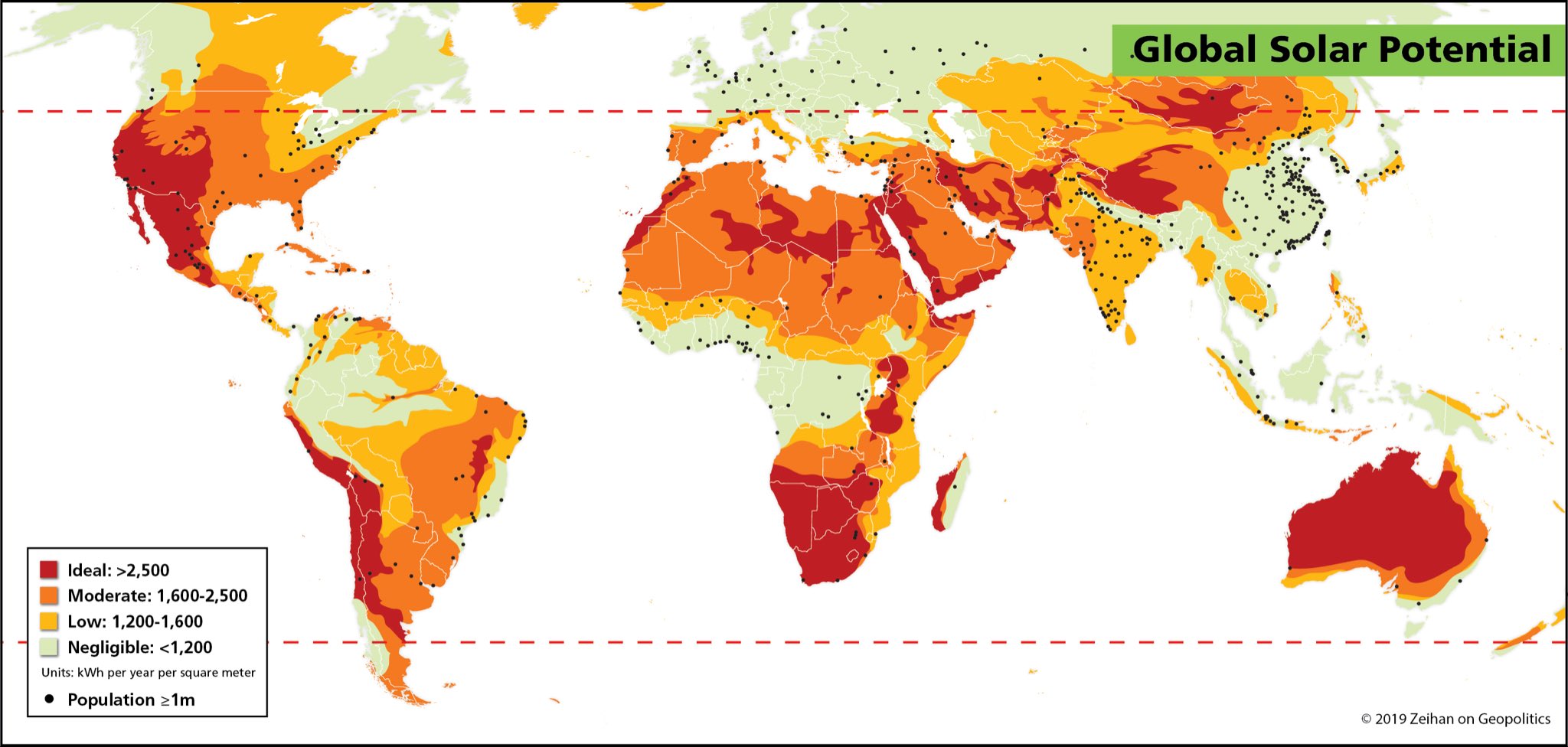
> A recent investigation into the world’s largest carbon standard found that 94 percent of its rainforest offset credits did not actually contribute to carbon reduction.
When I looked at the offset market in the past, I realized that it was one of the few markets where both the buyer and seller are perfectly happy with fraud.
- The buyer is motivated to seek the lowest cost offsets they can find. They're not paying for the cleanup - all they need is the offset document itself, often for legal purposes.
- The seller is more than happy to take the buyer's money and spend it on looking like they're doing something. The rest is free margin.
Neither side remotely cares about the underlying activity behind the offset, and neither side is really penalized if the underlying activity is fraudulent. In fact, both sides are actually better off if the whole thing is fraudulent! I can't think of many other markets where this dynamic exists.