It will be interesting to see how Lyft's partnership with Waymo evolves given this tech announcement and Waymo's acknowledgment that they plan to offer their own ridesharing service.
Lyft's approach to self-driving partnerships in general seems to rest on the assumption that self-driving providers will catch up to each other before any of them can fully handle everything a human driver can do. If this assumption is correct, Lyft ends up in the great position of being compatible with all major self-driving providers before any of them can feasibly launch a standalone service without Lyft's driver network (who wants to take a car service that doesn't take you downtown? Or doesn't work in the rain?). Ideally, this means Lyft can negotiate favorable terms with all the providers and maintain their position as marketplace brokering between riders and ride providers (either human or robot).
But, if this announcement means Waymo is truly way ahead of the competition, is Lyft aiding and abetting its own demise by covering Waymo's short-term holes (weather, urban areas, etc) up until the day that Waymo can cut Lyft out and run their own service? If Waymo is the only self-driving game in town, and they solve the urban case, why do they need Lyft? I wonder if we'll see any tension develop between the two if leadership at Lyft starts to get concerned about this scenario being a likely outcome.
If you are a pessimist about autonomous being bigger part of transpiration then add 2 years to DATES shown below.
2021 : Electric Self-driving on-demand FLEET Car 1000 miles/month SUBSCRIPTION from Google, DiDi, Uber, Renault/Nissan,Tesla, VW,Toyota,GM for $400/month
At $200/month Subscription price for 1000 miles/month (which is average US driver car mileage/month), savings are so big as average car ownership is around $400/month ( AAA Estimate ) , all inclusive of
- Car depreciation
- Insurance cost
- gasoline cost
- Repairs & maintenance costs
- extra 1 hours/day you get in NOT-Driving
(EDIT: This Model I mentioned is Summon only, there is NO OWNERSHIP of the Car, is it monthly pay instead of per RIDE Pay .
In this Model, All the Major CAR Manufactures of today offer these FLEETS with monthly pay of 1000/miles month SUBSCRIPTIONS.
Being a) no-driver Cost b) ELECTRIC c) RIDE Sharing d) mass adoption -- is the key for Lower price tag of $200/month
)
The above is Phase 1, in Phase 2 starting 2025 Google will be supplying only "end-to-end Autonomous vehicle Software system" for a fee of $5000/year per car for ALL the CAR FLEET companies .
Google will run small FLEET of Autonomous CARs for the purpose of "Reference implementation of Software" much like "Pixel Android Phones" to showcase the Reference implementation of Android ( for all other Android Vendors )
I still think that proper self-driving cars are such a paradigm shift that predictions of how it will work are still up in the air.
For example, right now I live on the west coast and my parents live on the east coast. 4 kids, Minimum of 40 hour drive or $3500 flight.
Here's one tiny example:
I can work remotely for a few weeks and my boss doesn't mind. The kids sleep for 8+ hours at night. Friday, Saturday, Sunday, Monday nights driving for 12 hours (mostly sleeping) means I am at my parent's house on Tuesday and I either take Monday as vacation or work remotely from a friend's house in Ohio. We see friends in flyover country that we rarely visit or see national parks on Saturday and Sunday.
I can now take the whole family to my parents taking just 2 days of vacation/remote for the trip, for only the depreciation cost on my car. Car trip isn't too bad because the kids are awake for a total of the running time of 6 movies.
Car usage will go up by an order of magnitude because a major cost of driving isn't the dollars, but the time.
> Car usage will go up by an order of magnitude because a major cost of driving isn't the dollars, but the time.
This is why I think self driving cars will make traffic worse, not better. The more comfortable it is to be inside a car and the less people mind long car rides, the more people will drive (self driving or otherwise). If road infrastructure is the same, that necessarily means a much higher density of cars on the road. It's possible that self driving cars will be more space efficient on the road, but ten times more efficient? I think it's more likely that there will just be way more cars on the road and traffic will worsen considerably.
To detail one particular addition of traffic to the roads: students - with self-driving cars, students from K-12 may much rather want to have the independence to hop in a car rather than ride a "stinky school bus". Parents may end up loving it, especially those who already drive their kids to school. And I'm sure the school districts would love self-driving cars, because it means they can pass the travel expenses onto the parents to pay for those cars, instead of having to buy tens of millions of dollars worth of buses, pay bus drivers, liability and insurance, gas, etc. (where I grew up a single school bus cost the district over $1m; we had a fleet of maybe 40-50 buses)
In my home-town of 30k people, nearly 2,000 of those are high school students alone, plus probably another 1,000 elementary school kids, and maybe 800 middle school. No doubt they'd all want to use the cool tech to ride to school instead of taking the school bus. Add 4,000 more cars to the road please. (And as for ride-sharing, that may be fun once in a while, but why do that when I can get an entire entertainment pod all to myself?)
The self-driving platform will financially nudge you in the right direction.
Currently Uber charges more during rush hour.
It's rather obvious that self-driving operator will implement similar price discrimination e.g. $10 if you drive alone, $5 if you share with one or more people.
And the more they want you to share, the bigger the surcharge e.g. if $10 vs. $5 doesn't have desired effect then maybe $20 vs $5 will.
It's a win-win during rush hour (operator makes much more money from the few people who don't care about money and minimizes over-all traffic by packing more people into a single car).
Still, traffic will be worse when you compare one bus with 50 people vs. 12 self-driving cars with 4 people each. A bus is 14-15m long, whereas even a small car like the Chevy Bolt is over 4m. So parked bumper-to-bumper the cars produce >3x as much traffic, and then you add some gaps for actually driving you're up to 4x.
Personally I'm very skeptical of both the claim that a) self-driving cars will see huge adoptation at the cost of car ownsership and that b) self-driving cars will give less traffic, less pollution and be significantly cheaper than owning a car.
On the latter point, we have basic economic theory: say the average American today spends $600/month total on owning a car. Why would anyone price a self-driving service at $200/month? No, they'd go for an initial price of $400/month for a couple of years to get customers, then sneak back up to $600/month once they've caught most of the market.
> On the latter point, we have basic economic theory: say the average American today spends $600/month total on owning a car. Why would anyone price a self-driving service at $200/month? No, they'd go for an initial price of $400/month for a couple of years to get customers, then sneak back up to $600/month once they've caught most of the market.
That's assuming a monopoly.
> Why would anyone price a self-driving service at $200/month?
Because if they priced it at $400 then a competitor could price it at $300 and make more money.
No, that's not what happens. This is a classic situation with a stable Nash equilibrium where the best for all competitors is to keep the price high. They know the current price is affordable enough that people will keep paying.
Think about gasoline prices back when crude oil prices suddenly fell off a cliff. Did gas prices at your local station drop? No, not one cent. All of the competing stations kept the prices roughly where they were and raked in increased profits.
> say the average American today spends $600/month total on owning a car. Why would anyone price a self-driving service at $200/month? No, they'd go for an initial price of $400/month for a couple of years to get customers, then sneak back up to $600/month once they've caught most of the market.
In year 2000, in order to run a medium web site as a company you need 2 Servers one for each Database, WebServer. People bought each server box for $5000 and server capacity used is only at 15%
Come to 2012, Amazon AWS charged for the same Servers only $40/month .
Amazon know It costs lots for website owners, why they offer all the server capacity for $40 ???
VPSes did not exist as a commercial product in 2000. Back then you likely purchased and colo'd your hardware or leased from a provider. You could get shared hosting with CGI access but that was about it.
Shared hosting (with PHP, mod_perl and SSI) was available from thousands of providers for between $5 and $25/month. SSL required a dedicated IP, because SNI wasn't a thing yet, and so if you wanted an SSL enabled site, you were looking at closer to $100/month. But that was for managed, shared hosting, typically with access to a database and automated backup. Good enough for most businesses small-ish web presences.
Rackspace offered dedicated servers for $150/month and up. Smaller providers would rent you a server in their datacenter for around $60/month. I used a company called sagonet in the early 2000s that is still in business and still offering a similar service for about $30/month: http://www.synergyisp.com/dedicated-servers/
Most larger companies at the time contracted with a colocation provider and purchased servers for between $1000 and $4000 each, and paid in the neighborhood of $1000/month for a rack, or $500/month for a half rack, including power and network.
This was monumentally cheaper than the AWS based stack we have these days, though - no company with any complexity to their website has a $40/month AWS bill. A company with a similar SAAS offering to what I ran in 2001 for $40K up front and $500/month is probably looking at a $5000/month AWS bill at today's rates.
So parent's logic, as I was expecting, doesn't necessarily apply. We just started wanting more from our cars, we didn't necessarily make them cheaper. There are very cheap cars but most would consider them death-traps...
I imagine a self-driving car packs a ton of servers, I'm not sure it can be cheaper than your average mid-range car...
The only way I see limiting the impact of traffic increases on self-driving cars is for municipalities to pass laws ahead of time limiting the amount of self-driving cars on the road to a specific number, much like Singapore [0] (or tie it to a percentage of the town population, say 10%)
A town could say, for instance, "we will only allow 3,000 self-driving cars to be actively driving within our borders". If transportation needs are not met, then it's time to start thinking about other improvements like walkability, biking, buses, etc. Realistically though, this would never happen in the United States. Either people would sue to get that law repealed, or every time the cap was hit those in charge would just raise it to keep their constituents happy...
Without strict agreements ahead of widespread self-driving car adoption, I think it's just going to be a free-for-all with lots of car companies freely pushing their products into towns, and the people of course are going to welcome it.
Someone said a few weeks ago that buses that run very often on the same route is just a very expensive train.
I think for self driving to realy work well, we have to ban humans from driving (and perhaps make it a felony to interfere with a self driving bus the same way we cover assault on a bus driver).
I thought it would be easier to implement self driving trains than to implement self driving cars. Who is working on that?
Roads are dirt-cheap (pardon the pun) compared to rail: first off, a road requires an order of magnitude lower precision, can scale significantly steeper grades, and allows for curves and stopping distances that on rail would be considered insufficient. Next, operating it is a dark art in itself - scheduling, communication, safety, etc.; a highway through nowhere just needs asphalt and it just lays there, a railway needs active elements. And to top it off, there's maintenance: a 2-inch bump in a road is normal, in a railway it's a major defect. Worse, rerouting around a closed section is not a simple matter of setting up traffic cones.
All of that is expensive - like the difference between 80% and 99.9% reliability.
Wouldn't the route inefficiency compensate somewhat for the rider efficiency of the bus? If you break one bus route that snakes around town hitting a dozen or more stops with 12 cars each hitting one or two close together stops and going direct to the school, you've potentially saved some driving mileage and certainly decreased the amount of time the kids are on the roads. Dependant on timing, this could be used to like traffic impact.
Why would the self-driving car vendor charge $20 if you ride by yourself or $5 if you share with one other person? They'd be getting less revenue for a longer, more time consuming trip due to the need to pick up and drop off the 2nd passenger.
I could see them charging something like $10 for one person and $7 each for 2 (which is close to actual Lyft pricing). That way they give a price break to the user, while they themselves also make more money, so they have an incentive to offer that pricing even if the trip takes longer, or they can't find a 2nd rider.
> where I grew up a single school bus cost the district over $1m
What? Per year or once? If per year I wonder what amounts of corruption must be going on. A simple 31-seater bus from Mercedes costs approx. 285.000€ to buy new (https://www.busplaner.de/omnibusmagazin/omnibustest/10035/Me...), which means over a 5y life it's 57k/y... add the same for insurance premiums and the driver, and still I can't get anywhere close to that figure of 1M/bus per year.
In the US, school buses are typically 70-80 seaters; when I was in high school ~4 years ago, I rode a Blue Bird Vision (https://en.wikipedia.org/wiki/Blue_Bird_Vision). These will get around ten miles to the US gallon of diesel and cost around $110,000 US. The lifespan of these buses is typically around 20 years; each school day, they might be driven a hundred miles or more. $1m over 20 years seems reasonable.
I live near an elementary school and I seldom see school buses on the road in the morning, even if I drive in front of the school. I do see fleets of SUVs. The question is, are these cars dropping off kids because the kids like it or because the parents like it? Is it because of class/status or stranger danger? If it is stranger danger, is the parent going to entrust their kids to multi-passenger Lyfts? Or even to single-passenger Lyfts?
If it is class/status, what is the view of a public conveyence like Lyft vs the personal car?
Our city in it's infinite wisdom doesn't have public school buses except for special needs kids. So everyone drives their kids to school unless they are close enough to walk (most aren't). The school district uses full size buses for the special needs kids. It's insane. I'd gladly pay higher property taxes, or even a flat fee to have school buses.
There is no shortage of Uber, at least, outside any fancy place that serves $16 cocktails at closing time. And they already have nicer cars for those who want to pay more
And if the cars are self-driving, the school doesn't need parking. The kids can be dropped off and the car will drive itself home. Of course that means a doubling the total number of physical trips, but that isn't the school's problem.
I'm waiting for the ability to, rather than pay for parking, have my car circle the block while I eat lunch. The cost of running an electric vehicle for a few hours is far less than paying to park.
The "drop off lane" at my local elementary school is already a 30 minute traffic jam, and that's with parents in the cars hurrying the kids along and school staff directing traffic. You think a robot car is going to get a kid out of a seat with their backpack and lunch faster than a parent? The pick-up line is even worse, as the kids are individually dismissed after the driver has been authorized by the school staff. The current breed of self driving cars would flip out trying to navigate an elementary school parking lot with kids running all over the place and crossing at random spots. The idea of a robot car delivering my kids to school so I don't have to is appealing, however I can't imagine a worse application of the technology, given the reality of the situation.
Yeah, forget autonomous vehicles having to cope with snow/ice etc, if they can deal with my schools parking lot at the start and end of the day, they'll be able to handle anything.
> self driving cars will make traffic worse, not better.
I definitely see your logic towards higher density with things like 'office cars' so people do more travel. Or sleeping cars but that would be outside typical peak hours. But would self driving increase volume that much? Possibly if people stopped getting trains/busses but this should be remain cheaper and faster via priority lanes most cities have.
Also in general;
Freeways; most traffic jams are caused from someone breaking and then the next person breaks a bit more and so on creating a jam. With self driving car the computers will be able to talk and do a 'everyone accelerate on this mark' and get the flow happening even on very crowded roads. And ideally accident reduction that often creates traffic jams.
Cities: Algorithms will start making little efficiency improvement to driving. All the little things like removing unnecessary lane changing. People double parking to drop something off. And like those futuristic car intersection scenes where cars dont stop at lights but all go through an intersection from every direction reducing traffic back-ups.
We will need to make rules to adapt and keep the flow, e.g. stop people have cars driving around the block rather than parking. Ensure we have 'road neutrality' so the wealthy dont pay a premium for faster trips where other cars in the fleet move aside and slow everyone else type deal.
Anyway, I dont profess to know the answer. Its all a guess! I do suspect the benefits will outweigh additional trips people might take. Besides, who knows, maybe by then we'll have the 'Boring company' or equivalent making private roads so only the plebs use public roads anyway....
> With self driving car the computers will be able to talk and do a 'everyone accelerate on this mark'
This won't even be necessary as the self driving cars will have vastly superior reaction time when compared to humans. Especially if the cars are electric and thus have almost instant power to the wheels.
Especially if you use tricks like radar underneath the car in front of you so you can react to what the car one car ahead of you does etc.
Also a lot of the highway traffic jams are caused by too small distance between the cars. A self driving car should be much more efficient in keeping enough distance between the cars to keep up the flow.
> But would self driving increase volume that much?
Absolutely. Not even accounting for induced demand, you'll see ~30% more vehicle-miles due to empty-vehicle repositioning.
As you say, accelerations and decelerations can be synchronised, accidents reduced, and standing wave behaviours eliminated, all of which will indeed help traffic flow more efficiently. But this is not by any means enough to compensate for empty-vehicle redistribution, much less induced demand.
> And like those futuristic car intersection scenes where cars dont stop at lights but all go through an intersection from every direction reducing traffic back-ups.
That's only possible in environments where there are no pedestrians or cyclists -- eg., segregated motorways/freeways, which already have no intersection conflicts. At best it represents a space saving, not really a time saving.
> This is why I think self driving cars will make traffic worse, not better.
Yeah, of course self driving cars are going to make traffic way worse! Who even thinks otherwise? Suddenly you are going to have millions of disabled and homebound seniors wanting the cars to take them to do grocery shopping and errands, kids being driven around to and from from school and practice, and low income residents sleeping in their cars commuting to work in higher income areas of the country. Self driving cars will make traffic exponentially worse.
another climate apocalypse... 'cos even if all of these cars are electrical, they still need quite a lot of energy to be built and, after a while, destroyed...
One mitigating factor for that is that service cars will have much higher duty cycles (80%+?) than private cars currently do (5%).
What might be interesting is how they deal with peak usages like commute hours. Would swarms of cars try to hop over to the next time zone when it's easy?
I feel the same way but I feel a little guilty for feeling that way. It feels like saying climate change will get way worse if poor people can afford to eat beef (because cowd fart and stuff).
You are absolutely right, and this is not widely understood yet. I expect people to live farther from work and spend more time in cars and in traffic. On the other hand, need for parking will plummet and that should free up a bunch of space in cities, increasing density. I wonder if there is money to be made betting on this in the markets? Which companies will benefit, or lose, from these shifts?
that’s very true. i read somewhere that something crazy like 30% of traffic in city areas are people looking for car parking. don’t have a source on it, but the parking situation definitely shouldn’t be ignored, at least as far as the most built up/problematic areas are concerned
> i read somewhere that something crazy like 30% of traffic in city areas are people looking for car parking.
Without a source, this is just a made-up statistic, i.e., worthless.
Here's a source for you, though [1].
> Sixteen studies of cruising behavior were conducted between 1927 and 2001 in the central business districts of eleven cities on four continents (see Figure 1). ... About thirty percent of the cars in the traffic flow were cruising for parking. The data varied widely around these averages, however; on some uncrowded streets no
cars were cruising, while on some congested streets most of the cars were cruising. Cities have changed since these observations were made, and the data are selective
because researchers study cruising only where they expect to find it.
If we have self driving cars the roads in cities will get a lot wider as no side parking in many streets many 2 lane or 1 lane would become 3 or 4 lane streets as well. Would allow for dedicated bus lanes as well so traveling by bus could also become a lot faster.
If we have self-driving cars that aren't parked the same way as human-driven cars, but instead drive unoccupied to park somewhere else, then the extra space from reduced roadside parking will largely be occupied by extra traffic lanes to accommodate the added deadhead traffic.
I agree that traffic will be "worse" in some sense, in that there will be more of it. But maybe not "worse" in the important sense of how annoying it is, since we won't be consciously piloting a machine through it.
Instead we could be sleeping, playing video games, working on laptops, etc.
I think that vehicle design will shift a lot once we start optimizing for these new use-cases, and this might make a big difference to how tolerable road journeys are.
Agree that it's going to be harder to predict, and probably dependent on the individual.
When it comes to commuting in the Pacific Northwest, for most of the year an extra half-hour of available daylight at the end (or start) of the day is the difference between getting out climbing during the work week, or not.
Personally, I'd trade a comfortable commute for that extra time, no question. Of course, maybe a self-driving car could allow for working during the morning commute, and getting off earlier... Hmmm.
The economics of self driving cars make any such assumptions sort of up in the air.
Maybe self driving car fleets will be so numerous, they will optimize via carpooling in busy urban pockets.
Maybe people will stop driving there own self driving car to work and use these.
Maybe people will own/ride in really small self driving car that network to optimize and self park.
> The more comfortable it is to be inside a car and the less people mind long car rides.
This may not be generally correct. People also like to commute quite a bit by rail in certain areas. Living on the east coast I can tell you this because of #of people using NJ Transit and Amtrak is big. Cars take much longer to get to NYC already. Commuting to city via subway trains is so that there is shortage of housing right in manhattan where no one goes by cars.
Traffic might be worse, initially, but once people are okay with sharing seats in a van, you might see a massive rise in ad-hoc ride-sharing/carpooling. These services know where you're getting picked up and where you're going, so there's no reason that can't route close vehicles/riders designating as okay with sharing to have a higher rider ratio per trip. Even with increased total per-person trips, we might be able to achieve a relatively low per-vehicle trip increase.
Couple that with the ability to reclaim a lot of space designated for parking, and forward thinking cities might make themselves much more walkable as well.
That's going to be a long wait in the US! People would rather pay 10x to sit in their own luxury bubble in traffic and have everyone see how fancy their luxury bubble is vs. /gasp/ sharing it with others. Most people here don't want mass transit, they want their big truck / SUV to haul 1-4 people ("it's safer for my kid").
> People would rather pay 10x to sit in their own luxury bubble in traffic
I think it has a lot less to do with the bubble factor than the fact that public transportation in the US just sucks, period.
My 3-mile commute from Menlo Park to Palo Alto would take
- bus: 58 minutes (2 minute walk from home to bus stop + 12 minutes average wait for ECR bus + 10 minutes on ECR + 12 minutes average wait in Palo Alto Transit Center for bus 22 + 15 minutes on bus 22 + 7 minutes walking to work)
- train: 51 minutes (4 minutes walking from home to station + 30 minutes average wait till next train + 5 minute train ride + 12 minutes walking to work).
- running: 35 minutes end to end
- bike: 15 minutes end to end
- Uber: 13-20 minutes
- driving: 8-12 minutes
I bike, but I can see why others would drive. Public transportation is basically defunct here. I can run faster to work than taking public transportation. That says something about seriously how bad it is.
I live in a UK city with fantastic public transport options, and I would get to work faster by taking public transport than by car about 90% of the time. And yet I still drive, because I just don't like sharing the space with strangers, I can sit in comfort at the temperature that I like and listen to music/podcasts that I want without using headphones. I'm pretty sure I'm not alone in this.
Typing this as I exit the world's fifth best public transit system: the exact same sentiment exists here - for a commute of 45 min by public transport, 120 min by bike, and 90 min by car (morning traffic+cruising for a spot), people still pick the car option, as it's "more comfortable".
So, while the efficiency of public transport might be a concern, car-as-a-status-symbol seems to be near-universal.
I use the 3rd best in the world and I dunno, sometimes at the end of the day or end of a long-haul flight you're really tired and you don't want to jostle for a comfortable place to stand on the tube. I'd understand why people prefer getting a cab in such a situation.
I do understand and do have those use cases, but aren't they exceptions? Moreover, I was referring to driving, not taking a taxi (perhaps I should have been more clear). What I meant was "driving my own car is my primary, everyday mode of transport, regardless of congestion: hour and a half there, an hour back, never mind that I could have made the round-trip an hour faster by public transport. I'd rather be dead than be seen on the tube, EVER."
People certainly pick a car anywhere, but in areas with great public transportation the percentage who do is greatly reduced, even if the reasons why those that do remain largely the same.
>train: 51 minutes (4 minutes walking from home to station + 30 minutes average wait till next train + 5 minute train ride + 12 minutes walking to work).
Do the trains really not go on a timetable there, instead arriving completely randomly?
- The signs about which train is actually arriving are frequently wrong, resulting in boarding the wrong train
- The time I need to be at various destinations is fairly uniformly distributed. with a bike I can just leave for work exactly 20 minutes before my first meeting, allowing 5 minutes to freshen up.
Okay, so instead of waiting at the platform 30 minutes, it becomes waiting at my destination (e.g. restaurant, office, whatever) 30 minutes for everyone else to arrive or for the meeting/event to start because it is unprofessional to arrive late, so I must arrive 0-60 minutes early, dictated by the train schedule. Doesn't change the fact that I have to waste 30 minutes on average either way.
In many cases, running, biking, driving would all waste less time because I can leave on-demand, even if the actual transit time takes longer.
Public transportation needs to be either frequent enough (e.g. Tokyo, Hong Kong, Shanghai, New York, etc. where rush-hour trains arrive about every 1-2 minutes, non-rush-hour every 5-8 minutes or less) or on-demand (e.g. UberPool, autonomous cars) to cut the time waste.
That implies 1) the train or bus arrives and leaves at the station exactly according to the timetable and 2) you get from home to the station exactly according to the estimate.
In my limited sample group of one (1), these are rarely true.
The train usually doesn't arrive exactly on time where I live, but delays aren't so bad that I have to wait 30 minutes on average. And if it's a 4-12 minute walk to the station, as OP says, I'm sure they don't need a huge buffer to get there on time. Personally, I just make sure I have a five-minute leeway and I'm good.
There certainly must be places in the world where trains are so unpredictable that the average delay is 30 minutes, but (not having been there, I should say) Menlo Park and Palo Alto sound like places where trains should be a bit more punctual than that?
Not all trips are to and from locations on specific timetables, such as work. Sometimes you want to go from your house downtown, or some other location. There's still an average wait of half the train interval time. You can wait at the train station, or wait at home and travel closer to the arrival time (and hope you don't miss it), but there's still a wait involved. Sometimes you can effectively use this time, sometimes you can't. Acting like it doesn't exist isn't useful though.
I think that depends quite a bit on the people in question, and quite a bit on what types of vehicles come to market to support this usage. Compartmentalized vehicles with shutters of some sort might find quite a bit of use. People that don't own a car and want to get around cheaply might find quite a bit of use. Designated child-only vehicles for school shuttling might see quite a bit of use. A small stretch vehicle with lots of doors would be perfect.[1]
Road Traffic won't worsen as you mentioned, let me explain why ? Increased capacity utilization.
I assume, you are a technical person. If you look back at year 2000, In a typical IT company there is a server Box for each category. A Database server box , a WebServer Box ( physical machines ) etc.. very few people used viruvalization etc.. Physical Machines capacity utilization is around 15% .
Come to 2017, with Amazon AWS cloud is providing on demand servers to thousands of companies, all of them TIME Sharing tens of thousands of Servers.
Same thing applies with self-driving cars. Higher utilization by ride sharing leads to FEWER cars on the Road.
Today average occupancy in a car may be 1.3
with Self-driving RIDE sharing, if it goes to 2.6 that is HALF the CARS on the ROAD compared to today.
Doubling the average people in car from today is much EASIER, since that BEHAVIOUR of Sharing is tied to FINANCIAL gains to people. If you ride by yourself , 1000 miles/month SUBSCRIPTION cost is $500 vs. If you Share it is $200/month, that motivate people to SHARE and leads to LESS cars.
OP's probably referring to induced demand [0], or something similar to Braess's paradox [1].
But I see your point though. If people are incentivized to share a car then that might reduce the load.
That said, my suspicion is, once you take the driver out of the equation, you can do so much more than just ferrying people. E.g courier/shipping services, or mobile food stalls (food truck that sells food while moving on the highway, once engineers figure out how to safely and autonomously speed match two cars), etc. The induced demand may be greater than the savings from ride-sharing.
Yes, the financial incentives for sharing the RIDE , coupled with Induced demand make Autonomous cars so cheap like $200/month for 1000 miles/month SUBSCRIPTION, the adoption goes exponential at this point .
I will give you one great example of 'Exponential adoption' happened in recent history of technology.
In the year 1998, at the early days of Internet, we used have only WIRED Broadband Router. Everybody has a 100 Feet CAT 5 cable in the home, when you need to connect a different computer/laptop you change that CAT 5 to that ROOM from Router. 100 Feet CAT 5 wire used to cost $75 those days.
When Wireless ROUTER are released in the next 10 months, at the cost of $100 every body bought, it is no brainer instead of Buying couple of CAT5 100 Feet wires which each cost $75 and still inconvenient .
In my memory this is the most RAPID adoption in a matter of one year , whole USA moved to Bought WIRELESS Routers.
Same thing will happen with , Electric Self-driving on-demand summon CARS where it costs $200/month using it any time vs. owing CAR costs $400/month ( insurance , Gasoline , etc.. )
You're ignoring the time cost (or assuming that other people don't care) -- if the ride takes 20 minutes by myself or 30 minutes by the time the car finds another passenger going my way, and then takes an earlier exit ramp to drop off that passenger, next time I'm not going to select the shared ride option.
That's the only thing that keeps me from using something like Uber Pool today -- I don't want to spend extra time picking up/dropping off another passenger.
> The more comfortable it is to be inside a car and the less people mind long car rides
There are places with comfortable public transport today but it seems most prefer would prefer a 40 minute drive than a 1 hour train ride even though it frees up their time.
> it seems most prefer would prefer a 40 minute drive than a 1 hour train ride even though it frees up their time.
A train ride frees your time up less than an autonomous car ride because on a train you have no personal space. You always have to be aware of people around you and where your own belongings are, watch for your stop, etc. In a car you can focus on whatever you're doing.
But will it be worse than taking public transportation?
In my experience Public transportation sucks. It's fine for getting around locally, but is terrible for commuting.
For a short 3 month period I found uberpool to be far superior to taking a train. Some days it cost a dollar more. Some days it cost less. The travel time was pretty much equivalent plus it was more comfortable.
I hate driving in rush hour traffic but as a passenger I didn't mind.
You are probably judging public transportation from an American point of view. The vast majority of public transport systems in the US are greatly under-developed compared to what is done elsewhere. A small European city such as Toulouse has orders of magnitude better public transport than Los Angeles or San Francisco for example.
Camper-van, pick-me up at the office (London) on Friday evening, by Saturday morning we in the highlands of Scotland.
It sounds silly - but the more automation the more I want to spend within my fictional camper-van. Soccer away match - no problem. Trip to the beach again, overnight.
It is like an sleeper train - only more comfortable and spacious, as it would be my families camper-van.
>Camper-van, pick-me up at the office (London) on Friday evening, by Saturday morning we in the highlands of Scotland.
I just want to point out that there is a pretty decent sleeper train that departs from the center of London and will have you wave up in the center of Glasgow. You'll have a full-size bed with sink, toilet etc. and a dining car and a bar if you want to avail yourself. Tickets are pretty cheap too.
I get the impression that people who make this sort of comment have never ridden a night bus with beds.
It is in no way comparable to a sleeper train, which rides on relatively smooth, straight rails and isn't constantly swerving about and dumping everybody on to the ground. You need to "sleep" in this tensed up position where you're wedged in between ends of the bed using your core to keep you in place.
On the sleeper buses in China, you'll often see people standing in the aisle, getting a rest from "sleeping" while building strength for another bout of it.
So yeah, you'll get to Scotland the next morning. But next time you'll take the train and rent your van at the station.
It's really sad that the United States has let passenger rail deteriorate to the point that people are forced into this situation. Really, really poor foresight.
Passenger rail in the United States probably doesn’t have the same economics as the other places you’re thinking of. I recently drove across part of the country, and it is shocking how much space there is with absolutely nothing there. There is a 100 mile stretch of I-80 without cell service or signs of habitation. If you live in a city, it’s easy to forget that the United States is much, much, bigger than Europe or Japan.
Logistically speaking, empty places are really, really easy to build rail through. (Politically they may not be).
These rail networks already exist, but they are often not dual line, aren't engineered to support fast trains, and there aren't passenger rail options that utilize them. All of these factors are due to consistent under investment because of chick-and-egg and political problems. It's a real failure of national investment.
You can Google around but the cost per mile of new railroad track is comparable, if not a bit less, than interstate highway. And there are _tons_ of miles of interstate highways.
You can have way more passagers on a highway than on railroads though. Capacity wise cars are the better choice because its a continuous flow. Plus, they get you where you need to be, not just where the track stops.
A typical freeway lane today can carry around 3600 passengers per hour. Reduce the headway between cars to 1 second and put 4 passengers in every car and that goes up to 14,400 pax/hr
However, run a heavy rail line and run trains every 3 minutes, and it can carry 54,000 pax/h, or 90,300 pax/hr crush load
Even in Japan where trains are tightly operated, you don't get trains every 3 minutes (talking about long distance trains, not metros). At best one train every 15 minutes on average between peak hours and more calm periods. That divides your capacity by 5 already, so you are now at around 10 000 passengers per hour with your trains.
Add to that that freeways don't have a single lane, but usually at least 2, if not 3, according to your numbers you get 7000~10 000 passengers per hour with cars.
Now consider than most of the trains are not running full, and don't run at night at all between 10 pm and 5 am, and you can clearly see that there is an inherent advantage in terms of flows towards cars (since traffic never stops) per day. Plus you have mass transportation on freeways with buses, too.
And still the major advantage of the car is that you can stop exactly where you want to go. The train may get you from A to B, but most people want to go to C, D, E or F and not just B so trains are always a trade-off unless you have a very standard route every single time.
And I'm not even talking about cost yet. For passengers, trains are way more expensive (even in Japan, where trains are highly developed) than the same trips by car (even though the freeways are heavily taxed).
The OP was talking about max capacity not real world capacity.
Some JR lines run at 4 minute headways during peak times and subways run reliably at 2 minute headways.
No freeway today has has 4 passenger cars running at 1 second headways so you end up with a more realistic 1000 to 2000 pax per hour. Which is about the number of pax you can fit in a single train.
A 3 lane freeway takes up about the same amount of space e as 4 sets of train tracks. And the areas that have heavy congestion are also typically the areas that have little space to spare for more lanes.
The road toll from Osaka to Kyoto is $20. A local train costs about $5, a slightly faster JR train is $12. The toll from Nagoya to Fukuoka is $160 and the drive takes 9 hours. I paid about $165 for a Shinkansen bullet train that took about 3.5 hours. And the toll prices ignore the cost of the car
So your point is that in ideal (not real world) conditions, trains have higher throughput. And in Japan, the cost to a consumer is higher to drive.
A) why should we care about ideal rather than real world scenarios? If the train is only 30% full on average, it doesn’t matter that if full, it would transport more pax per hour. And based on the number of cars on these highways, I don’t think the trains will be very full. If the trains are going to be empty, operating them and building the tracks is probably not cost effective.
B) Without knowing the all-in cost of the two options, comparing these prices is meaningless. It’s very likely the Japanese government sets tolls high enough to incentivize people to take trains. That doesn’t by itself mean trains are a better option... I could point to plenty of places in the USA where driving is cheaper than taking Amtrak. What does that illustrate? That American states pay for roads with taxes instead of tolls? That Amtrak is inefficient and expensive? I have no idea.
Some London tube lines run with <100 second headway, and the highest capacity London underground trains have a capacity of nearly 1200
And my local heavy rail station regularly handles 3-4 trains to the same station in a 10 minute interval. E.g right now there are 3 trains for London Victoria scheduled to leave in a 7 minute period, and that's not peak time.
But, not coincidentally, those areas are the same areas where freeways are at capacity and would benefit from running 4 passenger self-driving cars at 1 second headways.
Self driving cars work well with railroads -- the cars can get passengers from their lower density neighborhoods to the rail stations, and rail can take the passengers to the urban centers where their jobs are. It makes little sense for a self-driving car to take a worker from his suburban home all the way to the crowded urban center where his car either needs to find someplace to park, or join thousands of other cars looking for someone else to ride until it's time to go home.
That's the best part, I think, with self driving services: Coupled with other modes of transport, if we know the start and end points, we can optimize public transport accordingly, and in the meantime your car can take you to the optimal station and tell you which platform to go to and where you'll get picked up for the final leg of your journey.
You can also then optimize to drop people off at stations they might not otherwise pick if traffic makes it more sensible, or tell them to get off a station early/late and pick them up there if it helps the overall journey.
Over the long run it may even fundamentally alter construction of new lines, in that there may be more optimal location of station placements for stations e.g. feeding commuters when you have detailed data on the precise journeys.
This is the opposite of everything I’ve ever read about transportation capacity.
Trains have exceptional capacity. You can make them longer, you can increase frequency. Cars routinely max out capacity in roadways where equivalent area train systems would have vastly more capacity without breaking a sweat.
Once you can easily hail a self-driving car at both ends of the trip, where the track stops ceases to be a problem. You can do that with cabs today, but the cost and convenience aren't where they need to be.
True, the continent of Europe (10.2 million km^2) is larger than the United States (9.8 million km^2), but the context suggests wskinner meant a comparable geopolitical entity such as the EU.
The US covers roughly twice as much area as the EU (4.5 million km^2), which includes most of the countries we're talking about. If we want to add the rest of continental Europe (mainly western Russia), we might also add the rest of continental North America (mainly Canada).
> Passenger rail in the United States probably doesn’t have the same economics as the other places you’re thinking of. I recently drove across part of the country, and it is shocking how much space there is with absolutely nothing there. There is a 100 mile stretch of I-80 without cell service or signs of habitation. If you live in a city, it’s easy to forget that the United States is much, much, bigger than Europe or Japan.
Visit China sometime. Lots of space, lots of high speed rail. The high speed rail is incredibly nice to use, puts airplanes to shame.
What we need is more large metro areas to take trains between. Over here on the west coast, our largest cities are not even what China would consider a tier 2 city.
(To be fair, by Chinese standards, NYC is the only reasonably sized city America has!)
That stretch is I-70 between Moab, UT and I-15 about 150 miles south of Salt Lake City. It's an absolutely breathtaking segment of road. I truly recommend visiting it.
More important difference is that a lot of the empty space in Europe is at its northern and eastern extremes and America's empty space is mostly in the middle (and Alaska).
It takes longer than driving, and a sleeper car is more expensive than flying. The cost is similar to driving for a family of 4, once you account for depreciation on your car.
In Europe, it would be very rare for someone to drive for that long. They would take a train or plane.
Anyway, indeed self-driving cars can be disruptive for long-distance travel, also in Europe.
Suppose you are traveling between two small towns that are hundreds or thousands of km apart. I think the most reasonable model would be self-driving car from town A to nearest high-speed rail station, high-speed rail to station close to town B, and then self-driving car to town B.
Rail companies could sell the ticket for the whole thing, and owning a car for long-distance travel would make no sense.
Your kids must be saints. If I had been cooped up with my parents and sibling as a child for 40 hours even in a large van or RV with robo-Uber at the helm, someone would probably have been murdered at some point :-) As for my adult self, lie-flat seating on planes trans-Pacific is OK but it's still pretty boring. Even if I could work at some level in my comfy cross-country van I'd still take a significantly faster option given the choice.
I think you perhaps misread the post. It suggests that there is only 12 hours driving per day but the kids would be asleep for at least 8 of those. The idea being drive overnight and stop at the next waypoint (see friends in flyover country/national park etc) during the day. I guess the plan being to do interesting stuff when awake and travel when asleep, for the most part.
I suppose as long as you get in the hours you need to as a remote worker and the sleeping is comfortable then this would be pretty sweet for even very long journeys.
It would take a complete redesign of car interiors to something far more comfortable/secure for lying down but no reason that problem couldn't be solved.
>It would take a complete redesign of car interiors to something far more comfortable/secure for lying down but no reason that problem couldn't be solved.
Well, it's solved. They're called RVs. As a kid (or even as an adult), I think I'd still find it being pretty cooped up. It's one reason that I've never taken long-haul Amtrak that I suspect I'd find is more interesting in the theory than in the practice.
I've never been in an American RV, which I know are huge, but still narrower than a train. The ride on a train is usually much smoother than the best road, and of course you can walk around, use the dining car etc while the train is moving.
There are some pictures of various Amtrack train interiors at [1], aimed at tourists. That toilet next to the seat is weird, I think I'd prefer a shared toilet at the end of the corridor. But overall, the US has very spacious long-distance trains.
(I have taken one long-distance Amtrack train, for about 11 hours. The standard seat was as big as a first-class seat in most of Europe.)
Sure. A roadtrip--though that's still a long roadtrip. But if you're robo-pedal-to-the-metal across the country instead of flying you're not doing a lot of adventuring along the way.
A $30,000 car that lasts for 200,000 miles costs you $0.15/mile or $450 one way for 3000 miles (I ignored age-based depreciation, but also didn't account for other costs like maintenance and insurance). At 30 mpg (because a car that a family of 6 can feel comfortable riding/sleeping in for 40 hours is not going to be a compact car), that's around $250 for gas.
So you're at $700, or $1400 both ways.
With advanced purchase, you can get flights from SFO to NYC for $250, so that's $1500 for your family of 6.
I find it hard to get good sleep in a car, I can't imagine having a good experience trying to sleep 4 nights in a row. Nor can I imagine spending 40+ hours in the car over 4 days with the kids, even if they are sleeping a lot of that time.
Using similar calculations, we figured it at about $2k for our roadtrip last summer, so sounds right.
However, flying:
$550 after taxes and fees is the cheapest I've gotten an LAX/IAD roundtrip for in a while, so $3300 minimum for flying.
Parking for 3 weeks is about $200
$3500 is the flying price, and often I can't get tickets for under $600 that match our schedule.
Depending on the 405, it can take 3 hours to reach LAX and park. You really don't want to have to be running through the airport with little ones, so plan to be there 90 minutes before flight. It usually only 4 hours in the air going west-to-east (east-to-west is longer) but figure time sitting at the gate an taxiing means a minimum of 5 hours on the airplane. So nearly 10 hours of travel time.
Issues with flying that were non-issue in car:
We cannot change our schedule even by a few hours without incurring fees with the airline.
LAX/IAD, plus price sensitivity means almost certainly flying United. I'm not paying the economy plus price times six, so my knees are touching the seat in front of me the entire time.
We had a 20 month old, already nervous from flying for the first time fall asleep on the taxi-way with her seatbelt on, resting her head on my wife's lap. The flight attendent insisted she must be sitting up for takeoff. Said child was screaming for the next 90 minutes from being woken up.
kid potty training? Not while flying, since the fasten seatbelt sign always goes on at the most inopportune times.
It's true that none of these were enough to get us to stop flying (having a kid with PTSD was what did that; you don't want to be locked in a box with 200 strangers when he gets triggered), but it was surprising how much less stressful it was even compared to flying before we had him.
Perhaps cross-country will still be niche, but certainly day-long road trips will jump in popularity when nobody has to do the driving.
You also need to calculate the cost for a rental car at your destination when flying. So add roughly $100/day to your total stay. When driving, you save that right away.
This whole discussion is about how self-driving cars will make car ownership unnecessary -- you don't need a rental car at your destination, you just call a cheap self-driving car to drive you around just like you do at home.
He's comparing riding in a fully autonomous self-driving car that will let him and his family sleep at night when he's driving to flying. He's not planning on driving his car 40 hours over 4 days himself, I think the number of people that consider that to be a viable option over flying are very low indeed. I can almost agree with him that a self-driving car would make this viable, but I think he's overestimating how comfortable 4 nights of sleeping in the car on the road will be for him and his children.
When that fully autonomous self-driving car exists, then cheap self-driving cars for car-share will exist.
I don't think it's an edge case: If an operator redesigns the interior of their fleet with large, comfortable reclining seats, long distance travel by road will become much more competitive with business-/first-class air travel. Boarding at my house and being dropped off at my destination and sleeping all the way (or working if you're a telecommuter, or watching movies) is quite appealing to me - the lack of TSA and/or Rapey-scan is a bonus
I've been on long distance buses with large, comfortable reclining seats and convenient pickup/dropoff points for 8 hour plus journeys more than most sane people
I assure you it's not the human driver which means that most people strongly prefer other methods of transport.
I feel like a car has greater potential for comfort than even a "comfortable" reclining bus seat.
For example, right now the idea of a folding bed in a car isn't something you'll ever see as an option, since it would only really appeal to people trying to live in their cars, which probably don't overlap much with the "people who buy fancy cars with fancy extras" market segment. However, in a future where a car can auto-drive you on a long-distance trip, why not offer an actual bed mode in the car as a purchasable option?
Improbable, unless you can handwave terrain away. (And deer. And malfunctions. And...) There's so many things a car can impact besides other cars that a non-seatbelt in a car is far less likely than cars being replaced by some other form of transport.
A closer analogy (rather than a bus) would be human-driven limousine: not bunched up with strangers, door-to-door service (not just "convenient" location). Even that considered, I am yet to encounter a limousine designed for long-distance travel (but that might just be because I'm not rich). Also, the human driver and the associated control interfaces takes up interior space which would have been put to other uses.
It's not about the driver for me - I would hire such human-driven limousine today (for a reasonable cost). I think the costs of finding the driver a place to stay and planning their trips in order for the driver to get home frequently makes such a service impossible today. This problem would go away if the car was self-driven - the service becomes scalable.
Not being rich, I believe from folklore that the rich have this in the form of custom luxury buses. The furnishings seem to be about the same level as those of an RV or yacht but there is more space and a professional driver.
Road travel is very rarely smoother than air travel though. I've actually been to Singapore on BA's lie flat beds, as well as bus seats that weren't far off in basic comfort, and train beds which were much more comfortable and generally smoother than both yet remain a very niche form of budget transport. Taking an order of magnitude longer than air travel means the overland options are still rarely a better fit (the sort of road trip that can be done overnight without interfering with schedules is also a nice short evening flight, and I'm happier emailing on the plane too).
I can see the appeal to some demographics for some itineraries, but can't see people preferring a series of road trips amounting to 40hrs over a 4hr flight being a mainstream market.
I've taken sleeper train services before from Scotland to London. It's cheaper than a hotel and the service leaves at 11pm and arrives at 7am. You get a room with a real bed (and lockable door, sink, toilet, etc.) and a pretty decent restaurant and bar to avail yourself of. You also get to leave from the city center and arrive in the city center, without messing around with security and arriving 1-2 hours before the flight.
The line from travel via auto mated car to TSA style security invasion is actually pretty short.
It just takes one person to decide to go carmageddon and now every car will have weight restrictions, luggage restrictions, then there will be ~~economy cars~~ pods and more.
The moment you start paying for a seat, and the car is owned by someone else, the owners are going to see exactly how LITTLE they can keep in the car, and still get someone to use it.
Unlike flying which benefited from budget airlines, car transport is not likely to benefit more people by going this route.
All this thread is filled with people talking about some sort of benevolent firm wanting to take care of its customers.
The moment the market place hits it's growth plateau, people will be cutting corners to reduce weight, and improve fuel efficiency.
As for rapey scans - they will just expect people to get to a hub, and from that hub pick up their cars.
The hub will have the rapey scans.
The point of the TSA is to make the public feel that something is being "done", post 9/11.
Its a product of fear, not of security requirements.
So you can take it as a bet, that if any of the scenarios come true here - you will eventually return back to TSA levels of security theater.
Because motion sickness prevents a large amount of people from watching movies or doing work in a car, even if you could make a decent enough workspace. The start and stop mode of car traffic is much different from an airplane or even train, and the road surface varies so much by area that potholes would make sleeping, working, or what have you a nightmare.
A lot of this discussion seems dominated by people who don't use a car or understand driving.
Am I the only one who gets car sick when reading or using a computer in a car? Everyone keeps talking about working while on a long commute in a self-driving vehicle. Doing more than 30 minutes of it is not really an option for me.
I think there's going to be a spectrum of motion sickness.
Would happen to me as a teen when we were going down well-made freeways to go to the beach, I had to just watch the scenery go by and ruminate about the lives of the residents of the various districts. Never happened to me as an adult in a plane, even reading tiny low-res screen of netbook. Can't imagine reading on a sailboat, I've got a job to do, or I'm drinking and socializing. No problem reading or walking around on the one cruise ship I've used.
Of course there are individuals out there who can't read or even sit quietly in any of those scenarios without motion sickness.
Yeh things will change... you sorta already see stuff like this in Asia where drivers are common... people have vans with offices in the back and work while their driver takes them to places.
Drivers in Asia are, to my understanding, very common... Idk about the office/van. I just know one guy in South Korea that has that setup and he is rich. He says other people have it but not sure how common it is.
But "executive" back seats are very common on luxury brand vehicles in China.
i never thought about this: you can just fill a car with a bunch of stuff and send it somewhere. makes mailing heavy stuff potentially dumb in some cases, depending on how things price out. also, maybe moving cross country gets easier for the same reason.
The logical conclusion of this may be the self-driving RV as "tiny home". Especially given how expensive property prices are. Laws currently prevent you in some areas from "living in your car", but if you're exempt from that so long as the car is moving? Well then.
"If you are a pessimist about autonomous being bigger part of transpiration then add 2 years to DATES shown below."
I think you drastically underestimate the possible values of pessimism. In my opinion, truly autonomous vehicles driving in arbitrary, real world, public roads in my lifetime sounds optimistic ...
Yeah, having done robotics in the past, I'm super skeptical of promises of level 5 autonomy in the real world, even in the medium term.
I mean, we were able to do level 5 trucks in the desert two decades ago! But the human world is much less benign, and the perception problem is hard. And the history of AI is littered with limited solutions that failed to scale.
So I'm more curious about the purported GM testing of level 4 in Manhattan, it's a much more realistic and far less forgiving driving environment.
I think it might be possible that the subscription fleets that already exist in many cities can be used to "summon" (like teslas can be summoned) a few blocks ro a few miles, autonomously, because they know the area.
That makes these subscriptions much more convenient than having to pick up/drop off a share car in a fixed spot.
The user uses the car for a while in semi-autonomous mode (car can drive 90, 95 or 99% with user supervision) and then the user can return it by letting it drive back. If the car is stuck it just stops and a driver from the fleet company comes along to drive it.
I think a scenario like that could be viable in small scale for some metropolitan areas (good climate, limited user base etc) within 5 years.
I intend to be an early adopter of these subscriptions, but there's a key item they don't overcome: kids. When you have kids you don't just have to bring them everywhere, you have to bring lots of equipment everywhere. Baseball, hockey, football, etc. has lots of equipment that people are accustomed to leaving in the back of their vehicles. Same goes with strollers and diaper bag for babies. I don't know how we'll overcome that, most families will presumably still need to own at least one car. However, many two-car families should be able to downgrade (upgrade?) to one car and a subscription.
I'd bet my left nut that by 2021 there won't be a self-driving car subscription service. I'd be surprised if your average consumer could buy them by then.
If a significant percentage of the population shift to a subscription service where they summon cars on-demand, the benefits to smoothing out everyone's commute schedule will grow dramatically. Ride-sharing will help, but assuming population keeps out-pacing growth of infrastructure in already-congested area, removing individual car ownership and switching to a shared pool will increase avoidance of peak hours. I really see a future in which having most people work 8-5 will become incredibly inefficient, and more work will be done on flexible / rotating schedules (or more remotely).
Which means the little benefit of daylight savings that is there will disappear, which would be awesome. Long-live the driverless car subscription model.
My car doubles as a "everything I need when I take the kid out" storage. We always have:
- diapers
- changing pad
- strollers
- extra clothes
- kids movies for the tv in the van, queued up to where we left off
Sure, people in places like NYC just carry all that stuff with them when they take the kid out, but they also take the kid out less often or move to the burbs because it's a huge pain in the butt.
I'd much rather own the car simply so that I can keep all my stuff in it that I need when I go out.
When I lived in the Metro DC area (Bailey's Crossroads in NoVA) with a 1-2 year old we kept that stuff in the bottom of our stroller (mostly in a single medium-sized bag). We took the stroller everywhere via buses and trains. We very rarely drove our vehicle while living in DC since a couple grocery stores, several restaurants, and several department stores were within easy walking distance (about a mile) from our house. With the stroller, we used carabiners to hold bags on the walk back. For longer excursions (all day to a museum or zoo), I'd bring a backpack with misc stuff in addition to what was in the stroller. Our stroller had a detachable car seat integrated (the car seat set locked into the stroller when using it as a stroller), which allowed us to use taxis if needed.
It's only easier if you know you'll have parking at your destination. If you live in a city with convenient transit service, you don't need to worry about parking.
And if you want to take a long stroll down the waterfront, you don't need to return to your car to go home, you just hop on a different train.
... and someone else mentioned the car seat, too. Always fun!
However: unless you are planning a very large family, this is a transitory phase. I noted as my kids matured the amount of crap you have to lug around drops precipitously. I can't see that many people needing to carry the stuff on the bulky end of this for years and years. I carried my kids sequentially in a back-pack (3 years separation, so #1 was walking everywhere when #2 came along) and managed to fit all the above (aside from movies) into the back pocket of the kid backpack (strongly recommended for the transition to walking, incidentally, as a backpack is almost zero hassle when empty, while a stroller is just as hard to push empty as full).
But back on topic: you could lease a car/van for the Peak Kid bit of your life and still save money.
Yeah I know it goes down over time and then won't be an issue anymore. We did in fact get a van that I plan to keep for Peak Kid.
I fully expect to be using at least one driverless vehicle before they leave to college. I'm just not sure if it will be exclusively a rented driverless car or something else.
For subscription cars to be even remotely usable by anyone with small children, you have to summon a car with the correct configuration of car seats.
Having to install one just won't fly. if you can't get one with the right car seats, it's a no go for a daily use family car. On the other hand it might easily work as a second car in such families. I'll probably need to own/lease my own car for the foreseeable future, but I'd be very happy to not have to own two like I do now. And my requirements for a second car are much simpler.
pfft, made up problems. You will submit to not owning anything. You don't need a house either, just go to an AirBnB every night.
Everything must be a service. Ideally provided by google.
Next thing your going to say is that waiting for 15 minutes in the rain with a crying baby while you get gouged for triple price because of nearby concert is a problem for you. Just suck it up and accept that car ownership is a outdated idea and you need to bow to the will of the tech hipsters and conglomerates.
An entire AirBnB? You're just an opinion-having meatball, there to get adverts screamed into your face 24/7 while you have opinions and allocate your UBI.
There won't be everything as a service, because you won't have anything. There's no need for you to do anything in this fiat-advertising-bubble-money future world. Expect maybe a stream of soylent and a ventilated cage, unless you have pro-tier skills in extracting money from Stanford Prison Experiment 'customers'.
we (people with families), will just create our own zones outside of cities with identical tacky housing that will make childless hipsters go blind. there will be no avocado toast, and the only music will be alternative rock from the mid 1990s
I agree, say now you may have two CARS each costing $400/month ( AAA estimate ) Total cost of ownership ( Insurance, gasoline, Repairs, depreciation ).
Now when some thing is available for $200/month , you won ONE CAR like OLD way ( for Kids etc.. ), and your spouse may use FLEET CAR .
Sure, I can totally see us ditching the second car for a self driving subscription. We barely use the second car as is, but we use it just enough that it's still cheaper than Lyft/Uber. Unless the self driving rental were even cheaper, it wouldn't make sense.
I store tons of stuff in my car so I can have it available at all of the various places I end up, and while I would happily believe I am not in the majority, this does not seem to be something that would be rare. While I don't feel the need to "own" a car (I literally rent a car continually, paying in 30-day cycles), it would be extremely annoying to not have consistent control over most of the storage space in a car (I often even have stuff in the back seat I am dragging around with me forever). And no: while I do love driving, I feel no need to drive, and would welcome a future where the car drove for me... but it will be a much more awkward arrangement to get me to be OK just summoning random cars temporarily.
It would be pretty easy for a fleet service to also provide a bin that you can persistently store your stuff in. When you summon a car, the system puts your bin in before it goes to get you.
I envisage systems of standardised storage lockers, you can pull the whole locker into your car, 4 fit in the car for 4 users, you can wheel them into work, or lock into cabinets around the place, when there's no car parks they'll be lots of free space, 1% can be for storage lockers.
I agree, there are good % of people like you for all right reasons to have a their OWN CAR "same CAR" every day.
There will be different flavors of pricing for needs like yours, like 'Keeping CAR With you'. How about this pricing
Option 1: The CAR will be in serving people 10 streets around your Home, will be available whenever you want but costs you $300 /month ( It will have two Locker boxes in the Truck to keep your Items ALL the time, and your LOCKER BOX opens only with your Smart Phone ).
Option 2: you lease Autonomous car, it is all yours to keep, but the price is like $500/month Lease .
With the following caveat, I'll bite: "Not available in adverse weather conditions or outside service zones". Said service zones wouldn't include anyplace where increased crime is a concern.
The cars would also probably have to be inspected and possibly cleaned between each use...
I'm also uncertain the tech is advancing quickly enough to justify a 5 year timeline. Not to mention ensuring society and the government is onboard with this. It would suck to be stuck in an automated car by a picket line of displaced drivers.
If you just want to steal a car, cities are littered with them. If you want to rob people, humans are also not hard to find. And an autonomous vehicle will have excellent video recording, fast notification of police, and hard-to-disable vehicle tracking.
Weather, though, is a giant issue. Chandler, AZ has 90% dry days and rarely gets more than an inch of rain per month [1], so I think it's no coincidence they've started there. As a Michigander, I grew up driving in all sorts of shitty weather, so it's astonishing to watch San Francisco drivers fall apart in heavy rain. I expect auto-automobiles to be no better.
Automated cars will be better than most of us in these conditions. If you live somewhere that only snows a few days each year, you can't drive in it very well. You don't even have the right tires.
Fleets will change their tires for the conditions and the automated system will be just as good at driving in adverse conditions as it would be if it drove in them all year. The sensors will see things human eyes can't.
I don't know how long it will take to happen, but it's inevitable.
Sure, eventually it will be better. But I wouldn't be shocked if bad-weather automatic driving lagged at least a decade behind what they can get away with in Arizona. It's a significantly harder problem, and much more difficult to generate reams of data to test against.
Worse, the risk shoots way up, and people will be much less tolerant of risks that aren't under their control. "Driver Ends Up In Ditch" is never news in places with real winter. But "Google Almost Killed My Family" sure will be.
Places that only get a few days of snow are typically paralyzed by that snow (schools close etc), so the autonomous cars being paralyzed aren't really a problem in those areas.
But for a lot of northern and central europe, northern US, canada etc where people are used to changing tyres and driving for several months in snow, the autonomous cars will have a harder time.
On one hand like you say, they can see things we can't. But on the other hand, there are zero lane markers, and sensors are typically covered in snow.
For example: I have parking sensors and a rear camera on my car and those are completely covered a lot of the time in winter. I still use my car and just ignore that the parking sensors scream constantly and the rear camera shows the inside of a wad of snow. That situation would be worse for an autonomous car because those sensors aren't just nice-to-have, they are fundamental to to the operation of the car.
Rocks thrown, sensors spray-painted over, side panels (and sensors) graffitied, interiors damaged, forced into stopping and their chassis stripped (or their occupants held up).
And while the police may be quickly notified, they will not be so quick to respond. Ask someone in a big city about the police's response time to their car being vandalized or stolen... Not to mention, all those fancy cameras? Ask a small business owner with CCTV how useful it is to catch robbers.
I think Google providing/licensing the software and tech to other manufacturers is risky and leaves open the possibility for a new provider to slide in and undercut with each car provider. Google should leverage their early position and corner the market where they'll be a sole player and dominate for the longterm.
Let us explore the case of competitor offering software by under cutting Google with low price .
Let us take the established known history of 'Evolution of Android on smart phones'. By 2010 as Android share is growing world wide, everybody know there is big money to be made in FUTURE ( By Ads and other means ) by supplying Mobile OS even at free of cost at THAT time.
But nobody is able to do it, even microsoft with it Billions even after after offering Mobile OS Free to vendors .
Now with self-driving Car software, google with DeepMind, Self-driving Teams hundreds of Deep Learning engineering working and developed advanced Neural nets have at least the edge of few years over competation.
Again in 2025, google will choose to limit as "software system supplier" from the "position of strength" that is
1) Let the FLEET companies compete for LOW MARGIN monthly SUBSCRIPTION FEES and provide high value software
2) By limiting as software players, it treats all FLEETS as equals avoiding the "formation of Consortium of" FLEET & Car Manufactures".
Beyond 2025, both FLEET and Car manufacture will be SAME ONE Entity, With out running FLEET, you can not Survive as CAR Manufacturer as there are FEW "end User Buyers" left as majority start moving to "on-demand Summon Monthly Subscription" pay model .
2017 US new Car& Truck Sales are at 17 Million Vehicles , by 2022 it will reduce to 14 Million, then by 2025 10 Millions, then the decline Accelerates .
Even number of different CAR Models are around 500 worldwide, by 2025+ they should reduce to 100 models and Lots of mergers and shutdown of CAR companies
With Android, Google was able to maintain its influence by the use of the Play store and other external services tied directly to default and popular apps (i'm aware there are hacks to get around certain restrictions within the AOSP).
Those same concepts won't necessarily be applicable to self-driving car tech.. unless Google is able to establish auxiliary services required to support the self-driving network (public monitoring stations, deep mapping, etc) that can further solidify their position while continuing to distribute just the software. This would further raise the bar for competitors to enter the market.
I'm not willing to bet on specific prices or business models but I will bet you $100 that a traveler will be able to take a self driving car from Reagan Airport to The Hay-Adams Hotel on or before Dec 31, 2023.
I love my cars. That being said it took 1.5 hours to drive the 30 miles to work today with traffic down the 17/85/101. I would sign up for this in a second and sell one of the cars.
IMO it's solving the wrong problem. Did what you do at work require you to be there, or could you just as well have done your work from home / a close co-working facility?
As you said, there will be all kinds of Demand pricing.. one example
You will have 1000/miles per month general rate. If you use peak hours 8 AM to 9 AM , then it is counted as 2X miles of real distance etc..
Think it's unlikely that Waymo will build out and operate a full fledged ride service - there's a lot of other factors to work out like scheduling, routing, supply-demand management, optimal vehicle distribution, pooling etc that they could just delegate to Lyft for.
They might just build a service to the extent of push a button and a vehicle will come, and take you where you tap. That's enough to work inside a controlled town environment. As times goes by there'll likely be a merger with an actual ride sharing company.
The thing is these rideshare companies: Lyft, Uber, Ola, Grab and Didi Mechagodzilla Chuxing, these companies all exploded out of nothing, they're all so young.
The software they run on is complex, but not so complex that it can't be replicated.
So if you're a company with the secret sauce, that being a validated autonomous OS, you would most definitely want to run the consumer facing end of the business yourself, because that's where the real profit margins are hiding. Back-end software, fleet maintenance, and harware: this stuff is all eventually going to become commoditized. Customer experience will be the differentiator.
A thing to keep in mind is that a fleet of sensor riddled robotaxis will gather far more granular data about the world than just a standard human driven taxi, so the potential is there to take fleet management logistics to another level that no conventional rideshare can hope to compete with.
Really, if you let your imagination run wild with what can be done with that kind of data about the world, well, oh my gosh. You're building a live action parallel universe made out of networked lidars and running annotated data through pattern recognizers.
The privacy implications would make the hairs on your back stand-up if conceptualizing the astronomical amount of data that's going to kicked around hasn't already made you dizzy. It varies from company to company, but a typical test vehicle gobbles up something in the neighbourhood of 4 terabytes a day. In the future that number will go up. Thousands and thousands of Robotaxis.
The evidence for the real profit margins being in the customer facing bit isn't strongly supported by the current market being so competitive that the companies run at VC-subsidised operating losses in most markets whilst fighting endless legal battles. If the secret sauce that changes all that is the self driving tech, the profit remains all in that. Ride locating software is relatively straightforward for a company with Alphabet's resources to develop, the business side less so, especially when its core businesses are notoriously poor at customer service and making far too much money from an existing search near-monopoly to want to risk attracting complaints about anti-competitive behaviour in new markets. And they could still can collect all that juicy data if other entities paid them enormous licence fees to run the consumer facing bit of an autonomous vehicle operation, maintain the vehicles, obtain permits in 1001 jurisdictions and design cars and ownership models to consumer preferences
Unique, regulated and highly complex software and hardware components seems far less likely to become commoditized than ridesharing apps that essentially already are, and of course viable markets for the driving tech exists even if the driver can't be dispensed with altogether.
I agree those other factors are complex and challenging to develop, particularly for Waymo which has the additional challenge of delivering self-driving tech that works.
But Lyft (and Uber for that matter...) doesn't really have those capabilities today anyway, at least to the extent they will be needed for autonomous fleets. They have blunt tools for supply and demand management, but drivers take on much of the risk in terms of positioning, routing, and deciding whether or not to get on the road in the first place. If Waymo owns their fleet, will they let Lyft have complete control over their assets without some balance or at the very least data to make sure the vehicles are being used efficiently? And if Waymo learns enough about scheduling, routing, etc. to make sure Lyft is using the vehicles efficiently, how much harder is it for Waymo to just run the vehicles efficiently themselves and capture the value of owning a direct relationship with the end rider?
> there's a lot of other factors to work out like scheduling, routing, supply-demand management, optimal vehicle distribution, pooling etc
These things come along the way. If there is a service that's 10x cheaper than Lyft, I could imagine most people would churn to that service. The technology shift from human to completely autonomous driving is so huge that it could just disrupt the current market structure.
Why would a ride service based on autonomous cars be 10x cheaper? It's not like 90% of the current revenue or costs are human labor. I'm not sure the exact ratio of driver labor vs. gas/maintenance/depreciation, but I'm pretty sure it's less than 10:1.
I haven't personally done the math but my understanding is that the current (possibly subsidized) rate for Lyft/Uber is in the $1.00 to $1.50 per mile range. The IRS rate for car usage is about $0.53/mile.
Presumably the cost for a heavily utilized vehicle is going to be lower per mile. OTOH, any commercial fleet service is going to have costs on top of the base mileage cost. (The $0.53 figure also ignores any distance the vehicle might have to travel to pick you up.)
So it's probably reasonable as a back-of-the-envelope swag to assume that, if a fully autonomous vehicle were available today, you could probably undercut a "ridesharing" service by about 50%. It's definitely not suddenly going to be almost too cheap to meter just because you take the driver out of the equation.
I think it could eventually be much cheaper but I don't know about 10:1.
If autonomous cars don't crash, the insurance will be super cheap. If they are electric, then maintenance and operating costs should be very inexpensive.
When cars don't crash, they don't need to be designed to crash, so you can start building the cars out of lighter materials. When the car is far lighter, then the drivetrain can be simpler and energy consumption should be less.
I could see taxis serving city centers that are more like a golf cart than a Crown Vic. So the cars should be cheaper to buy or lease as well.
Some of the same technology that's needed for autonomous driving could be applied to the maintenance and repair side as well. So when the cars do break, I think they could be repaired inexpensively by other robots.
I can imagine all the people involved in the taxi industry being replaced by taxi.py.
All you need next is to build A near B and you can take the person out of the car entirely. They can walk to their destination, and the car can be made out of aerogel and powered by fairy dust and the ride sharing software is simpler, the logistics are easier to manage, wear and tear is reduced, and the companies can have a valuation into the stratosphere.
> I could see taxis serving city centers that are more like a golf cart than a Crown Vic.
Maybe you'll do that, but the net effect would still be a greater migration into the city, because people would be able to have all the benefits of urban living and all the benefits of car mobility, without having to cover the high monthly cost of a downtown parking space.
Just leave your car parked out in the suburbs somewhere, program it to move to another parking space at least once every 72 hours so it doesn't get towed, then call it to come in and pick you up whenever you want to use it.
Using china as an example, taxis (and Uber equivalents) are much cheaper there to use than the USA while non labor costs (gas and cars) are actually more expensive than in the states. So I would guess labor is a large part of the cost, or it doesn’t really make sense. Maybe not 10x cheaper, but half as much is probably reasonable.
50% of rideshare rates with a driver seems like a very reasonable ballpark. There are reasons it might be somewhat more or less but it's probably pretty close. Which means you probably change car ownership outside of dense areas where it's already marginal a lot less than many assume. I might use my own car less at those rates but I'd absolutely still own one for a variety of reasons.
In china I didn’t own a car, it was about 2X the cost to buy one (for what I wanted() vs. the USA, plus parking was a PITA in a city like Beijing where it was often illegal (parking in the second lane each way of a 4 lane street). In many places, car ownership and use fees are a lot more than the USA, but somehow taxis are very reasonable as alternatives.
Having move back, I now own a car that I have to fill up with gas once every couple of months (I don’t drive it much, but with a baby uber isn’t an option)
A lot of taxis are already run 24 hours a day, switching off between drivers at shift changes. The per-mile gas, maintenance, and depreciation (ignoring any fixed per-day or per-year costs) are already much more than 10% of the total cost of a ride.
I came across a (possibly outdated) Uber pricing model for LA of a $5.60 minimum fare and a $0.90 per mile charge, and among other fees, NYC cabs are $2.50 per mile. Compare both of those numbers to the IRS mileage rate of $0.53 per mile to get a very rough lower bound on some of the costs.
The fare for NYC is incorrect -- $2.50 is the base price and $0.505/mile and $0.50/minute the car is stopped (i.e. in traffic if they're waiting). There's also a $1 surchage between 4-8pm on the weekdays.
Also, the challenges involved in "scheduling, routing, supply-demand management, optimal vehicle distribution, pooling" are far easier to replicate than self-driving capabilities. Don't think this'll be a huge challenge for Google to do themselves.
Yeah, I think Waymo is much better off selling shovels to prospectors than trying to mine all the gold themselves. A lot of people will try to get into the ridesharing business, some of them much better capitalized than Waymo.
Better capatilized than Waymo? Alphabet has over $100b cash with less than $4b debt and over 40% on shore.
Only Apple has more with about $260b cash but over $100b debt and over 90% offshore so tax liability yet to be paid.
What better capitalization are you speaking? Also realize Alphabet could also raise additional capital bpver easily. They are the only ones truly able to so level 4 and they are miles and miles ahead of everyone else literally.
Seriously, if Google wanted to actually build it's Waymo car, it could just buy Chrysler, probably in cash for ~$8-15B. It doesn't need anyone... then again, I get a sense that they have no interest in getting into that market due to the lower margins.
If history is to repeat itself, Waymo will dominate on the whole planet excluding China, where Chinese self driving companies prosper but cannot reach outside.
I am not convinced. Many sovereign nations will think twice before handing a foreign corporation the keys to their mass transportation industry. They will have the motivation, and the means, to keep manufacturers in check, and play them off of each other. Hopefully this will prevent runaway monopolies from taking root.
I think it will be very hard to convince French regulators, for example, to allow any foreign corporation to have more visibility and control over the national transportation system than the French government itself.
And unlike ridesharing, which appeared practically overnight, self-driving car technology is under mainstream scrutiny several years before achieving meaningful scale. This means regulators have more time to prepare.
The car industry, and the national transportation infrastructure, is considered a matter of sovereignty, and a politically sensitive topic. This won't be anything like ridesharing, consumer electronics, or advertisement.
I think (and hope) that the result will be that Waymo will fail to get a winner-takes-all stranglehold on the global self-driving car industry. Instead it will be forced to compete on a relatively level playing field, against Didi, Apple, Amazon, or whoever decides to compete in the space. The more the better.
I am rooting for the regulators on this one. If they fail to protect our national transportation systems from Google-style walled gardens... Then that sends us down a very scary road, where almost every aspect of society and government ends up privatized, and managed from either the US west coast or China, with no accountability or representation.
>>> "Waymo will be operating a fully autonomous ride hailing service without any humans at the wheel ... Waymo wants to broaden the geographic scope of its trial, starting with expansion in the near-term to cover the entire Phoenix metro area, which represents more acreage than the whole of the Greater London area, he noted"
My family is mostly in Tempe / Mesa area (near Chandler, AZ) and during my last few visits I've seen an increasing number of these autonomous (driver-at-the-wheel) cars on the streets. Note that Uber / Lyft also are very popular in the area.
Waymo's transition to a general-public/driverless service in the whole Phoenix area will be the first time that automated ride-hailing services go up against human-driven ride-hailing services. This will be a very interesting and perhaps disturbing experiment. I predict Waymo will price their service competitively, will ramp up to a large fleet, and that after a few months Uber / Lyft will be in trouble. The public will accept the perceived risks in driverless rides.
Over a longer term it will be interesting to see what impact there is on car-buying, congestion ... I wonder whether Waymo will provide ride-sharing as well.
EDIT: clarification; ride-sharing; car market; traffic congestion. ( Hmmm, also adding that "... after a few months Uber / Lyft will be in trouble" is probably too compressed, it realistically will take a longer time. )
I dunno I can see this remaining small-scale for a while so Waymo can gather data about how people feel about the experience. I can see the backlash now if they were to suddenly unleash a battalion of fully autonomous vehicles on the unsuspecting public. I suspect keeping the numbers relatively low will be a good way to gather just how disturbing this is to the general populace without overwhelming people and ultimately causing an unnecessary uproar and rejection based on appearance, with no regard to quality.
The cars are a familiar sight in Phoenix, they've been testing there for a couple years now. They started up an early rider program in the spring, with real people volunteering to be guinea pigs while they refine the human UI and logistics. This isn't coming out of the blue.
I'm aware, I live in Phoenix :) I'm referring to this bit
> I predict Waymo will price their service competitively, will ramp up to a large fleet, and that after a few months Uber / Lyft will be in trouble
Waymo vehicles are far less ubiquitous than either Lyft/Uber vehicles. I expect to see a growth in Waymo cars, I just mean that I don't think we will see a huge ramp up in the number of driverless Waymo vehicles soon as people need time to acclimate and no one yet knows what the response will be. IT will happen, just not immediately.
I suspect it will be the opposite. Who-ever releases driveless taxi's first, people will clamour for the experience. People will be ordering rides for the sake of it for initial weeks/months. Then assuming the experience is safe etc, people will go by price and ride availability which driveless is sure to win.
I also guess there will be some big drama about the danger, then find out it wasn't the cars fault. E.g Massive headline about someone dying in a Waymo car and then we find out they decided to climb out the window while moving or something like that.
I agree with most of your story, but I do think there will be deaths from Waymo/Tesla/Uber. It'll have a very negative impact on the tech sector, but I also think they'll learn from their mistakes and after several years they'll get better and trust will be rebuilt.
Be prepared for a five year self-driving winter that will slowly subside.
Once they get the software down, they'll need to find a way to lower the cost of those LIDARs. No one is paying $150k for a self-driving car, and it'll be difficult to recoup that investment as a taxi.
On the other hand, there is also an advantage to moving quickly. Waymo seems to be far ahead, but if others (like Tesla?) release their self-driving vehicles prematurely, that would cause a backlash perhaps against the whole industry. (For example, Uber's self-driving cars running red lights in San Francisco I think helped result in tighter regulations across California.)
Moving quickly to show that the technology is safe might prevent a heavy-handed regulatory backlash.
That is also my impression, and it scares me that they have been so aggressive getting something "autonomous" to market.
If flaky products are released that end up killing drivers (or worse, pedestrians), it'll set the entire self-driving tech sector back 5 years or longer.
I don't ride-share with Lyft because the per-ride cost is cheap enough for me -- but that's not true for everyone. No matter how cheap it is, there will always be people that want to pay less.
Plus, when cities are inundated with car-shares and institute congestion pricing, even if the car is cheap, the $20 congestion charge can be split among the riders.
A lot of low-income workers currently rely on informal ride-sharing schemes or shared taxis. They're not necessarily safe, reliable or legal, but they're very cheap and fill the gaps in official transit services.
Autonomous minibuses with AI dispatching could have a revolutionary impact on areas that are currently under-served by public transit.
Car pool lanes will likely be a big reason people choose to pool in autonomous cars. I imagine that self driving cars will make traffic much worse, and we will see a movement where cities create more and more HOV lanes to reduce traffic in such situations.
"I imagine that self driving cars will make traffic much worse"
With fewer accidents causing traffic jams it could be much better. Eventually many autonomous cars will probably network with one another to create an optimal traffic pattern as well.
If I could press a button and have a car pick me up, take me to the train station, get on a train, and have a car waiting on the other side I'd choose that over the present litany of call a car, hope it arrives in time, get on the train, arrive at the station, wait around for a car. Many times I'm just too tired (or lazy) to do that, and call a car for the whole journey instead.
There's a radical idea that could be looked into - have a very large autonomous car, carrying 20-100 people. With enough of them, we could reduce traffic, save money (Compared to the cost of private vehicle ownership) - and the best part is, from the perspective of the riders, it will be self-driving.
Why should we invest into self-driving carpools, when buses are cheaper, and more efficient?
Fixed routes and last mile. Buses are particularly poor on that.
I'm thinking on mini buses, 10 to 20 pax, with flexible dispatching. A service where you tell where you live, where you want to get to every workday at what time. Algorithms pool people and make sure you don't have to walk more than a few minutes. Nor wait for long before journey or arrive too early.
Buses have poor last-mile economics because the overwhelming majority of commuters drive, killing any hope for economies of scale. If there were fewer cars on the road, bus coverage would be much better then what you're used to. (If we were to use 20-person mini-buses.)
Over a short term, yes, but there's likely to be work done on co-operation + communication standards between autocars. If a cars at an intersection are all auto, a quick Raft election can decide who goes first, so they'll all get to go through much faster. Broadcasting intention can also help with overtaking, trailing, etc. And if road train standards get built in they can all run much faster and more efficiently on highways as well.
... and the roadway is not used/intersected by cyclists, pedestrians, or anything that isn't an autonomous vehicle...
I think this stuff is super promising, but it alarms me how often we forget that streets are used by more than motor vehicles. The fact that roads are used by a mixture of users is a feature, not a bug.
From the provider's perspective it means they can serve the same number of customers with fewer cars, and from a public infrastructure perspective it means they can do so with less total road capacity. For both, it makes sense to create price incentives to encourage people to pool, especially at peak times.
>>The public will accept the perceived risks in driverless rides.
This is what I am trying to highlight - what, specifically, are these risks that people need to be made aware of?
So now, in addition to everything, there will come a day when a person is stranded some-place as the driverless car couldnt exactly find them, and the person had to call the call center to get help and guess what... calling the call center for uber and lyft has been an "email us and we wil get back to you in 24 hours" type of thing, so imagine the following scenario which will happen in the next few years:
Person takes a driverless car to an event.
Person winds up being in an unsafe environment and needs immediate assistance.
Person gets into the driverless car way too intoxicated and passes out/overdoses/dies in the car -- need physical help?
So now we have driverless cars effectively classified as emergency ambulances - so assuming the CARNOC is paying attention, they then drive the car to the hospital - and have to have a mechanism to contact said hospital
I think that driverless cars have WAY too many factors that have literally been either not well thought out, or not openly discussed.
I am positive some of these questions have been asked - but I dont see any answers forthcoming.
Imagine the healthcare implications where if someone hasa seizure, ODs, cardiac, etc... what is the response time from the CARNOC, and getting them to a hospital ==> then what types of lawsuits will these companies see? what type of insurance will they require?
So now, in addition to everything, there will come a day when a person is stranded some-place as the driverless car couldnt exactly find them
Ahh, if you think this is a new problem, you're too young to remember the fun of calling a cab by pay phone to some obscure address, then alternating between going inside and calling the dispatcher and then running out to the street to try to flag down the cab.
At least with a driverless car I can pinpoint my location on a map when I call it.
Person winds up being in an unsafe environment and needs immediate assistance.
Existing car-share (and cab) drivers are also willing to drop you off in an unsafe environment if that's where you told him you want to go. While sometimes they'll stick around to make sure you make it to your door (if you're female), that's by no means guaranteed.
I'll just be happy that I don't have to make sure the driver isn't microsleeping on a late drive home (it's happened more often than I care to count). Some countries have very poor regulations on working hours for people operating vehicles.
Edit: I don't mean to sound like I'm singling out ride sharing/hailing companies, it's an across the board thing with human drivers.
im 42, so no not too young - and I appreciate your point.
I feel that people are latching onto their opinions about driverless car tech and not talking about the wider implications. That is the point, I am poorly, making, apparently....
I just think that not all the questions have been asked about what it means to be a "driverless car" and that we need to run through all the risks -- and thats the one thing I find really lacking in any of these conversations at all.
TBH, your objection seems like something that anyone would think of in ten minutes of considering pitfalls. To think that no one at Waymo (or Cruise, or Lyft, etc.) has considered it, you must have a very dim view of their competence.
Nope, not question their competence - I’m questioning where the answers are to the dialogue we should be having surrounding ai cars???? Where the fuck are the answers, what body owns them?
Presumably each company will have their own approaches to these issues. They don't prima facie seem to be issues that require legislation. In that sense, "we" are not having a dialogue about this at all, any more than "we" are having conversation about cyclist detection, because "we" are not building self-driving cars. Waymo, Cruise, etc. are building self-driving cars, and we are not privy to their internal deliberations on these issues.
My mention of “we” though are the consumers who will be paying these companies for rides and presuming they have already thought about these safety issues, yet “we” have no privvy to an understanding about who has approached the issues nor who has the best approach and neither a standard to refer to that “we” can expect the companies to uphold.
That’s the whole point of “us” starting to ask questions.
“So, uh, you want me to fly in your plane, to what standards are these planes built to?”
Oh look, “we” have an FAA who manages all that, regardless of who made the damn plane.
Replace your driverless car with the driverless metro in Copenhagen, where you're only likely to see a metro employee in the busiest stations at peak times.
Danish society hasn't yet collapsed. I think you're overstating the issues.
Is that said metro attached to rails -- or does it take you along "lines" where you have to get out at a designated station and then walk 2 miles to you house -- or does it pick you up and take you directly to the market.
Your comment is bullshit comparison if youre talking about comparing freaking rails with vehicles whos routes are 100% random per rider.
> Person gets into the driverless car way too intoxicated and passes out/overdoses/dies in the car -- need physical help?
> So now we have driverless cars effectively classified as emergency ambulances - so assuming the CARNOC is paying attention, they then drive the car to the hospital - and have to have a mechanism to contact said hospital
> Imagine the healthcare implications where if someone hasa seizure, ODs, cardiac, etc... what is the response time from the CARNOC, and getting them to a hospital ==> then what types of lawsuits will these companies see? what type of insurance will they require?
The comparison is useful because all of the above scenarios are possible in the Danish rail system.
There would be several bystanders in a typical Copenhagen rail car; they would be able to call for help. This wouldn't necessarily be the case in a driverless car; if the only passenger has a medical emergency, it would be up to the vehicle to detect that and take appropriate action.
Not necessarily in the scenario they presented. While I haven't been in Copenhagen specifically, I've been in plenty of train cars late at night (think last few trains before service closes) where I'm the only person in the car.
Just like a random onlooker could see you from the platform, someone in another car could see you in your driverless one and call emergency services. The two scenarios are very similar in the end. It's just that the train car has a higher (but far from 100%) chance that you will be noticed more quickly.
The Copenhagen Metro runs all day and all night, so it's pretty easy to find an empty or almost empty train -- near the end of a line at 3am on Tuesday should work.
The scenario certainly also works for trains in general -- perhaps even more so, since an older, manually driven train is less likely to be filled with CCTV cameras linked to a control room. (The metro has this, but it seems they're only monitored once someone presses the emergency button.)
Ok - thank you for that explaination, however, the danish rail system is probably a model which any and all of the driverless car companies shall fail to emulate in that regard because they are going to fail at having a top notch NOC as they hire a bunch of people who don’t understand or value that type of service level.
Mentioning rails and "100% random" turn up an interesting point - people are comfortable with autonomous vehicles when they behave in predictable, understandable and widely known ways. And it looks like the Waymo cars and other autocars in general will do just that. Once people learn to recognize an autonomous driving style, whether they'll be concerned or bored depends on how predictable the style is, not the fact that it's autonomous.
hmmm - should we require all autonomous vehicles to be "micro buses-on-deman"d until they are trusted - and follow beaconed bus lines rather than random routes for a while until trusted?
> So now we have driverless cars effectively classified as emergency ambulances
That's quite a huge leap you made there. Care to back up and explain how a drunk person calling an uber magically turns the uber into an emergency ambulance?
They manage to climb in, they OD/go into arrest, cant climb out.
What then? So the uber now has to either get a person or take that car to a hospital - how do they know to do such?
So is uber running a massive call center that watches every driverless ride and monitors the situation?
Are they monitoring if people get into a fight in the car?
That actually happened to me, where I took an uber pool, and the two other riders got into a physical fist fight in the car and the driver had to pull into a gas station and kick them out.
How to monitor a potential rape? How to monitor unless your watching literally every ride.
> So the uber now has to either get a person or take that car to a hospital - how do they know to do such?
It does? Why? What if the person passed out in their own, manually driven car? Would you expect that car to automatically call an ambulance?
Just because you theoretically could have some kind of elaborate system that detects when the user falls unconscious and carries them to the hospital, doesn't mean that's _required_.
> Are they monitoring if people get into a fight in the car?
No. Why would they be? What makes you think that's necessary?
They will have to handle the case where the passenger doesn't exit the vehicle somehow or another. But the fact that it is occurring in an automated vehicle shouldn't make anyone worse off.
If the passenger doesn't exit the vehicle after a set time, start a video call to a support central (perhaps the person is unable to get out because the doors won't unlock? or they fell asleep?) The attendant could then instruct the vehicle to go to a pre-specified location nearby where a human can intervene, call another vehicle or notify the competent authorities.
There are certainly cases where going to another location will be impossible. If the passenger opens the door and does not exit, for example, there is no way to close the door or to move the vehicle.
But I agree with the overall point, while occasional incapacitated passengers or manual intervention may occur, these are not insurmountable problems.
I suggest you do the math on this though since you think its so simple:
Ride is avg $10, vehicle is ~$30,000 satellite uplink is ~1200 per year. BOFH guy watching is ~$65k per year... insurance is ~$2400/ year...
so if we take that, we have an annual cost of (assuming life of care is 3 years) 10000+65000+1200+2400 - so ~80K per year per car... and / BOFH among his volume to monitor N cars....
but we extract the BOFH from the car model.
so we have a per car cost of 15K per year
and we have an avg rider value of 10 per ride, and a ride volume of 1,500 rides per month / BOFHs required / insurance claim / lawsuits
and we can suss out the model pretty well... but there are a lot more inputs.
and if this is going to be a service to public from multi-parties, we'd better understand this model....
This is literally the stupidest response on this thread. Why? Because presume I am paying Ajedi32 to drive me home. So the presumption is that Ajedi32 is responsible for my well being to arrive Home.
So I don’t arrive home. I get dumped on the side of the road or I die in the presumed care of Ajedi32.
Don’t mess around with Your reputation, Ajedi32 because you want to defend stupid ai driving cars, have some self awareness and vision.
Yes, you're paying the car to drive you home. You're not paying the car to monitor your vital signs, or to break up fights between you and another passenger. Those have nothing to do with the car's primary function.
If you were paying me to drive you home you might reasonably expect that I would also do those things, since I'm a human and am therefore capable of performing tasks completely unrelated to the one you're paying me for. But the car isn't a human, and there's no reason you should expect it to behave like one in all respects. (For example, I am also capable of engaging in small talk with you. Would you expect the self driving car to be capable of performing that task, just because I can?)
Basically, if you OD and pass out in the back of a autonomous car, there's no reason to expect the outcome to be any different from if you ODd and passed out in a public restroom. And you wouldn't be justified in blaming the car for that anymore than you'd be justified in blaming the restroom.
These aren't hard questions in the long term though.
Non responsive passenger->follow protocol that emergency services prefers (or even legally requires).
Fist fight->stop car, inform passengers that car won't transport them further.
Rape->turn over recordings of vehicle interior to police.
I suppose for the last one you have to take it as a given that they are making such recordings (probably on a rolling basis), but there you go.
It's not like these situations are any thornier because an automated system is involved. Passed out person is better off with monitoring (at least in health terms), fist fight without car, same difference, rape without monitoring, no video evidence.
I like where this thread is going. If the car is responsible for the passenger and what happens to them inside the car, they could conceivably act as an ambulance. Maybe it could even diagnose you on the way to the hospital.
No fitbit required. The interiors will have multiple video cameras of the interior. An automated system that flags unusual behavior, then alerts a human would be fine.
For emergencies where the passenger is more responsive, an "onstar"-like emergency button that calls emergency support staff would probably suffice.
How do they know you need to be taken to a hospital? They will have internal cameras and when you fail to exit at your destination after being invited 3 times to do so, they will enable that camera and somebody in a remote location might take a look and make a call - or the car might automatically take you to the nearest hospital without even consulting someone if you fail to exit after a timeout.
How to monitor a potential rape? That thing probably has 15 cameras on the outside and might already be saving the footage for law enforcement review. And you actually removed one potential rapist from the scene by not having a driver - sadly this is a real (though thankfully infrequent) issue.
"So now we have driverless cars effectively classified as emergency ambulances - so assuming the CARNOC is paying attention, they then drive the car to the hospital - and have to have a mechanism to contact said hospital"
They don't necessarily need to drive the person to the hospital. They could just call a real ambulance and wait in place for it.
Yeah, I suspect the liability issues arising from trying to take the person to the hospital would prove too steep. Ambulance + EMT assistance is a safer bet, even with the initial delay.
These are companies with big purses and lots of human-factors personnel, and lots of lawyers that can write huge terms-of-service agreements, and cover legal costs and damages in lawsuits until they get it right.
There are few better test beds for driverless cars than Phoenix metro, from technical, legal, and customer-concern viewpoints.
The basic answer is that, yes, at least until we all understand these things, they will have humans monitoring rides quite carefully. One person should be able to watch tens of rides at a time.
At the very least, there will be a panic button that will get human support very quickly.
I think people are not jazzed about your questions because this answer seems like common sense. And nobody, engineer or not, owes you an answer.
If Waymo's tech is years ahead of the competition (say 18-24 months ahead minimum) then I think a lot of the self-driving companies and car manufacturers in the US will be having cold sweats. This may not be a winner-take-all market (I don't know honestly...) but I see this lead up enabling Waymo to capture significant market share in the US in regions where laws towards autonomous vehicles are friendly.
One way the competition could attempt to mitigate Waymo's lead is to test and launch in areas where Waymo are not currently active (other states in the US, or other countries altogether). They could of course accelerate development of their self driving tech but that's easier said than done I presume.
I also worry Uber & Lyft's valuations and usage will drop with the introduction of driverless vehicles, unless they somehow manage to strike long-lasting partnerships with Waymo.
Regarding OEMs (i.e. car manufacturers), I can't tell what will happen with them: do they continue shunning Waymo and pursuing their own self-driving car efforts or come back begging for some sort of deal? I presume we will see both attitudes play out depending on how confident each company feels about its own self-driving tech ability and acquisition potential.
It's hard to foresee the consequences of this announcement, but I feel Waymo has upped the stakes tremendously today, and the pressure on everyone (including Waymo) to deliver is on, more than ever.
Waymo does seem to be ahead technically. They've been working on the hard cases for years, while the other guys are still struggling. They are trying hard to
get good situational awareness. One of the few neutral measures we have are CA DMV's disconnect and accident reports, and in those, Waymo has been consistently ahead. Waymo is hooked up with FCA (Fiat-Chrysler Automobiles), of all things.
Uber is "fake it 'til you make it". Otto's truck demo only worked on a deserted highway surrounded by chase cars. Cruise also started out that way, but they seem to have improved once acquired by GM. Those guys seem to drive mostly on visual cues, without as much of a near-area model as Waymo.
Tesla has the self-crashing car. Four collisions with something partly blocking a lane, all on video. I've posted the links before. Musk made a big mistake trying to do it without LIDAR. Nobody else can do that reliably, and neither can Tesla. Tesla had to turn off most of the autonomy. Now they're shipping the Model 3 in small quantities with hardware that's only enough for lane keeping and auto-braking.
Volvo has a good, but limited 100 car demo with real drivers running. Freeway only. Their goal is "no crashes". They'll probably get there.
Ford is quietly doing something and not talking about it much.
Meanwhile, Continental and now, Delphi are quietly gearing up to make low-cost LIDARs by the millions. Despite all the talk about self-driving as a service, it may turn out to just be an auto part.
Tesla's approach may really have fundamental problems, but it's impossible to compare the results from a driver assist system used by untrained consumers with an autonomous driving system that's only being used with professional safety drivers in conditions for which is expected to function properly.
IMHO, the big difference between the Uber/Tesla approach and the Waymo approach is that Waymo seems to understand that this is an extremely hard problem to solve. Uber/Tesla seem to be happy with getting 90% of the way there and make headlines. I don't think either Uber or Tesla have really committed to the technology the way Waymo has.
As far as the legacy auto-makers, it's really unclear what they are up to. I think they appreciate the difficulty, but probably don't have the skills to move faster than Google.
It's quite possible to compare them. Google has never done anything like this.[1] This is a Tesla vehicle on "autopilot" crashing into a street sweeper without even slowing down. It's on an expressway, where Tesla's "autopilot" is supposed to work. The street sweeper is big, partly blocking the lane. The driver trusted Tesla's "autopilot" to do something reasonable. It didn't.
The driver was killed. That blood is on Elon Musk's hands.
The details of that video are fuzzy at best. The crash happened 8 months before it was reported in western media, before Tesla made any announcements about fully self driving systems. It's not even entirely clear Auto Pilot was involved.
Still, there have been confirmed accidents involving Auto Pilot. That's not to say it hasn't been acting as designed. It is currently a system to help drivers when they make a mistake, not a way to prevent drivers from needing to drive. They've said it will do more eventually, but that's not what they're selling.
It's entirely possible that Waymo's system is completely incapable of dealing with street sweepers stopped the middle of a passing lane of a highway. If that's the case, there's no way the professional test drivers would be taking the car into that kind of situation. The public isn't given that degree of insight into their testing methodologies. This contrasts with shipping systems, where the public is implicitly given a users (potentially mis)using the system. It also means that Tesla has orders of magnitude more distance of real-world test data than non-shipping systems.
Excuses, excuses. Waymo's system regularly demonstrates its ability to navigate around unexpected obstacles. Tesla just has "lane changing", as if roads were railroad tracks.
"Your upcoming crash is very important to us. Please stay on the line and a representative will be with you shortly."
There is no "primed" human on the line or you might as well just have a driver. And leaving aside issues of controlling remotely, you're probably talking on the order of minutes for someone to establish situational awareness, figure out what's going on, and take control. Which may be fine for something like Onstar but not for time-critical vehicle control.
Thought experiment: If you had such a system and it was good enough that people would not notice it’s use, would you advertise that? I would look carefully at the wording of these companies. Such a system would let you paper over all sorts of issues and claim zero “driver interventions”...
Never will happen. Latency is a law of nature. 60mph === 8.8 ft / 100ms. Near misses and close calls with unexpected objects can't afford the additional delay of a radio round trip that may or may not be working to make safety critical decisions. All situational awareness has to be handled on board for immediate response when needed.
I've worked on a videogame where vehicles are controlled from the client but have their physics done on the server. Server sends car position, and client sends inputs. So I can give some insight into how driveable it might actually be:
- <40ms (round trip) is not really noticeable
- 40-~80ms is driveable
- 80-150ms is getting difficult
- 150-250ms you're overcorrecting all the time
- 250ms+ is completely undriveable
That's not trying to avoid sudden obstacles, that's just making turns etc that you already intended to make. Avoiding anything sudden would be impossible much earlier. I agree remote control over Internet will never happen.
If you set up a control center in each metro area, you could potentially have a sub 10ms RTT.
And I imagine that in a large percentage of cases the car's sensors might indicate potential danger with enough advance warning for the remote driver to take over.
Obviously the operators won't control directly the vehicule :-)
The operators will have a map on which they click to set the vehicule's destination, and the console will show what will be the exact path of the car, and ask for confirmation.
This is what they do to circumvent legal reporting requirements. You don't have to report a hand-off to a remote driver, but you have to report a hand-off to the safety driver in the car.
I think FCA had not yet started to build an automatic driving team in house, so pairing up with Waymo would make sense and Waymo could push for a deal it thought worth making. Maybe Waymo got a non-exclusive deal, where other companies might have wanted some exclusive period with Waymo tech in their cars. Similar to what happens with cell phones.
It's certainly not a winner take all market, the world is a big place and it would be ridiculously capital-intensive to deploy everywhere before anyone else has a shot. Though we could very well end up seeing regional monopolies where a single fleet provider dominates in a given city.
Uber is working hard to develop autonomous vehicles, but I don't think they need to worry about getting usurped by a competitors robotaxis near term. Uber's biggest future markets are in the developing world, particularly fast growing metropolises where transit infrastructure can't grow to meet demand. In places like Lagos, Dhaka, Delhi, Jakarta or Karachi it will be a long time before robotaxis can handle that level of chaos, or compete with low-cost human labour in those markets. Overwhelmed and cash strapped governments in these places are more than happy to let a private operator such as Uber handle transit.
(interesting article on that: https://thebolditalic.com/ubers-goal-is-not-to-operate-along...)
Regarding OEM's, well, some are doing better than others. GM subsidiary Cruise Automation has some real inertia. While Waymo is first to hit this milestone, I'm betting Cruise will be the first to deploy 100k robotaxis. Waymo doesn't make cars, and doesn't have any sort of manufacturing partnership on lock-down. With these FCA Pacifica's Waymo basically just bought them and retrofitted the autonomous hardware themselves. It's not clear if the so-called partnership will go any further than that.
In a few years maybe one or several of the OEM's will throw up their arms and say "This is too hard, I give up", and that will be Waymo's opportunity to pounce, though they'll likely be competing with intel/mobileye, who are a little behind but entertain aspirations of becoming an open provider of autonomous hardware and software, and have a lot of money to spend.
Disagree. Think it is a winner take all. But I also think Google will involve other companies but be controlling the platform that wins.
Google has way too many advantgeous even beyond a beta? Alpha? working solution. But it is the fact that Google really wants it. Plus there is no competition from any other big tech player like Amazon and FB be the most important two.
Google is years ahead of the competition. Far ahead of Tesla, Uber, and all of big auto. I do believe they want the best tech. I'm not sure they want to make cars though, which means they'll eventually have to team up with somebody. Maybe they'll just buy Chrysler.
> If Waymo's tech is years ahead of the competition ... then I think a lot of the self-driving companies and car manufacturers in the US will be having cold sweats...I see this lead up enabling Waymo to capture significant market share in the US in regions where laws towards autonomous vehicles are friendly
Yes, Waymo may capture 100% of the self-driving tech market for a few years, but I don't see it having a sustainable advantage. As soon as another company develops self-driving technology that meets safety standards it can undercut Waymo and capture a significant market share. In 10 years self driving tech will be a commodity product - any car manufacturer/ride hailing company will be able to choose between a half-dozen offerings.
But car manucturers are still in for long-term pain because their product is also becoming a commodity: nobody cares about the colour or horsepower of the taxi they take to work. Electrification and ride sharing may also significantly reduce the demand for new vehicles.
Ride-hailing companies like Uber are also going to feel their share of pain, but only until they can develop or buy self-driving technology. Until then they can just pay a few billion dollars to subsidize their human drivers.
> Yes, Waymo may capture 100% of the self-driving tech market for a few years, but I don't see it having a sustainable advantage. As soon as another company develops self-driving technology that meets safety standards it can undercut Waymo and capture a significant market share. In 10 years self driving tech will be a commodity product - any car manufacturer/ride hailing company will be able to choose between a half-dozen offerings.
This is what I'm most excited about. Currently ride sharing market isn't very competitive because its hard for new entrants to get the network effects going of drivers and passengers. With driverless cars, once the tech is commoditized, any large-ish company could theoretically offer a ride sharing service - it just becomes a financing problem to lease the cars which I believe will allow for more entrants (not mom and pops, but many more corps can jump in).
> But car manucturers are still in for long-term pain because their product is also becoming a commodity: nobody cares about the colour or horsepower of the taxi they take to work.
Maybe they don't care about color and horsepower but they might care about other features. Comfort, tech bells and whistles, layout (all the seats face inwards with a poker table in the middle), or just straight luxury. On that last point, there are many high end cars that aren't meant to be driven by their owners. The owners are meant to sit in the back and enjoy.
I'm still unsure whether net cars will go up or go down, theirs arguments on both sides.
> Maybe they don't care about color and horsepower but they might care about other features
It's instructive to look at the current offering of ride sharing / taxi / hire-for-a-few-days car companies. Uber offers a choice between a standard car, a luxury car and SUV/minivan. Within each category the market doesn't support much differentiation: if I order a luxury car I expect leather seats but don't really care whether I get a BMW, Lexus or Audi.
> I'm still unsure whether net cars will go up or go down, theirs arguments on both sides.
It's possible that the number of car miles travelled will double, the number of vehicles produced will be flat, and the total profit of car manufacturers will halve.
> This may not be a winner-take-all market (I don't know honestly...)
I think it’s important to distinguish service from tech. Once the tech is mature, you’ll probably have a handful of providers but the service will be wildly federated. It’ll only take one tech provider to have moderately open terms and the service will be the equivalent of WordPress for autonomous vehicles.
What I'm dying to see with the OEMs is how it will impact their advertising and design. They used to design for individuals and advertise for brand affinity. Will they still make that distinction with self-driving cars? Will they have a luxury line, a mid-end line and an economy line?
The road for car makers is way, way longer than ride sharing. Thru ride sharing things will be so far along that there is little chance the car makers will be competitive. Plus the future is NOT buying cars.
A lot of people say that buying cars will be a thing of the past but I doubt that. People don't just own a car because they have to, they like having a car. I currently don't own one and use a lot of ride sharing and rental cars. And I'm seriously considering buying a car soon. Even with a dense network of cars it's still a hassle to always look for an available car and you don't know what model you'll end up with. The same goes for cleanliness or any issues with the car.
We know Waymo started well before most other players in this space.
We know they hired a bunch of people from teams that did well in the DARPA Grand Challenge - such as Sebastian Thrun.
We know that Google Maps has some of the best map data on the market, including high-resolution images of a great many streets; and that ReCAPCHA regularly asks people to identify cars and street signs - which they do free of charge.
And finally, there are autonomous vehicle accident reports [1] which tell us they've driven a great many miles with very few manual interventions; and that their competitors are either doing orders of magnitude less driving or are doing so badly they won't even release their figures.
Of course, there's no reason this should be a winner-take-all market.
They've historically played it very safe so it feels like a bold announcement coming from them.
We don't know whether they have more advanced tech; there is too much opacity in this space. The best proxy we may have are the California disengagement reports[1] from last year and Waymo were doing better than anyone, by a WIDE margin.
Just as a contrary response to everyone else pointing to Waymo's (real) historical tendency to be very risk-averse...
Waymo has been feeling a lot of pressure from Uber and other companies, who have developed their autonomous car programs faster than Waymo did, even if Waymo is still momentarily ahead. Waymo's legal attempt to sidetrack Uber's program seems to have failed. So Waymo's executive may be at the point where Alphabet is asking them, "we've poured literally billions of dollars into you: when are you going to produce something beyond good marketing?"
FWIW, I think Waymo is still significantly more risk-averse than Uber and ahead of it technically, but you can't project its historical hyper-caution into the present or future indefinitely.
> Waymo has been feeling a lot of pressure from Uber and other companies, who have developed their autonomous car programs faster than Waymo did
Did the other companies develop their autonomous car programs faster than Waymo did or have they just hyped their programs up more than Waymo did when they started?
Uber strikes me as a company that'll spend a ton of money, try it out for a year or two, show off a few prototypes and back off once they see how hard it is. In the meantime they may produce a few vehicles with flaky autonomous capability that will hopefully not get anyone killed. The company has money, muscle, and can-do drive, but the company isn't rooted in nerdy tech the way Google is.
Makes far more sense for Uber to license Google's tech and integrate with vehicles.
Who has developed a SDC faster than Google? DE reports it is not at all close. Google working longer and appears spending more and just wants it more. Plus Google has the prephereal systems like simulations to test. P!us Google is the only one with the cloud infrastructure that is in play.
If anything, Waymo's risk appetite has seemed cautious to me. How many years have they been at it? How many millions of miles have they tested on? Every company that has something good in this race (Waymo, Tesla, Mercedes, etc.) seems to want to show it off. It seems pretty definite that Waymo is in the lead.
Waymo is doing more than building an autonomous vehicle, they are building a trusted brand. Admitting the problem is hard and periodically presenting small milestones builds credibility. When Waymo does release a general purpose car, I'll be far more likely to trust it than a Tesla Autopilot.
It'd be interesting to see how this compares in overall efficiency to properly implemented and comprehensive mass transit systems in a dense urban environment. The Tokyo metro alone (not including the JR trains, Tokyo Subway—a separate but compatible subway system, and other train transit systems which totals over 40 million daily users) handles 6.8 million passengers daily just in one city.
It seems like if it scaled to the point where even there are no drivers, there's no way such a system can support a large number of users in a dense area at the same efficiency of a train. For Taxi's the issue isn't the cost of the driver, but actually the space and traffic constraints. Medallion supplies weren't constrained due to corruption and cronyism but to prevent the overpopulation of Taxis. Removing the driver may lower costs of Taxi's but there will still be a minimum floor to Taxi prices as you can't just infinitely supply a city with driverless cars.
The area where I do see driverless taxis flourishing is suburban point-to-point transport. The current use case in SF where basically Uber and Lyfts have supplanted public transit is unique to the city, flush with money and short on public transit options.
> Medallion supplies weren't constrained due to corruption and cronyism but to prevent the overpopulation of Taxis. Removing the driver may lower costs of Taxi's but there will still be a minimum floor to Taxi prices as you can't just infinitely supply a city with driverless cars.
This is maybe true in exceptional cities like NYC and Tokyo, but for the vast majority of US cities the fraction of cars on the road that are taxis is negligible. Autonomous service will almost certainly increase the average number of passengers per vehicle, thereby greatly improving the efficiency of the road system. (Obviously a better/cheaper system can induce demand, increasing overall congestion, but this is the case with all improvements to transportation and simply signals that more value is being delivered.) Yes, small cars will have difficulty matching the passenger volume of trains, but autonomous vans and buses will come much closer and with vastly more flexibility than trains.
Obviously trains win on raw throughput, regardless of who drives. If you expect to supplant trains with self driving cars, you are doing it wrong. The two technologies aren't in opposition. They are complimentary.
If mass transit can handle 80% of my daily commute, that means I buy a car for commuting. Or if mass transit requires extensive planning, delays or limitations for unscheduled non-commuter travel; then I buy a car. If I have the car, then I might as well use it.
With self driving cars in the mix, I know that whenever I want, I can put a destination in my phone and reliably gain transportation to anywhere inexpensively and immediately. Now that 80% mass transit solution is enough for commuting, because a car service is waiting to handle the last 20% as well as non-commuter travel.
Ideally we will see coordination between services/transfers. I put one destination into my phone and it handles booking car -> train -> car -> destination without having to fiddle with buying transit passes or checking train schedules. Then you will see mass transit usage ramp up significantly.
Edit: Imagine something like on-demand vans that do nothing but taxi people to the local bus/train/tram station. Or even do full point-point travel if the next train is >maxtime away.
The immediate benefit I can envision is being on the highway more than the city. I regularly do a three hour drive between two states and automating the highway portion alone would be a godsend. I've actually considered getting a Volvo S90 for this purpose, but apparently the tech still isn't really where I want it to be, which is: get on the highway, press a button, don't touch anything until the final exit.
The Audi A8 appears to be the one with the most advanced system sold this year. From the reports I read, auto pilot functions are a step ahead of Tesla. The big difference is that they don't require you to pay direct attention as they define the system as a level 3 car.
Toei[0] has been experimenting with it; the Nippori-Toneri line from Nippori is a driverless monorail. The trip is fairly normal albeit jerky.
Awkwardly enough, many of the stations do not have attendants either, so if you have a problem with the gate, you have to call back to Nippori and ask for help, which is a huge problem when you can't hear well enough...
[0] Toei (都営) is the Tokyo Metropolitan Government-operated rail system (mostly subways and buses), not to be confused with Tokyo Metro, which is a private rail system (mostly subways), or JR, which operates mostly above-ground trains.
Driverless trains have been around for a while. The world's longest fully-automated driverless metro system, moving close to 500,000 people every day, exists in none other than Vancouver, Canada:
This, indeed, is a major step for Waymo. While some people may be skeptical about the safety of these rides, we all saw this coming. This has been a part of the ambitious goal most self-driving companies set out when they start. The reason I say "part of the goal", is because the end goal is L5 - to handle more complex scenarios which I assume Waymo is still working on.
Taking the ninety-ninety rule or the rule of credibility into consideration, the remaining 10% of development will probably take 90% of the time. By this, I mean that reaching a stage where L5 cars are owned by consumers can take a long time (if at all people want to buy instead of sharing, but that's a separate topic). For example, running this project in Pittsburgh, Boston, or SF is much more difficult than in suburbs of Arizona. Conditions with rain, snow, uneven terrain, high population density are still difficult to handle.
Several challenges still remain, from both technical and legal perspectives. However, any of that may not undermine the tremendous opportunities for Waymo (or its partners). There are several areas/markets that are ready for this technology (e.g., ride sharing in suburbs, transportation of non-dangerous goods over passengers, etc.)
Why would self-ownership ever be the goal though? I can see people just moving en-masse to Lyft/Uber type services that use a mix of people and machines, with people eventually being phased out, and simply giving up their own cars (except for those who genuinely enjoy driving).
Interesting question. Like you, I too believe that a large population may prefer Lyft/Uber type services instead of dealing with the concerns of owning one (e.g., parking, requiring space for parking, insurance, time spent in fueling, maintenance, etc.).
However, I tend to think that there still may be a decent size of population who'd prefer owning. Others mentioned the convenience of using cars for storage, being readily available, lower cost of owning, reduced insurances, customizations, etc. Along with these, I believe some other factors exist.
In context of self-driving cars, we typically tend to picture urban transportation first. However, there will still be needs for long distance commuting, or taking long trips for pleasure. There will always be places where people frequent less compared to major spots/suburbs in a city.
People may not always want to hop into a random car every time they take a trip. The cost/time involved in flagging a car of your choice may not be worth the effort for some. Also, keep in mind that many think of cars as a statement, another way of expressing their beliefs. Take for example, preferring German vs. American vs. Japanese, some prefer minimal space, others may like to exhibit opulence.
All in all, there will be a large shift towards not-owning cars, but there may always be a market for owning (at least for a long while).
While there are some valid points there, I think most of those benefits can be realized to some extent without anyone needing to actually "own" any of these cars.
> using cars for storage
While it's true that you won't be able to just stash all your stuff in a car you don't own forever, I think it's entirely feasible to have a system that lets you rent a car for a day to use in this manner. Obviously not quite as good as owning a car, but you can get a lot of the same benefits in limited circumstances.
> being readily available
I think under most circumstances shared cars will actually be more "readily available" than a car you own. Once autonomous ridesharing services reach a certain level of market penetration, it's practically guaranteed there'll be a car less than a minute away whenever and wherever you call for one. Plus there's no need to worry about where you parked, whether your car is out for repairs, or whether you can drive home without leaving your friend who hitched a ride with you on the way there stranded without a vehicle.
> lower cost of owning
Wouldn't a shared vehicle actually cost less, since the cost is split among all the different people using it?
> reduced insurances
Again, probably be cheaper with shared vehicles, since the driverless car company can self-insure.
> customizations
Yeah, this you'd probably lose with shared vehicles. No more bumper stickers or vinyl wraps. Though there may still be a way to pick a car of a specific brand or paint job if you so desire.
Here in Copenhagen we have a car sharing service called Greenmobility that offers 45 hours of driving for about $190 a month. Electricity, insurance and city-wide parking fees are included and 45 hours a month are sufficient for commuting.
The cost of owning a car would be at least thrice what this service costs. A loan on a new car starts at almost $400 a month. The electricity alone would cost a private individual around $100.
The inconvenience of having to find a car and being unable to keep it for extended periods is real and may be enough reason for many to want to own a self-driving car, but the cost of owning is certainly higher.
And towing boats, or ATVs, or anything that won't fit in a small vehicle. Or going to Costco/Sam's Club and loading up on groceries. Sometimes I think many on HN live in an urban bubble without children, where everything is either ordered online or picked up at a bodega on the corner. For much of the US, life is nothing like that. There's a reason the Ford F-150 has been the most popular selling vehicle in the US for many, many years.
What makes you think you wouldn't be able to summon a self-driving Ford F-150 via the Waymo app? It's not like minivans are the only cars capable of being self-driving.
I think in a lot of places the low population density would mean the F-150 would be 20+ minutes away every time. You might get sick of that and be willing to pay to always have it.
I don't know about that. Imagine for a minute that every car on the road right now were self-driving. How far away do you suppose the nearest pickup truck is from you right now?
There may indeed be locations where 20+ minutes is a realistic answer, but I suspect those places are more rare than you think.
But I don't think you can get to "every car is self-driving" without a pretty high proportion of self-ownership in rural or exurban areas. Lots of people live ~20 minutes from the nearest downtown-ish area, and you can't really serve all those people without a pretty serious wait.
You'll end up a) waiting longer for "uncommon" vehicles, b) paying more than for an L5 econobox stuffed with three other commuter.
Minivans are being used in these trials because they can carry multiple people to different destinations. That's the only reason. Minivans suck.
Imagine a boat owner. They need an F-150 with a trailer hitch, plus the wiring for the boat trailer's lights. So if they want to move their boat around, they need to wait 20 mins for something they can currently do right now without waiting, without dealing with network outages, with the ability to tow something heavy.
Look at the sustained performance of a Tesla S at Nurbergring. Towing takes a lot of torque, and will kill a battery like a Tesla. Plus the car needs to be able to get a bit wet/muddy sometimes.
As many have said here before, it really depends on the use case. Many have cars customized for various activities. They also essentially use their cars as mobile storage lockers--especially parents with children. The way some people use vehicles in a handful of dense cities is utterly unrepresentative of how most people use their cars and trucks. To the degree that vehicle depreciation is more miles-based than time-based, it's not even clear how much driving up utilization past a certain base usage really helps financially.
You can't have self-ownership. It's not remotely possible due to the safety considerations. Self driving cars need to have more oversight than FAA/aircraft.
Even with self driving vehicles, America will still have terrible traffic. If anything, self driving vehicles will make things even worse, instead of America finally fixing its broken/non-existent mass transit system.
I wrote about this a while back. Basically even if you only had self-driving vehicles on an interstate, all of them filled to 4 people each, travelling at 120km, you still couldn't even get to the fraction of the capacity of a single rail line running at 5 minute intervals:
If you can't own (or lease, but that's just a financing variant) a self-driving car, the concept is going to be basically a non-starter. People who already take taxis/Uber/Lyft/etc. will appreciate a 50% cut or so in rates but anyone else who already drives a car daily will just pass for most of the same reasons they own a car today.
Do not agree. Habits will change as it will be cheap. My kids already are very, very comfortable using Uber where me and my wife are like let's take our car.
Are your kids paying for Uber out of their own pocket? If not, then their opinion about the financial side is moot. My kids love to be chaeuffered about by me.
It would be far cheaper for me to take Uber to work every single day than pay for my car + fuel + maintenance + insurance. Like....half of what I pay a month if not more. Yet having the car for my own personal use whenever I want is still worth the premium IMHO.
There is certainly a lot of comfort in knowing the car will be exactly where you left it last night so you can load your kids up to go to school, go to the hospital, evacuate in an emergency etc.
Also, cars are status symbols. Everyone has a phone with a clock on it, but watches still haven't disappeared entirely. Going driverless won't suddenly convince everyone to stop liking their cars and prefer generic Uber vehicles.
Even if it's not a status thing you buy vehicles with the features you want, equip them for outdoor sports, store gear in them, etc. And, as you say, if I really need a vehicle in a hurry because of an emergency or just because I'm running late I really don't want to fiddle with a mobile app.
All the mileage-related costs are still there though. You're probably overestimating the degree to which simple age (and time value of money) dominates car cost. It is admittedly greater in states with snow--and hence salt on the roads in the winter.
What happens if these cars get in a situation where there is no legal way to move? For instance, the other day I was driving down the street and it was closed because of a Farmers market. Will they just sit there for hours? In gridlock, there is often no way to move without "blocking the box."
Waymo has an operations center the car is in contact with. I would assume the car would call out to this operations center for human-provided instructions. And you'd be the only car to experience it, since all other cars would be notified and take an alternate route.
Part of getting this out into the world is finding good answers to these questions.
Waymo and Cruise automation are building out call centres, where remote human monitors will be available to help out the vehicles when they get hung-up. The monitors won't be able to make safety-critical interventions, but they'll be able to give the cars and passengers instructions, kind of like a backseat driver, I guess.
So if there's an accident scene, for example, the human monitor will judge whether to stop and wait, navigate a path through, or turn around and find a detour.
Ah, the cat is out of the proverbial bag! These cars are not really "self-driving" at all! They are merely remote-control cars with adaptive cruise and lane assist.
So it's somewhere between a Lyft and remote surgery. What happens if the car loses internet?
No, they're not remote control. The human operators can't make safety-critical interventions, they won't be able to drive a robotaxi 50 mph into a tree, for example. There's an inherent liability associated with that.
> Ah, the cat is out of the proverbial bag! These cars are not really "self-driving" at all!
?
Do you class a self driving vehicle as one without any manual controls whatsoever? In which case, you're going to be waiting a long time for your version of it, and not for tech reasons.
Presumably Waymo has this traffic data by leveraging existing Android monitoring technology and can reroute accordingly. If you've ever used Google Maps for directions and come up to an accident or something you know it will suggest a better route as it becomes available. These cars will likely not get themselves into high-congestion areas with no way out simply because they already know about the high congestion area and reroute accordingly
There are anecdotes of Google Maps causing traffic, routing people to dead ends, etc. There was the incident where Google Maps routed a lot of interstate drivers down a dirt road serving a prison. Last week in Oakland, Google routed drivers away from traffic on I-880, onto Embarcadero where the bridge is closed for construction. Last week, Google refused to route me over the open, clear Sonora Pass between Modesto and Bridgeport, giving me instead a 2.5-hour detour via US-50 to South Lake Tahoe.
I'm sure this Waymo project does not take the perfection of Google Maps data as a given.
I wasn't aware of these, but with anecdotes like these then it makes perfect sense to have available remote human overrides! I don't mean to insinuate that maps is perfect, just that the number of times the cars will find themselves in this specific situation is probably minimal.
Eh, in my whereabouts Google Maps routinely suggest "shortcuts" on shitty dirt roads instead of 10km "detour" on a perfect tarmac road. And use 70km/h (speed limit for dirt roads) to guesstimate duration for the shortcut. It got to a point that I'm double-checking their suggestions via sat photos or other routing services.
Also local human overrides. I as a passenger want to determine the route to take. Maybe I just don't like the recommended route, maybe I know that it won't work. There's no reason why the passenger shouldn't be able to determine the route.
> I'm sure this Waymo project does not take the perfection of Google Maps data as a given.
Agreed, it would be nuts if they did.
Construction happens all the time. One day there is a bridge, the next day there isn't. Roads get destroyed by storms. I'm sure they have some way of detecting that the map doesn't match reality and have a variety of ways of dealing with that.
>> If you've ever used Google Maps for directions and come up to an accident or something you know it will suggest a better route as it becomes available.
So, extremely poorly then? Maybe it's different in the US but Google maps is extremely poor around EU, with roads leading nowhere, zero knowledge about no-turn signs and one-way roads. Traffic only works in largest cities and even then poorly. My TomTom dedicated satnav beats it by every measure possible.
Perhaps Google Maps is poor in the EU, but it's clear that Google does know how to make good maps, as they do elsewhere. If that's necessary for autonomous vehicles, that's what they'll do.
I think this whole thing is hilariously premature for a bunch of other reasons, but I assume a remote piloted car is gonna go REALLY slow until the car is confident again, and Google's cars are ridiculously limited in their geographic area. My guess is that they have sent a Verizon guy ("Can you hear me now? Good.") down each and every road they whitelist the cars to drive on.
This is a major reason for Google street view cars going everywhere, I would guess. Letting people look at street view in google maps is not the reason they have and continue to spend millions (billions?) on creating these detailed maps. Sort of like when Google had a free info phone service for a while to train their voice recognition system. I would not be surprised if street view goes away at some point.
a lot of people drive with van full of networking gear, telco companies checking their coverage maps, telco companies checking the competition maps, regulators checking coverage, consumer magazines checking coverage maps, regulators checking something else but seeing the coverage while doing it, mapping cars, etc.
my points are 1) running the roads scouring for GSM and wifi networks is nothing out of the ordinary 2) they would probably not even have to create a mission for that, and use or piggyback something else.
Everybody else is suggesting remote human intervention from an operations center, but those would likely suffer from hold times and dead zones.
What if, as an additional option, a touchscreen in the car highlighted the car's planned route, and the humans inside could drag the line to reroute, and/or add waypoints to the route? This would get around most farmer's markets and road closures. And/or they could tap to indicate a semi-permanent obstruction, and the car would do the rerouting.
In New York, they sometimes block all of Lexington Ave. (a major north-south throughfare) at Midtown for pedestrian activities. What happens when a hundred self-driving cars all get to Lex and stop because they can't pass?
These aren't "wacky what ifs." I don't know what things are like in the Valley, but here on the east coast something unexpected changes my commuting route a couple of times a month (multiply that by tens of thousands of drivers).
"Do whatever the human would do, but more efficient" isn't an answer. These cars can't get on WTOP the day before and listen to the warning that the Pope is visiting and X, Y, Z streets will be blocked off. One can imagine various contingency scenarios, but the devil is in actually handling all the edge cases.
>"Do whatever the human would do, but more efficient" isn't an answer. These cars can't get on WTOP the day before and listen to the warning that the Pope is visiting and X, Y, Z streets will be blocked off. One can imagine various contingency scenarios, but the devil is in actually handling all the edge cases.
Google maps already accounts for changes in traffic patterns and actively detects road closures, both based on municipal announcements and traffic flow data.
So yeah, they'd work the exact same way that I commuted on the east coast (which is the same way I commute in SV): the maps application had traffic information updates faster than the radio.
The answer is "do whatever the humans do, but more efficient", because the same technology has already made humans more efficient.
> Google maps already accounts for changes in traffic patterns and actively detects road closures, both based on municipal announcements and traffic flow data.
Sure, but Maps did try to send me the wrong way down a one way street last week, and through a closed tunnel last night. It's excellent technology, I don't mean to mock, but it's not perfect - situational info is going to have to override map info.
I think the question is less whether self-driving systems will ever be right and more what they'll do when they (like humans) are inevitably wrong. Driving in major cities often means breaking normal traffic laws because construction, police guidance, or some other circumstance means there is no legal way to progress.
That's the sort of problem that puts L5 vastly further out than this. What does your car do when a traffic cop waves it through a red light, or someone rear-ends it and needs to meet you at a crash reporting zone half a mile down the highway?
> The answer is "do whatever the humans do, but more efficient", because the same technology has already made humans more efficient.
I don't really buy that. Google Maps regularly gets confused in D.C. due to changes in traffic patterns. And Apple Maps once tried to send me down a highway on-ramp that had been closed for several weeks. They also get confused at the beginning/end of trips ("proceed to the route"). I don't even try to catch Ubers from downtown D.C. anymore because mapping applications can't reliably get drivers to a pickup point without spending several minutes coordinating with the driver over the phone.
Where do you think that radio station is getting its info? I promise you that Dan in Chopper5 is not actually feeding them real-time updates. That same data source (state DoT and municipal traffic data) is already fed into most mapping apps and you can see it just as soon as someone at the station gets a traffic update and has to decide when to feed to update into the broadcast, but you don't have to wait until minutes ending with a 6 to get the data now.
> "Do whatever the human would do, but more efficient" isn't an answer. These cars can't get on WTOP the day before and listen to the warning that the Pope is visiting and X, Y, Z streets will be blocked off.
Well yes, they can. Planned closures like that are the easiest ones to handle. They are planned and broadcasted. They can simultaneously listen and account for all planned & broadcasted road closures. That's easy.
The harder ones are going to be things like after a storm with a bunch of trees knocked down and random obstructions all over the place.
And yet Google Maps has on multiple occasions failed to recognize when a on-ramp to a major California Interstate was closed (even after the road work had been announced days in advance in huge street signs). I was forced to set my navigation to Avoid Highways for a bit to get it to consider an alternative.
And don't get me started on Germany. You don't stand a chance if you attempt to use Google Maps in Germany to navigate around construction (which is basically always happening somewhere)--at least that's how it was two years ago when going through country roads, despite the presence of well marked closure and detour signs.
My point is, these may be the "easiest" types of things to handle, but we have a long way to go on execution. Getting something to work in one locality (e.g. Arizona) is a far cry from making something work worldwide.
It's too bad they can't rollout self driving cars in places with less extreme edge case scenarios like... Chandler AZ and then build up to more challenging scenarios like NYC!
The thing is these edge cases being given have relatively easy solutions and when consider in the context of Google has cars driving themselves they do not seem like a huge issue.
But the sooner we get to the next phase so sooner they can be better understood and solved. I want this to get rolling. It is time.
Excited about the technology and expected this news eventually, but in less of a "Bam, we did it" and more of a "Coming Dec 2017... look for new autonomous vehicles, they'll be bright orange with flashing lights".
Following-up on the "How is this legal" question below, can anyone comment on:
1. For the 'autonomous engineers/technologists':
a) Is the technology mature enough that it can be utilized without an on-board driver such that public isn't at risk?
b) Does the sensor system provide the remote "monitor" have enough situational awareness?
c) What happens if whatever up-link that the vehicle is connected to disconnects? (for example: They're using Comcast)
2. For the 'lawyers':
a) Who's responsible if someone gets hurt or the vehicle breaks a law?
b) Is an Executive Order from the Governor the ideal channel for introducing the technology to the public (versus legislative action)? [I know subjective but curious]
3. For the 'marketers':
a) Any examples of technologies prematurely introduced that had negative impact on their growth or contributed to their demise?
Note: I realize some of these are subjective but thought would make for some great discussion.
>a) Any examples of technologies prematurely introduced that had negative impact on their growth or contributed to their demise?
Not really a class of product, but there certainly have been interesting processor architectures whose implementations weren't very good (and/or their timing was bad) out of the gate. Itanium comes to mind although there are others as well. One can reasonably argue whether it made a difference in the long run but late and slow meant Itanium ultimately never had a chance.
>a) Who's responsible if someone gets hurt or the vehicle breaks a law?
It's an interesting question. Outside of, perhaps, drugs, it's hard to think of consumer products that, correctly maintained, and used according to directions (or even not), randomly hurt or kill people and everyone just accepts that because "stuff happens." No, they get a lawyer. It also raises questions like "I'm sorry. You're not updated to sensor suite 3.72 with firmware patch level 7865 so we're not liable" or "Your vehicle is out of support and we can no longer provide security or safety updates so you can no longer be covered for liability."
Off topic, but years ago a friend of mine participated in a jury research program around tobacco. He learned a lot of weird and fascinating stuff there. One thing he said was that cigarettes et. al. were "the only product which, when used as directed, will kill you." He also said that they had apparently come up with a strain of tobacco that wasn't addictive but didn't bring it to market.
Tobacco is actually a good example of an inherently dangerous consumer product. It just doesn't make a strong case for "and everyone's just fine with it."
Yeah with respect to injuries, I agree that the consumer aspect is a particularly unique facet of the discussion. I've heard stories of accidents involving automated machinery in factories which resulted in "accidental death & dismemberment", but that seems to be somewhat of a known risk. With autonomous vehicles it you can foresee them being marketed as 'roombas of transportation'.
People assumed it would be huge news the first time a car crashed while driving autonomously too though, and it turned out people barely noticed. I'm sure this stuff will need to get figured out, but I don't think it will necessarily be a huge incident the first time there's an accident without someone in the driver's seat. Presumably the first of these vehicles to be deployed will be fleet cars and such and will have specially tailored insurance policies; by the time it's individual owners, the legality will probably be somewhat settled (although there probably will eventually be elements litigated).
In that case the manufacturer (or their insurance) will pay for it. Let that be $10m if someone dies, maybe a bit less if someone gets seriously hurt. Even if it's a multiple of that, that's in no relation to the cost of the programme. As long as they demonstrate that their cars are still a magnitude safer than other cars, paying fines will be enough.
Yeah I was curious how the responsibility aspect of autonomous vehicles might work. If I as the consumer own the car and it hurts someone while driving autonomously am I at fault or would the manufacturer be at fault. It seems like this would be an industry paradigm shift if manufacturers were to take on liability for products performing as expected in a world of the unexpected (so to speak).
Levels of driving automation is an ill-defined concept.
For example, L4 is defined as "mind-off". According to Wikipedia, "the driver may safely go to sleep or leave the driver's seat. Self driving is supported only in limited areas (geofenced) or under special circumstances, like traffic jams. Outside of these areas or circumstances, the vehicle must be able to safely abort the trip, i.e. park the car, if the driver does not retake control."
However, the difficulty of driving varies so much from case to case. City is significantly more complex than urban areas. If some company geofence the cars in urban areas and achieve level 4, it might be less impressive say a Level-3 system that works in complex city scenarios and extreme weather conditions.
It seems like it's not ill-defined, it's like all categorization schemes. It's suitable for some purposes and not others. The level system is important to the experience of the passenger, and to a number of design elements of the car, and, I would guess, to regulation. It's just not a total order on the capabilities or impressiveness of a self driving car project.
> the driver may safely go to sleep or leave the driver's seat
That's going to be hard to do while you are wearing a seatbelt and I don't see seatbelt laws rescinded just because a vehicle is self driving until car accidents are exceedingly rare.
That's because the current seats and belts are not designed for comfortable sleeping. This can change if the vehicle has L4 autonomy - the interior can be redesigned to from the ground-up to accommodate sleeping. Airplanes seats have set the precedence of having seat-belts whilst allowing for sleep.
Airplane seatbelts are only mandatory during take-off and landing as well as turbulence. It will be a very long time before any kind of driving is as safe as commercial air travel.
I wasn't talking about the laws, I was referring to the comfort baked into the design: I have slept while flying with my seat-belt on; it's not uncomfortable.
While not legally mandated, most airlines encourage people to keep their seat-belts on during cruise - this is good advice that I take to heart because turbulence is unpredictable; sudden loss of elevation are known to happen.
It's also the case that a loosely-buckled aircraft lap belt will probably keep you from making an acquaintance with the ceiling if the plane decides to suddenly make you very aware of the concept of inertia. On the other hand, should a car ram into something or something into it, the same thing is going to be pretty near useless.
Wow! Waymo is now confident enough in their vehicles that they're willing to risk letting the public use them completely unsupervised? This seems like a huge milestone for self-driving car tech.
I wonder what their current disengagement rates are for Chandler; at this point it has to be really close to zero, right?
No public rides quite yet: "The current passengers for this test are Waymo employees, however, so it’s not as if the Alphabet-owned company is throwing caution to the wind; instead, it’s showing that it’s ready to move to the next major phase of operations after around a decade of working on this incredibly complex problem."
> while the trial is starting with employees first, it’s soon going to expand to the existing members of the Chandler driverless ride hailing service trial that Waymo kicked off at the beginning of 2017. When that happens (sometime in the next “few months,” per Krafcik, Waymo will be operating a fully autonomous ride hailing service without any humans at the wheel, a major first for the industry in terms of realizing the dream of making commercial self-driving available to the public at large
There's a positive feedback loop that will happen: As they get more cars on to the road, the log more real world miles, which makes the cars better, which gets more cars onto the road which log more miles...
The real challenge here is extracting valuable information - if you just dump the sensor data to disk you will consume the world's storage capacity with a handful of cars.
Not sure how much that is worth. Tesla collects a huge amount of data but that doesn't help as much as some had hoped. You need to interpret all that data which is expensive and complicated.
1. Storing large amounts of logs data is challenging and expensive for anyone. So even if you can collect data, good luck storing it all. Think about what a self driving car has to store: images, audio, 3d point clouds, all organized by time, ideally labeled in some manner.
2. Unorganized data is not useful. For example, part of the autonomous vehicle problem is proving that the car is safe for <condition parameters>. You need simulation to ensure model changes don't incur regressions. I've heard rumors that Tesla didn't have a sim team as recently as 1.5 years ago -- a lot of people argue "you can't sim everything" but most mature players now have realized that sim is vital.
If your data is not organized and accessible, or you can't afford to store the data, your development velocity is going to be really bad and/or your safety characteristics will not be provable.
One argument I've heard is "well with each new model launch why not just run the model in ghost mode for all live cars on the road, and see if it causes any issues" -- many life-threatening situations are rare combinations of factors. If you don't record them, you can't count on them to happen again during your regression test period. And again, even if it worked, the time it takes you to run a regression test is now a lot longer than a team that has sim that can run O(hours-days).
I own the same model of vehicle as Waymo is using (2017 Pacifica PHEV). It's cool to see how little they've had to visibly modify the car (apart from the sensors)—the interior looks 100% stock, other than the row of buttons on the ceiling. Given the level-1 autonomous features in the vehicle (self-parking, etc.), all of the integrations are probably done over CAN-bus, with no additional hardware required (again, apart from the sensors and the computing power).
I think there's more than that. The safety report they released recently indicates the vehicles also have redundant power systems, redundant braking systems, redundant steering systems, etc. I doubt that the stock configurations require as much redundancy.
Ah, that could be. Though could that be talking about redundant processing (i.e. two dependent algorithms making the same decision) rather than duplicate hardware?
For example: The steering system features a redundant drive motor system with independent controllers and separate power supplies. Either one can manage steering in the case that a failure occurs in the other
Roads in Chandler are very regular (nice, wide grid), and the weather is clear and sunny the vast majority of the days. The particular geography helps isolate the number of factors the car needs to consider besides "just" driving.
From a NYT article[0],
>"The company did not say whether it was testing the driverless cars in environments considered challenging for autonomous vehicles, like bridges or tunnels, or more difficult conditions, like driving at night or in rain and snow — usually not a big concern in the dry Phoenix climate."
So crazy to see this video shot in the neighborhood I lived in the summers as a kid. Chandler's got a lot of good things going for it as eggpy mentioned -- well marked roads, wide, very little rain. On the downside, the entire Phoenix area has some terrible drivers, which I suppose is good training for the Waymo cars. It will be interesting to see if they park the cars during monsoon season; conditions can get pretty treacherous on the first rainy days of the season -- roads get very slick, drainage isn't always the best so you can end up with large puddles of water on the road that cause hydroplaning, etc.
The Ars Technica article says this is still the case:
> To aid with navigation, Waymo has built high-resolution three-dimensional maps of its service area. Self-driving software in each car can compare the objects identified by sensors to objects on the map, allowing it to quickly distinguish stationary objects like trees and buildings from mobile objects like cars and pedestrians.
> As Waymo expands its map and acquires more vehicles, it will also expand its service area. Before too long, Waymo expects to offer service across the entire Phoenix metropolitan area. Eventually, Waymo will extend service to other metropolitan areas using the same incremental approach.
This article from Dec 2016 seems to suggest that's still the case [0]. However, it also looks like those maps can be built by the cars themselves, which should simplify expansion.
Not significantly more difficult than what goes into google maps, you just need a modified sensor suite, if I understand correctly. (Disclosure: googler, but I have nothing to do with maps or cars)
That's pretty terrifying that it can't read street signs and is dependent on mapping. Here in D.C., there are all sorts of fine-grained road rules, such as streets that are one-way only certain times of day, streets that reverse direction at certain times of day, turns that are legal or illegal depending on time of day, etc. That's not including random road closures.
These databases apparently don't get updated that often. Recently, D.C. moved a major highway on-ramp. It used to be that you could get on 395-S heading west on H street, by taking a left onto the on-ramp. They replaced it with an underground entrance ramp on eastbound Mass. Ave., such that westbound traffic on H or Mass. Ave. could no longer use the on-ramp, and had to go several blocks south to use a different one. This was a widely-publicized move planned long in advance. And at least Apple Maps tried to steer me down the old route for awhile.
Similar thing in our neighborhood just outside the Annapolis city limits. They closed our street to car traffic with barriers, so that you can get in an out but can't drive along it for more than one cross street. Whatever database Uber uses still hasn't figured this out--I'll get Uber drivers waiting for me on the other side of one of the barriers.
It can read street signs, even hand-held STOP signs in the hands of construction workers. And the cars are continuously mapping their surroundings. But they ALSO use a shared, extremely high quality map database for first-level path planning.
There's little external information about how map dependent their implementation is.
They certainly have meticulous maps available in areas they operate, but it is easy to imagine other reasons for that. Like they could be using the map to separately process their sensor data, producing a reliable diff and evaluating the sensor only scene based on that.
Perhaps, late at night, some autonomous vehicles will drive unmapped areas at about 25MPH, gathering mapping data. You don't need much mapping data if you drive slow.
Why are the videos always done in perfect conditions? I like drive.ai's approach a lot more where they demonstrated the capabilities at night and in heavy rain. It's much more impressive.
What looks impressive in a video is often smoke and mirrors. Just because your car is working in inclement weather for the duration of a video doesn't mean it's safe or that the behavior scales to all situations. Proving that it doesn't cause catastrophic problems is even harder (you need sim).
FWIW most autonomous cars work great at night. As for weather, nobody has heavy rain completely solved (yet) (afaik). It messes with both camera and lasers.
Probably because nobody is behind the wheel. Given that this is the first time a company is willing to do that it's not surprising that it's at 20mph in sunny weather on the quietest most spacious roads in the world.
I haven't looked but I'd guess drive.ai's is no-way near reliable enough to be without a backup driver in the rain at night on a road with road-side parking etc.
A lot of what if scenarios being asked. The key takeaway here is that anyone that drives a truck, taxi, uber, lyft, or any other vehicle for a living will highly likely be out of a job in the next 10-15 years. So roughly about 10-12% of the global workforce will be unemployed.
Having said that I do love seeing these wide, straight American roads and wonder how well this will do on the tiny (often single track) winding country roads around here.
Just as good as the narrow curvy American country roads: Not at all. All the self-driving fanboys are living in la la land if they think this tech is any way near practical for general use.
Indeed. A day doesn't go by when I don't see drivers looking at their mobile phones, vans parked in the road on a blind bend, tractors which are wider than a single lane (or people who just think that because it's a country road they "should" straddle the middle of the road) etc.
The cars could be subject to vandalism, or at the very least really aggressive driving. The predictability of the driving and the lack of a driver is going to result in weird interactions with people.
California requires all companies with self-driving cars operating in the state to provide reports about miles driven, cars operated, number of disengagements, etc.
I was really excited, until I read that the change they made is not to have no employee in the car at all. They moved the safety employee from the front to the back.
> until I read that the change they made is not to have no employee in the car at all
Where does it say this? Going by this article, it sounds like the only employees involved will be those using the service themselves during the trial period. (And those working in the customer service call center.)
Less dramatic, but it makes a lot of sense. If nothing else, a human presence is probably still useful for common cases like a human rear-ending the car. I haven't really seen anyone with a plan for handling all the non-driving issues cars regularly face.
Yeah good point. Until they have the full infrastructure set up for handling exceptional situations remotely, it's probably a lot easier to have someone there at all times just in case.
Yeah, I have been waiting for them to announce that everyone in Chandler could download the Waymo app and hail a Waymo when they wanted and there would be no employee in the car.
I think they are just doing all of the incremental announcements and steps that they can think of though. I would guess that the next step would be to remove the employee entirely from the car and just have a remote human monitor all the time.
Then after that they would remove the continuous remote monitoring, and then the next one would be to maybe open it up to the public via the app.
If its 600 or 900 cars or whatever, I can imagine people will be so curious to try it out that they might be swamped. If its cheaper than Uber or Lyft then that will almost certainly be the case barring some major incident. The fleet could be fully booked almost all of the time.
Anyway I think that the truly open to public no safety driver service will come in the next month or so unless there is a setback or someone talks Krafcik out of it.
Why is that not exciting? It means Waymo is confident enough to have the driver seat unoccupied. It's really a "look ma, no hands... I can do this all day" kind of moment.
I think they're massively underestimating the general public's reaction to something like this. I as a nerdy tech dude think this is very tight and if I was much younger this would blow my mind, but I think this also might frighten many people.
I don't know if that's being considered at all here or maybe the transition will be slow enough to allow people to cope with the change.
They have been doing a series of incremental steps and press releases over the last several months. They started the early rider program in April. Recently they have been ramping up the press and public information program. They released a large 'safety report'. They have been working on self-driving education programs with organizations like MADD and NSC. They even put up billboards in Phoenix related to self-driving safety/education. They also did a big press event just recently inviting like 40 major media outlets including NY Times, WSJ etc. to their test track to give journalists rides and announce they would be launching soon.
Surprised you haven't heard about this stuff. They have been working pretty hard to publicize and market it.
What simulators, if any, do these self-driving car companies use for testing and development? Is any of these simulators available to the general public (I'm guessing probably not)? I read about something called Carcraft in Waymo's case, but it doesn't seem available.
Arizona's government has deliberately taken a very pro-autonomous vehicles approach. The governor's executive order [1] specifically allows driverless vehicles on the roads within the state, provided they follow traffic laws and there is a licensed driver somewhere who will take responsibility if something goes wrong.
Let this be a lesson to other states. If you don't allow innovation to happen, then there will always be some other state that will, and then THAT other state is going to get all the cool tech, as Arizona is in this situation. .
I'm not sure about "at a moment's notice", but yes they're supposed to have live operators standing by who can remotely direct the vehicles when needed. Since these are Level 4 vehicles, they should be able to safely pull over or stop when they are unsure what to do, so it isn't necessary to have a human continuously monitoring at all times.
> Level 0: Automated system issues warnings but has no vehicle control.
> Level 1 (”hands on”): Driver and automated system shares control over the vehicle. An example would be Adaptive Cruise Control (ACC) where the driver controls steering and the automated system controls speed. Using Parking Assistance, steering is automated while speed is manual. The driver must be ready to retake full control at any time. Lane Keeping Assistance (LKA) Type II is a further example of level 1 self driving.
> Level 2 (”hands off”): The automated system takes full control of the vehicle (accelerating, braking, and steering). The driver must monitor the driving and be prepared to immediately intervene at any time if the automated system fails to respond properly. The shorthand ”hands off” is not meant to be taken literally. In fact, contact between hand and wheel is often mandatory during SAE 2 driving, to confirm that the driver is ready to intervene.
> Level 3 (”eyes off”): The driver can safely turn their attention away from the driving tasks, e.g. the driver can text or watch a movie. The vehicle will handle situations that call for an immediate response, like emergency braking. The driver must still be prepared to intervene within some limited time, specified by the manufacturer, when called upon by the vehicle to do so. In 2017 the Audi A8 Luxury Sedan was the first commercial car to claim to be able to do level 3 self driving. The car has a so called Traffic Jam Pilot. When activated by the human driver the car takes full control of all aspects of driving in slow-moving traffic at up to 60 kilometers per hour. The function only works on highways with a physical barrier separating oncoming traffic.
> Level 4 (”mind off”): As level 3, but no driver attention is ever required for safety, i.e. the driver may safely go to sleep or leave the driver's seat. Self driving is supported only in limited areas (geofenced) or under special circumstances, like traffic jams. Outside of these areas or circumstances, the vehicle must be able to safely abort the trip, i.e. park the car, if the driver does not retake control.
> Level 5 (”steering wheel optional”): No human intervention is required. An example would be a robotic taxi.
The laws governing self-driving cars in Arizona are extremely lenient, perhaps the most in the nation. Additionally, it appears as if each ride is being monitored in real time remotely by a Waymo employee, who can intervene if something goes wrong, or if the riders request.
I imagine that stopping the car remotely is the least of a teledriver can do.
Unless you mean, is there a button inside the car? I don't know if that is of much importance, seeing as there isn't anyone physically there to press the button.
I saw they were/are offering free rides to anyone who wants to be one of the testers in my metro area. I'm all for free but I'm not too sure about being a human beta test lol.
Just a small point, but I'm curious if the road rights of way are significantly different there to the UK. I ask because in the video there's a bit near the end where the car pulls out of a smaller road in front of a red car that I'd normally have considered to have the right of way. Obviously they left it in intentionally, so is that kind of manouver simply not against the right of way there?
Great discussion, but what about the more human-based issues?
Like what happens if I forget my phone in one of these ride-sharing vehicles and someone else had jumped in right after me?
What happens when someone trashes a vehicle? Are there going to be cameras in these vehicles to track bad behavior? If so, what about the privacy implications?
I don't have answers to any of these questions, but I'd be interested to see what you all think
What happens when you leave your phone on the bus or train? You hope some Good Samaritan finds a way to return it to you, or hope the people who manage the vehicle find it whenever they do cleaning or maintenance. Why would this be any different?
Regarding a trashed vehicle, one imagines the next rider will have a way to note that in the app or in-vehicle UI. Cameras... Maybe, depends on how people tolerate it.
> Are there going to be cameras in these vehicles to track bad behavior?
I don't think you really need that. You just need a feature to "send back" a vehicle that has been damaged or soiled and it should be easy for the provider to attribute the damage to a previous user.
Preventing hijackings is more complicated than that though, since an autonomous vehicle will stop for anyone who gets in its way, not just police officers. The array of cameras, lidar sensors, etc each car comes with is probably a fairly decent deterrent against that threat already though.
I guess eventually police vehicles can just stop autonomous ones with the press of a button, so it doesn't have to rely on its "senses". Some two-way identification between the vehicles; avoid the issue of impersonators completely.
This is an important general consideration. I designed a class of drone/robot I call "gun-hunter": They detect humans holding guns and destroy the forearm.
Now immediately you have to solve "How do you NOT attack LEOs?" Because of course the obvious thing for the badguys to do would be to impersonate LEOs well enough to fool the robots. (This also applies to signals guns might emit to say they're legit/friendly.)
The solution I came up with was that no one should use guns in the presence of active gun-hunters. After all, why would the police need guns if the crooks can't use them?
The self driving (small)cars will almost be gone from every motorway within 20 years is my prediction. They will be replaced by self driving busses, trains and boats combined with a smart docking system where you automatically change “vehicle” at speed. This way we can travel at a fraction of the cost/emissions. We will se the first docking system on highway within 10 years, and the first prototypes within 5.
We already have self driving trains in much of the world. It's a solve problem and cars can't even remotely touch the capacity of a train line. Self driving cars are not a solution and yes, America needs to see a huge car reduction within the next 20 years to deal with gridlock. I've written about it before:
Considering how often Google/Alphabet orphans products, I'm not holding my breath for this to occur in my lifetime, not counting all the technical issues that get handwaved away in any discussion of autonomous vehicles.
But who cares? They convinced us somehow that self driving cars are important, but it’s just self-important, gets the investors attention and money. Now time to move on to the next big thing.
No need to rush it. Companies developing the tech might say it’s important to have it now but mostly because they need money now to survive. And they dont have any product to make the business real. So, they sell the hype, I would not pay attention to that. Maybe do a reality check every 5 years instead of jumping up at every ‘breakthrough’ news from the ceos.
Of all the companies doing driverless cars Waymo has the resources of Alphabet. They don't need the money to survive and aren't looking for their next round of VC money.
If a driverless ride hailing service isn't worth paying attention to what is?
No worries, they won't put you in a self driving car that isn't perfectly safe. Considering Alphabet sold Boston Dynamics because of PR issues (remember kicking the robots) they won't allow any human losses.
> No worries, they won't put you in a self driving car that isn't perfectly safe.
That they think isn't perfectly safe.
It's not about what they will allow or not. It is about what will happen. Whether or not it will happen remains to be seen, even if Waymo does not allow it.
The video shows the vehicle operating at 25 MPH in residential blocks, approaching speed bumps at 10 MPH, respecting a temporary 15 MPH school zone, and coming to a full and complete stop at stop signs and red lights.
Yes. The current situation is funny since it's a game of "what's the most effective limit to tell people to stick to" rather than "what's the most effective limit to stick to". Maybe once all cars drive under the limit we will decide that the limits are too low and increase them. And maybe a lot of stop signs will turn into yield signs at some point too.
The interstate highway system is an enormous and expensive asset paid for by the taxpayers of the US. Shouldn't we have a conversation about the rights of citizens before allowing corporations to set a precedent that we will not be able to roll back later?
If the driver of a commercial road vehicle makes a mistake which causes a serious accident or behaves in a way deemed reckless or inattentive, they can go to jail. Similarly, I was under the impression that the humans who took over Waymo vehicles according to very conservative engagement protocols (and according to Waymo's calculations prevented several accidents) had responsibility for the road vehicle
Who goes to jail if Waymo vehicles behave in a similar manner?
Assuming the answer is "nobody", how did this get greenlighted with so little discussion?
It's the government putting people in jail, not me. And the details of who is responsible for the car under what circumstances does seem like the sort of thing that should be worked out - in public - before you have a software program operating a car potentially beyond the effective (due to latency etc) control of its designated human driver (for legal purposes) and whilst corporate PR represents the vehicle as entirely autonomous.
Especially if there's a sneaking suspicion that the reason these trials are able to take place in this manner is that for any given driving error, officers and employees of corporations who have chosen to unleash experimental technology on public roads are less likely to be held liable for the consequences of their actions than a regular driver due to the dilution of responsibility.
I do a hit and run on a driverless car, assume its on its way to pickup a passenger, so no humans involved.
I hack a driverless car, again with no passengers, and make it do my bidding (hit that other [thing])
I follow driverless car back to its charging base and slash its tires?
I rearend a driverless car then leave the scene? (same as option 1 I guess - but could be applied differently)
A driverless car gets into its first fatal accident of a passenger, will that lawsuit result in the shutdown of the company? Who specifically will be held to account? Will the developer of the software? Will the engineer who didnt provide sufficient sensors? What if the driverless car looses traction due to black ice, and that results in the death of the passenger or another driver?
Im ubering from place A to place B and my phone dies early in the trip and the uber ride cant bill me?
What happens? There are a lot more questions that should be posed - and we should answer them all.
You get arrested for leaving the scene of an accident, and probably sued for damages. This is no different than smashing a parked car with no occupants and then driving off, except that in this case the car's sensors guarantee that you'll get caught.
Your vehicle and face are recorded by half a dozen cameras on the self-driving car and uploaded to the local police department for the accident report.
I think it's safe to say if someone was going to intentionally attack a Google self-driving car, say to hack it and direct it at a target, they'd bother to make a basic attempt to counteract the cameras. Something like those glasses with infrared lights that blind surveillance cams? Put some near your license plates as well perhaps, I don't know.
Not that I agree with the parent this is likely, but most of the replies here seem to ignore that technology is pretty easy to mitigate if you know what you're up against.
With the exception of the hacking case and maybe the legal ramifications of a fatal accident, I don't see how any of these are different than the status quo. Hit-and-run accidents and auto vandalism are an everyday occurrence whether a car is self-driven or not. I agree that there are a lot of questions and strange scenarios that should be considered. I think the assumption that none of these questions have been considered because they aren't being discussed in this thread on HN is flawed.
What if instead of the ridiculous situations you provided, you just found a human driven car on a desert road outside of the city, and then shot the driver with a firearm?
How does current society deal with THAT situation?
Given the latest situations with LV and TX, we dont.
But thats not the fucking point and youre literally be intellectually disengenious to yourself for not even being willing to think about the ripple-effect of implications to self driving cars.
So my questions are "ridiculous" -- I posted about the health-safety implications about elf drivin cars as well, care to share your perception on that?
So a person is taking a self drivin car service and decides that without human supervision its OK to shoot-up and ODs in the car? What do?
A person gets in WAY too drunk and passes out to the point there is no way they can et out, even assuming the car gets them safely to their destination, what do?
A person has a stroke or seizure or dies in transit, what do?
These are valid questions, so if you have them all solved, then please share?
BTW - my beef is with SELF driving cars... ELF driving cars are both cute and give off the right vibe....
Presumably the above average number of sensors on the car make it pretty easy to identify your vehicle and you are charged with leaving the scene of a property damage accident.
A lot of drivers have road cameras in their vehicles. If you crash into them, they will provide that as evidence when filing a police report. No one claimed that there would be a direct link from an autonomous car to police HQ, but that if you decided to break the law, the owner of that vehicle would do everything in its power to pursue you to the fullest extent of the law.
That's not materially different than where we are now, your exaggerations aside.
Thats not what I presumed the commenters to be saying: "driverless cars will have sensors and cameras that wil report anything back to the police"
So, lets assume we turn on an amber-alert and activate all driverless car cameras and sensors to find license plate X...
Sure that sounds great - but "just leave all driverless car sensors up all the time and track everything everywhere is what I hear in that comment.
And like I said, major tech companies are actually tracking every vehicle that drives by them, and reporting it to the police already.
I am just saying that the implications of driverless cars, while seeming like "sexy tech" have not been fully thought out - or if they have, that they havent been shared as being resolved issues.
I can tell you that I am in the process of handling about a petabyte of police body-cam video and I can see how thesse things can be abused
>driverless cars will have sensors and cameras that wil report anything back to the police
Well, driverless cars do have extensive sensor suites, and if you are a hit and run driver and I had a photo of your license plate, I would certainly use that to my advantage. I think you're reading the worst possible thing into what people are saying, which is your prerogative, but probably not constructive.
>And like I said, major tech companies are actually tracking every vehicle that drives by them, and reporting it to the police already.
Well yeah, that's what palantir does: they contract with governments and police departments to improve surveillance infrastructure. But assuming that because Palantir does that, everyone else will too is as silly as assuming that Amazon is going to come out with a Facebook clone. It's not in their business models.
Every ATM and many shop keepers, hospitals, hotels, etc., all have cameras. They may not automatically be turned over to police, but if something happens, the police will often just go and see if there are any surveillance cameras and ask their owners to give them the recordings. Most of the time, they will be happy to do so, since they generally don't like crime happening outside their places of business.
So if you did a hit and run on me while on the road, and even if I didn't have a dash camera (there are drivers who do, and who keep them always recording because they want to be protected from the sort of anti-social behaviour you seem to be discussing), if I have a location and time/stamp, the police could easily try to see if there were any third-party surveillance cameras either at the scene of the crime, or in the various streets down which you might have fled.
And of course in London and the UK in general, people have gotten quite used to surveillance cameras everywhere, which are being recorded by the police, and sometimes there are being monitered in real time by employees of the police department, and in some cases they can even speak to you via a microphone and a speaker near the camera, "Hey, I saw you litter in the park! Please it pick it up and dispose of it properly and we'll say no more about it." The UK citizens are OK with this, and haven't been complaining about it being a police state.
Quite frankly, I'd much rather if the police always had body-cam videos running all time time, so we (a) get hard data on how many police actually do commit cases of misconduct, and (b) actually eject those that do out of the police force.
OK, so lets forgeet the hit-and-run scenario for a moment.
How fucking shitty are ATM cameras or shop cams? (Ive designed hospital systems, btw - and they have less cameras than you think)
I can tell you that I have never seen a conviction of any ATM robber/murderer in my life -- thats not to say that ATM cameras havent worked, its just that its not widely publicized.
but the UK is not the US (anymore) -- and while your UK surveillance network is massive by comparison, I am advocating against self driving cars becoming the next level of surveillance.
to your last point though, police body cam vid is an interesting thing;
They typically produce about 16GB a day - which then needs to get slurped off the device - stored locally, then transfered to [end-location] - now if we talk about CJIS Compliance - this basically means govcloud and it needs to be stored indefinitely (or per the municipalities policy, which usually is about 5 years+++)
but going through that data is the hard part... and the problem scales pretty quickly.
Just do a wiki on "how many police by city in the us"
So look at these numbers:
   ```New York, New York	42.3	36,228	60.0	51,399

   Chicago, Illinois	43.9	11,954	48.2	13,135

   Los Angeles, California	24.6	9,850	31.7	12,692

   Philadelphia, Pennsylvania	40.2	6,313	50.9	7,995

   Houston, Texas	22.2	5,182	28.4	6,632

   Metropolitan Police Department of the District of Columbia	55.1	3,753	63.9	4,352

   Las Vegas Metropolitan Police, Nevada	20.9	3,326	30.5	4,855
Dallas, Texas 24.8 3,279 29.0 3,829```
So imagine, 16GB x 36,228 X 5-years of data.... and you want me to search back and find SELECT* from BCD WHERE OFFICER==X AND DATE==Y etc....
ALSO! Guess what - we know how many police in LV were on cams - So at 16GB a DAY PER officer we have 3,326 body cams from AXON collecting ~16GB a day - so from the vegas shooting there is alone we have 5.3TB of bodycam data to potentially be processed... reduce by 30% for off duties at the time, then reduce by another 30% to assume that they all didnt respond, then reduce by another 10% for those that werent wearing them... etc etc... so basically we should have around 1TB from that day alone in body cam footage...
im saying that I am PD and I want to run a random search for X lic plate and I access the autonomous nodes driving all the freeways for lic X and I see through cams and sensors that 'ggggtez' hasnt yet put his new sticker on his car - via the auto car nodes... and so I track him with these sensors and pull him over to give him a tiket. the shit was paid, his sticker was in the mail, but he didnt get/apply it yet - but I cot him time and money, because, fuck you, ggggtz, and thats why.
and what i am saying is that silicon vally is building that reality, and fuck you silicon valley, because I helped al along these nearly 3 decades and I do not want this reality.
its pretty gosh darn simple. cyber-dystopia was what we were supposed to be fighting.
I already got FUCKING SUED for revealing too much on HN in the past - this shit is not a joke people.
Nobody has an expectation of privacy while driving. There is decades of jurisprudence establishing quite the opposite. That's why there is a giant mandatory number plate on your car, why there is implied consent for search as a condition of your driving license, etc.
Why would it autoreport everything? Google has no incentive to do that.
How about instead, if just reports crimes that happen to its own vehicle? In the same way that a HUMAN would report crimes that happen to its own vehicle.
TL;DR: I don't think the tech is going to stop; we are going to have ubiquitous surveillance whether we like it or not; so we have to have laws and enforcement that we can live with (as opposed to work around, as so much of our lives today function.)
I wrote up my view, and I'd be interested to know what you think:
(Here's an anecdote: One of my favorite local cafes has a little tub of brown sugar for the coffee. They used to cover it with a piece of plastic wrap. This didn't work well at all, and there were flies. One day I came in and they had gotten a proper lid for it. I mentioned that to the owner and he started complaining about the Health Department getting on his case and making him do it. All I could think was, "God bless them. It's a shame we need them, but there it is." This guy wasn't a bad person, he just didn't give a shit about preventing disease vectors. That's why we have to have Health Departments, collect taxes and pay people to go around wiping the other fellow's ass for him. Law is a hell of a thing. As the tools we have available become god-like, we're going to have to learn how to live with it in a way that's, uh, livable.)


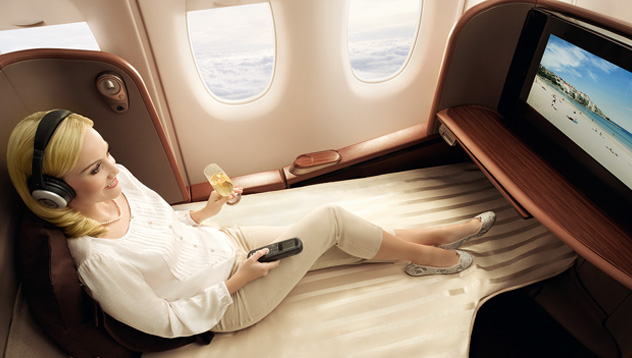



Lyft's approach to self-driving partnerships in general seems to rest on the assumption that self-driving providers will catch up to each other before any of them can fully handle everything a human driver can do. If this assumption is correct, Lyft ends up in the great position of being compatible with all major self-driving providers before any of them can feasibly launch a standalone service without Lyft's driver network (who wants to take a car service that doesn't take you downtown? Or doesn't work in the rain?). Ideally, this means Lyft can negotiate favorable terms with all the providers and maintain their position as marketplace brokering between riders and ride providers (either human or robot).
But, if this announcement means Waymo is truly way ahead of the competition, is Lyft aiding and abetting its own demise by covering Waymo's short-term holes (weather, urban areas, etc) up until the day that Waymo can cut Lyft out and run their own service? If Waymo is the only self-driving game in town, and they solve the urban case, why do they need Lyft? I wonder if we'll see any tension develop between the two if leadership at Lyft starts to get concerned about this scenario being a likely outcome.